
This post was originally published on this site.
The Canadian government’s deal with China to allow Chinese-made electric vehicles into the country is putting more important trade negotiations with the United States at risk, according to a representative for American automakers.
Brian Kingston, chief executive officer of the Canadian Vehicle Manufacturers’ Association, said the move “further complicates what’s already become a very challenging discussion.” His group represents General Motors Co., Stellantis NV and Ford Motor Co., all of which have auto plants in Canada that produce for the U.S. market.
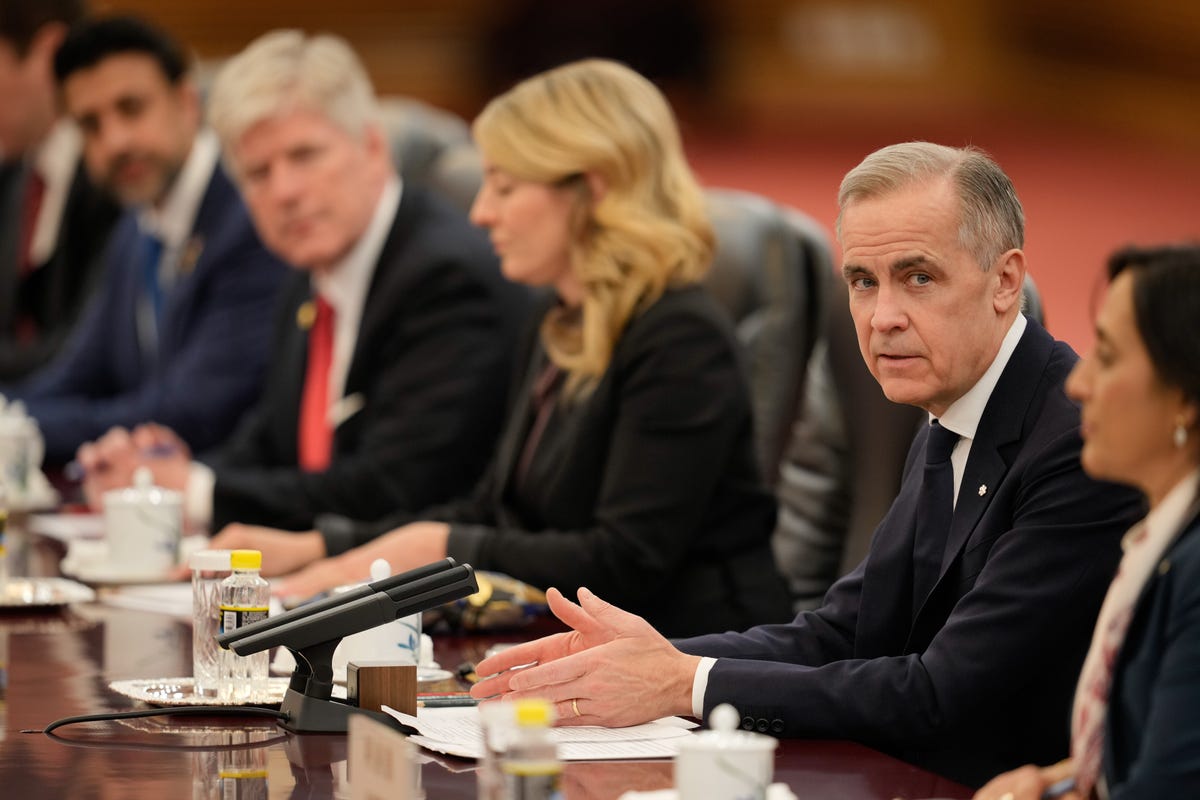
Prime Minister Mark Carney in January reversed the government’s policy on Chinese EVs as he looks to reduce dependence on the American market for trade. In 2024, Canada aligned with the United States in imposing huge tariffs on the vehicles, effectively banning them from the market. Now, it will allow as many as 49,000 a year to be imported from China at a low tariff rate.
In response, President Donald Trump threatened Canada with 100% tariffs if it makes a broader trade deal with China. Carney’s government says it has no intention of doing so.
Kingston pointed to Mexico’s decision to raise tariffs on Chinese cars and other goods to as high as 50%, saying it has resulted in more progress in negotiations over tariffs and trade issues.
“The Mexicans are advancing the discussions faster with the Americans,” he said at the Canadian International Auto Show in Toronto. “They’ve taken the opposite approach. They did allow China in, but now they realize that was a mistake and they put their tariffs up on Chinese vehicles.”
As part of new economic strategy, Mélanie Joly, Canada’s industry minister, has said the government is working to land Chinese investment in an auto plant in Canada that would export electric vehicles globally.
Kingston dismissed that idea as “highly unrealistic” because China already has excess manufacturing capability and it wouldn’t be economically feasible to build in Canada.
David Adams, CEO of the Global Automakers of Canada, said any Chinese-branded manufacturing in Canada “doesn’t make any sense” unless the United States also reverses its policy and allows those electric vehicles its market.
Allowing Chinese cars into the country is “the central premise of what the future” holds for the Canadian auto industry, said Flavio Volpe, president of the Automotive Parts Manufacturers’ Association. He said the Carney government would be held to account to ensure investment in the Canadian auto sector actually materializes.
“We hope they understand just how tough the conditions are to make a profit here and this is not the global south where you dump product,” he said of Chinese manufacturers. “This is a place where if you want to be a partner and be a part of it, then you’re going to have to grind it out like everybody else.”
Kingston expressed optimism that a deal will be reached between Canada and the United States that would lower or eliminate tariffs on the industry.
“There’s no such thing as diversifying away from America,” he said. “So we will get an agreement and there will be an industry that continues to be integrated.”