
This post was originally published on this site.
The Australian government is in the midst of tightening regulations on the crypto industry, which could increase consumer protections while strengthening crypto’s reputation as a financial asset.
In September, the government released draft legislation that would require more digital asset platforms and tokenized custody platforms to obtain an Australian Financial Services License and register with the Australian Securities and Investments Commission (ASIC).
These changes also highlight the difference between custodial platforms that hold assets on your behalf and non‑custodial wallets like Best Wallet, where you control your own keys regardless of which Australian exchange you use to buy crypto.
This differs from current Australian law, which doesn’t inherently include crypto as a financial product with registration requirements. Instead, crypto might be regulated by ASIC if it meets the standard for being a financial product, such as if an initial coin offering (ICO) is used, which includes rights to a share of another company that the ICO funds.
Any new legislation would likely raise the compliance bar, though there may be exceptions for small platforms. While additional regulations may make things a little more cumbersome for some platforms, it could also bring more trust and transparency to the Australian crypto industry.
Crypto also faces some regulations that fall under broader rules, like anti-money laundering/combating the financing of terrorism (AML/CMT) requirements. If a business exchanges fiat currency for digital currency or vice versa, it would generally be considered a digital currency exchange and have to register with the Australian Transaction Reports and Analysis Centre (AUSTRAC), which oversees compliance for areas like AML/CMT. Once you have purchased crypto through an AUSTRAC‑registered exchange, you can transfer it to a non‑custodial wallet such as Best Wallet to store and manage your assets outside of an exchange account.
Basics of buying crypto in Australia
Crypto assets in Australia are considered property for tax purposes, as regulated by the Australian Tax Office (ATO). Generally, trades can trigger capital gains taxes, just like for other securities such as stocks.
Amidst this compliance backdrop, it’s important for individuals to understand that buying bitcoin or other crypto in Australia does come with some guardrails similar to other types of investing. But at this point, the regulations aren’t as fleshed out as they are for more traditional financial markets.
Still, it can be useful to plan ahead for things like capital gains taxes and ensure that a platform you use to buy or sell crypto is registered with the proper authorities if required. You might also prefer to wait to trade until legislation is finalized to buy or sell crypto in Australia. Others might be more comfortable transacting on more of a peer-to-peer basis, without regulatory involvement. Keep in mind that this direct approach can come at the expense of some consumer protections.
Best ways to buy crypto in Australia
To buy bitcoin or other types of crypto in Australia, consider using the following types of platforms:
Centralized Crypto Exchanges (CEXs)
Centralized crypto exchanges (CEXs) typically resemble stock exchanges from the buyer’s point of view, and they’re generally on the more regulated side of crypto — though still perhaps not as much as stock exchanges. In general, CEXs have to register with AUSTRAC as digital currency exchanges, meaning they have to follow verification procedures, like Know Your Customer (KYC) requirements.
While it can reduce privacy, some buyers prefer KYC requirements because it can help them feel more confident that they’re transacting with trustworthy parties. Still, CEXs tend to have benefits like strong liquidity and ease of use, especially for beginners, because CEXs often custody assets on your behalf. Some investors may prefer to self-custody their assets, where you maintain your own private keys to your wallet. Much depends on your comfort level and trust.
Within Australia, some popular homegrown CEXs include Swyftx, CoinSpot, CoinJar, and Independent Reserve. International CEXs like Gate, Coinbase, Binance, and Kraken also operate in Australia.
Decentralized Crypto Exchanges (DEXs)
For crypto traders who want more privacy, decentralized crypto exchanges (DEXs) might be preferred. Unlike CEXs, you generally don’t need an ID to create an account and don’t have to go through KYC requirements. Some popular global DEXs that can be used by buyers in Australia include PancakeSwap, SushiSwap, and UniSwap.
These platforms generally aren’t regulated in Australia because they typically don’t meet the threshold to be considered a digital currency exchange. Instead of the DEX holding assets and exchanging crypto for other currencies, you generally connect your wallet to the DEX to trade with other parties through the platform. The DEX isn’t actually taking possession of the crypto.
That can come with some potential downsides, like making it harder to verify the legitimacy of the other trading partner on the platform. You might be more comfortable with a platform that uses smart contracts that essentially put assets in escrow on a blockchain and release them only if the transaction is properly completed.
Still, there can be other downsides to DEXs vs. CEXs, such as lower liquidity and slippage, meaning prices end up being more expensive than you expected when trying to buy the crypto.
Peer-to-Peer (P2P) crypto platforms
DEXs often resemble P2P platforms, and in some cases, the terms might even be used interchangeably. However, P2P platforms may go beyond connecting buyers and sellers via smart contracts by holding assets on behalf of the parties and allowing for the exchange of fiat to crypto, which could mean having to register with AUSTRAC in Australia.
There are many informal P2P platforms outside of the remit of AUSTRAC, which arguably creates risks, such as more potential for money laundering.
Some examples of P2P platforms available in Australia include LocalCoinSwap and Paxful. Binance, which is largely a CEX, also has a P2P platform.
Crypto ATMs in Australia
Another way to buy crypto in Australia is through certain digital currency ATMs. Similar to traditional ATMs, many of these machines enable you to deposit or withdraw cash, but the difference is that you generally connect your crypto wallet to facilitate an exchange of cash to crypto or vice versa.
If this fiat-to-digital exchange happens, the ATM is supposed to register with AUSTRAC, so there may be identity verification requirements for users. While some investors may prefer more privacy, using an unregulated ATM carries risks such as opening your wallet up to unscrupulous parties, or unwittingly facilitating money laundering. Even regulated ATMs pose risks, as they are often used in connection with scams, because once you convert cash to crypto through these ATMs, the transaction is almost impossible to unwind.
The convenience of ATMs for quick transactions is a draw for some investors, though you should still think twice about why you’re using that ATM and if the company seems trustworthy. Some examples of regulated crypto ATM companies available in Australia include ByteFederal, Cryptolink, and Localcoin.
Australian brokerages and mobile apps
Another way to buy crypto in Australia is through financial brokerages and mobile apps that often offer access to a wide range of assets, such as stocks, options, and exchange-traded funds.
The advantage of using a brokerage is that you can hold all of your investments within one platform, including crypto. These are also generally regulated platforms similar to CEXs, and they custody assets for you. This can be appealing to investors looking for ease of use and compliance controls, while others might prefer more privacy. Some brokerages and apps charge high fees for crypto transactions, so always review fee schedules carefully.
A few examples of these platforms that offer crypto trading alongside other assets include eToro, Revolut, and CMC Markets.
Buy and manage crypto with Best Wallet
If you want a private, multi-chain, no-KYC way to buy and manage crypto — without using a CEX, DEX, ATM, or legacy app — consider Best Wallet. It’s a mobile-first, non-custodial wallet that provides an all-in-one solution, where you can track trending coins, buy/swap 60+ cryptos, discover vetted presales, and use advanced safety features.
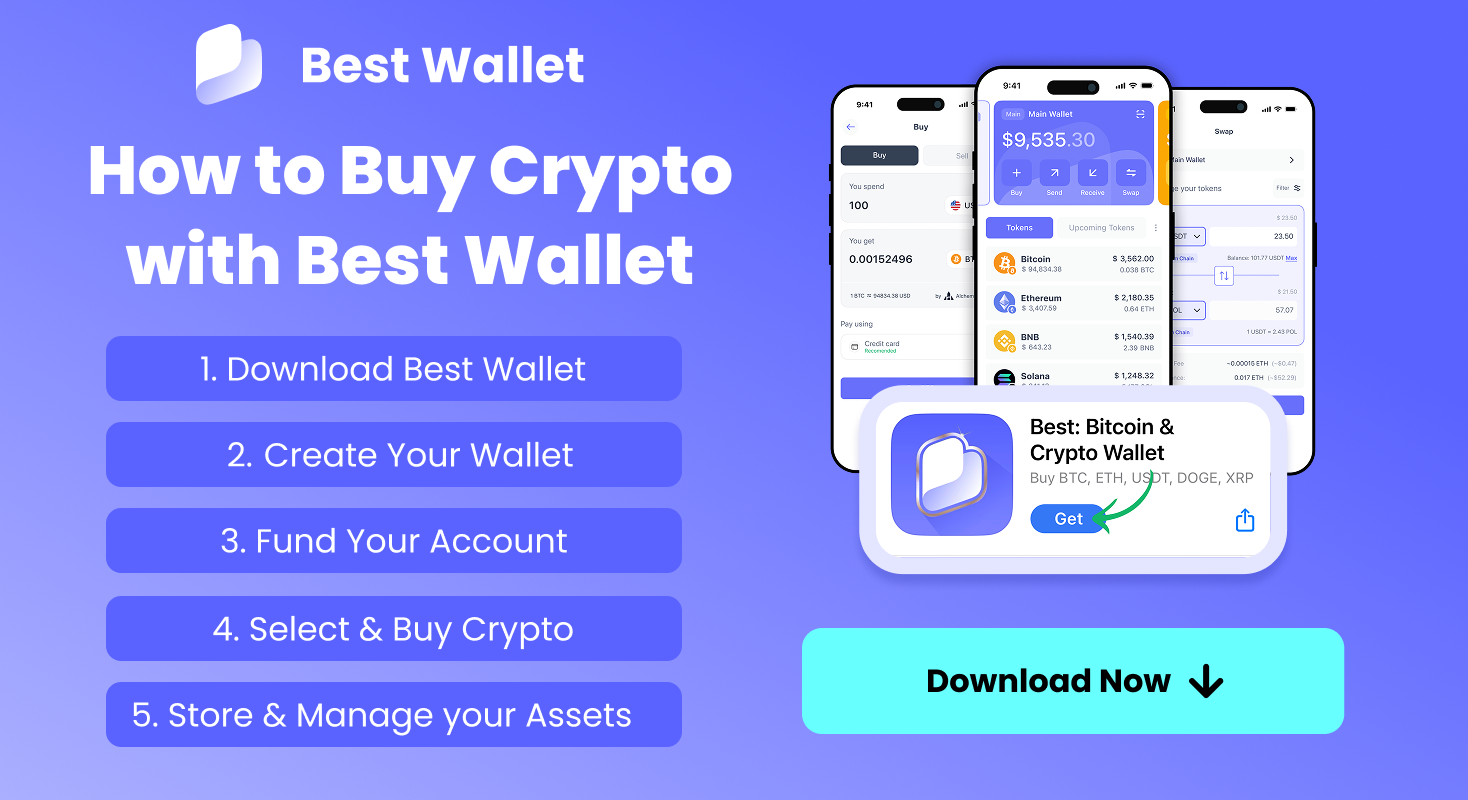
Step 1: Download and set up Best Wallet
Download the Best Wallet app from the Australian Apple App Store or Google Play and create an account with your email address.
Set a secure PIN and enable biometric login if your device supports it, so only you can access the wallet.
Step 2: Go to the Buy section
Open the app and tap the Buy or Trade section in the main dashboard.
Choose the cryptocurrency you want to purchase, such as bitcoin, ethereum, or another supported coin.
Step 3: Enter how much you want to buy
Enter the amount you want to invest in Australian dollars (AUD); the app shows how much crypto this will buy at current prices, including estimated fees.
You can usually start with relatively small amounts, which is useful if you are new to buying crypto through a wallet app.
Step 4: Choose a payment method and provider
Select a supported payment method through Best Wallet’s integrated providers, such as debit or credit card and other on‑ramp options available for Australian users.
Compare the quoted fees and exchange rate, then confirm the purchase once you are comfortable with the total cost.
Step 5: Store and manage your crypto
After the transaction is processed, your coins are delivered straight into your non‑custodial Best Wallet, so you hold the private keys instead of leaving funds on an exchange.
From there, you can hold, swap, or send crypto, and, if you want additional cold‑storage security, move some holdings to a hardware wallet later on.
If you later want to cash out to AUD, you can send funds from Best Wallet to an Australian exchange or off‑ramp service that supports withdrawals to local bank accounts.
Best payment methods to buy crypto in Australia
To some extent, the payment method you can use to buy crypto in Australia depends on where you buy crypto. Some of the most popular ways to buy crypto — which might also influence which platform you transact through, given available payment methods — include the following:
- Bank transfer: Through some platforms, such as many CEXs and brokerage apps, you can deposit money via bank transfer, such as through Australia’s PayID system. That makes it easy to convert fiat currency into crypto. You just complete the bank transfer, choose the crypto you want to buy, and complete the swap from Australian dollars into your chosen crypto.
- Debit/credit cards: Some platforms — typically more regulated ones like CEXs and brokerage apps — also allow you to deposit money via debit or credit cards. This works similarly to bank transfers but often even faster, though there may be additional fees. It also comes with privacy tradeoffs, and you want to be careful about getting into credit card debt to buy crypto.
- BPAY: BPAY is also similar to bank transfers, though it’s a third-party company that facilitates bill payments from an Australian bank. It can be used to buy crypto through many exchanges and allows recurring deposits.
- Cash in person: With some P2P deals, you can meet up in person and exchange cash for crypto. This often works by the crypto being placed into escrow, which the seller then releases once you give them the cash. This can make for more private transactions, but it increases the risk of dealing with unscrupulous parties.
- Prepaid debit cards or vouchers: Similar to cash transactions, you could potentially use prepaid debit cards or vouchers on some platforms, with those funds then converted into crypto. Doing so can help maximize anonymity, but also can be risky, such as if you don’t receive the crypto you were promised via a P2P transaction — in that case, it can be extremely difficult to unwind the funds back to you.
- Crypto swaps: If you already own crypto, you can often swap that for other coins or tokens on various platforms, particularly DEXs or P2Ps. This can help maintain privacy and avoid the step of converting fiat currency into crypto, but pay attention to issues like conversion rates.
Tips for first-time Australian crypto buyers
If you’re new to buying crypto in Australia, consider the following tips, which can vary based on your preferences:
- Do your own research: The crypto world offers a lot of exciting possibilities, but it’s also full of people trying to pump random coins or conduct outright scams. Don’t take anything at face value. Do your own research first.
- Start conservatively: Because crypto can be riskier and more complex than some traditional assets, avoid investing significant amounts of money that you can’t afford to lose. There’s no shame in starting with a small investment until you get more comfortable with buying and selling crypto.
- Consider privacy/anonymity tools: If you’re concerned about privacy or if you’re supporting a cause that you don’t want others to know about, you might try to preserve your anonymity as much as possible. You can do this by buying privacy coins when possible to then conduct more transactions, as well as using anonymous wallets and browsing tools. You might initially fund these via a privacy-focused method like a prepaid debit card rather than linking your personal bank account.
- Remember taxes: Don’t overlook the tax implications of crypto investments. If you have capital gains from the sale of an asset, you generally will owe taxes, so it’s better to plan ahead than get caught off guard with a big tax bill.
- Store crypto securely: Make sure you’re following best practices to keep your crypto safe, such as never giving anyone the private key to your wallet and using two-factor authentication if you have an account on an exchange or brokerage app. Consider using a non-custodial wallet to ensure you control your private keys and who can access your assets.
Frequently Asked Questions (FAQ) about buying crypto in Australia
Is buying crypto legal in Australia?
Yes, buying crypto is legal in Australia. The government is currently in the midst of expanding regulations for crypto to treat these assets more as financial products. Many Australians also use non‑custodial wallets such as Best Wallet to hold coins they’ve bought on AUSTRAC‑registered exchanges, combining regulated on‑ramps with self‑custody.
What’s the safest exchange in Australia?
The safest exchange in Australia depends on your preferences, such as whether you value privacy or the solvency of a crypto exchange. Consider factors such as an exchange’s track record, privacy controls, and security practices if the platform is custodying your assets.
Can I buy crypto without ID in Australia?
Yes, you can often buy crypto without ID in Australia, for example, by using DEXs or P2P platforms. Keep in mind that while not using an ID may grant you more privacy, it can then make it harder to recover assets, such as if you get caught up in a crypto scam. You can often browse and set up a non‑custodial wallet app like Best Wallet without full ID checks, but regulated Australian on‑ramps still have to verify you when you convert between AUD and crypto.
What’s the best wallet for crypto in Australia?
The best wallet for most Australians is a non-custodial, multi-chain wallet, like Best Wallet. It lets you securely buy, store, and swap dozens of cryptos, track trends, and manage presales directly in-app. With advanced safety features (scam scanner, contract checks, biometric login) and no KYC required, Best Wallet helps users stay in control of their assets. Always use a wallet where you hold your own private keys.
Are crypto presales safe for Australians?
Crypto presales can offer early access to new projects, but they are high-risk and can be targeted by scams. Australians should always use wallets with contract safety checkers and scam filters, verify a project’s legitimacy, and confirm all official presale links. Only invest what you can afford to lose, and understand any local regulations around early-stage token access.
How do I buy crypto privately and still remain compliant?
To buy crypto privately, use non-custodial wallets, like Best Wallet, and trade through DEXs or P2P platforms. Australia requires crypto users to track trades for tax reporting and remain compliant with anti-money laundering laws, so keep thorough records, use official platforms, and be aware of transaction size thresholds that could trigger KYC requirements or reporting rules.
Created by the Commerce team at Business Insider with Best Wallet.