
This post was originally published on this site.
India has taken a politically sensitive step in its effort to advance long-stalled trade negotiations with the United States by requesting its domestic oil refiners to submit weekly disclosures of Russian crude imports. The move reflects growing concern in New Delhi that its energy ties with Moscow – while economically advantageous – have become a structural obstacle to securing a comprehensive trade agreement with Washington at a time when India’s growth outlook is increasingly linked to access to Western markets.
India’s continued imports of discounted Russian oil, a critical source of war financing for Moscow, have emerged as one of the most contentious issues in bilateral talks. By seeking more granular and frequent data from refiners, New Delhi appears to be signalling both a willingness to increase transparency and a readiness to demonstrate that it is responsive to US concerns – without yet committing to a full reversal of its oil procurement strategy.
Advertisement
JOIN US ON TELEGRAM
Follow our coverage of the war on the @Kyivpost_official.
A Reuters report indicates that the request for weekly disclosures originated directly from the Prime Minister’s office, underlining the political weight attached to the issue. This is the first time India’s major oil refiners, including Reliance Industries and Indian Oil Corporation, have been asked to provide import figures on such a frequent basis. The step suggests that energy policy has been elevated to the highest level of strategic decision-making as trade negotiations enter a more sensitive phase.
Other Topics of Interest
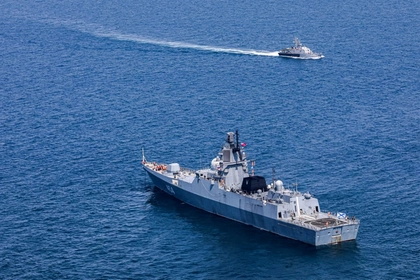
South Africa Defends Naval Drills With Iran, Russia as ‘Essential’
South Africa once again aligns with Russia, China, and Iran.
The message to New Delhi was clear: energy ties with Moscow now carry escalating economic costs.
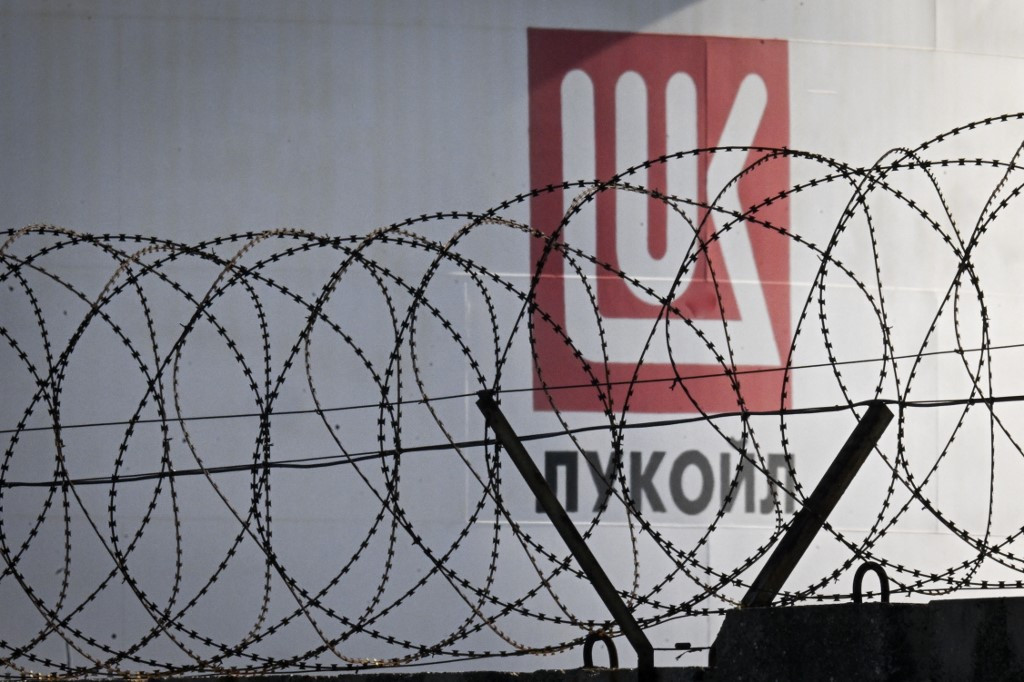
Since Russia’s full-scale invasion of Ukraine in 2022, India has emerged as one of the largest buyers of Russian crude, capitalizing on steep discounts as European markets became unavailable to Moscow. Private refiners in particular – most prominently Reliance Industries’ Jamnagar refinery and Nayara Energy’s Vadinar facility – have become central to this trade. According to data from the Centre for Research on Energy and Clean Air, during the first year of the war these two refiners were also among the largest exporters of refined petroleum products to the United States, France, the Netherlands and the United Kingdom.
Advertisement
This trade flow has drawn increasing scrutiny in Western capitals because it exploits what is often described as the “refining loophole” in sanctions regimes. Under current rules, Russian-origin crude can be imported, refined, and then re-exported as an Indian product without triggering penalties. While technically compliant with sanctions, the arrangement has raised political and ethical concerns, particularly in Washington and Brussels, where policymakers argue that it undermines the broader objective of constraining Russia’s wartime revenues.
Reliance Industries, controlled by the Ambani family, has emerged as one of the primary beneficiaries of this realignment in global energy markets. The company’s scale, export-oriented infrastructure, and access to capital have allowed it to quickly adapt to discounted Russian supplies and expand shipments to Western destinations. More broadly, Reliance’s success reflects wider shifts in India’s energy and industrial policy under Prime Minister Narendra Modi, which have prioritized refining capacity, export competitiveness and its “strategic autonomy” over alignment with Western sanctions frameworks.
Advertisement
Trade deal remains elusive
Against this backdrop, negotiations for a US-India trade agreement have dragged on for months with little visible progress. While both sides have expressed strategic intent to deepen economic ties, talks have stalled over demands for concessions in politically sensitive sectors, including agriculture, steel and aluminum, and pharmaceuticals. India’s energy relationship with Russia has added a further layer of complexity, reinforcing scepticism in Washington about New Delhi’s willingness to align with US-led economic and geopolitical priorities.
The Trump administration’s decision last summer to impose an additional 25% tariff on Indian exports – bringing the total levy to 50% – was widely interpreted as a targeted response to India’s continued purchases of Russian crude. Rather than prompting an immediate policy shift, the tariffs initially hardened New Delhi’s position. The Modi government continued to emphasize India’s right to pursue energy security and maintain strategic autonomy, while also deepening engagement with Russia and China – a triangular approach fraught with numerous challenges and conflicting interests.
Advertisement
Over the weekend, the pressure intensified. The US President issued a fresh warning, indicating that tariffs could be raised further unless India curtails its Russian oil imports.
Speaking to reporters aboard Air Force One, President Trump praised Prime Minister Narendra Modi, but emphasized the United States’ leverage in trade negotiations. He suggested that India was responsive to Washington’s concerns, noting that tariffs could be increased swiftly if needed. “PM Modi is a very good man… He knew I was not happy. It was important to make me happy. They do trade, and we can raise tariffs on them very quickly, and it’ll be very bad for them,” Trump said.
Washington remains unconvinced that India has made a decisive shift.
The comments came alongside discussions of proposed US legislation aimed at choking off all Russian crude sales as part of a broader effort to force an end to the war in Ukraine. The message to New Delhi was clear: energy ties with Moscow now carry escalating economic costs.
There are emerging indications that India may be recalibrating its position, at least at the margins. Bloomberg reported that Russian crude flows to India in December were on track to fall to their lowest level in three years. Reliance Industries stated on Tuesday that it does not expect any Russian crude deliveries in January and has not received such cargoes in the past three weeks. The company also publicly denied a Bloomberg report – based on Kpler shipping data – that three vessels carrying Russian oil were en route to its Jamnagar refinery, underscoring the sensitivity surrounding the issue.
Advertisement
Despite these signals, Washington remains unconvinced that India has made a decisive shift. The additional 25% tariff, keeping total duties at 50% on certain Indian exports, remains firmly in place. For now, India’s ability to balance discounted Russian energy supplies against its broader trade and strategic ambitions with the United States remains unresolved – highlighting how energy policy has become a central fault line in the evolving US-India relationship.