
This post was originally published on this site.
New Energy World
The following excerpt is from an op-ed was written by Betty Wang, Senior Program Officer of Climate at the Asia Society Policy Institute, and published in New Energy World on January 28, 2026.
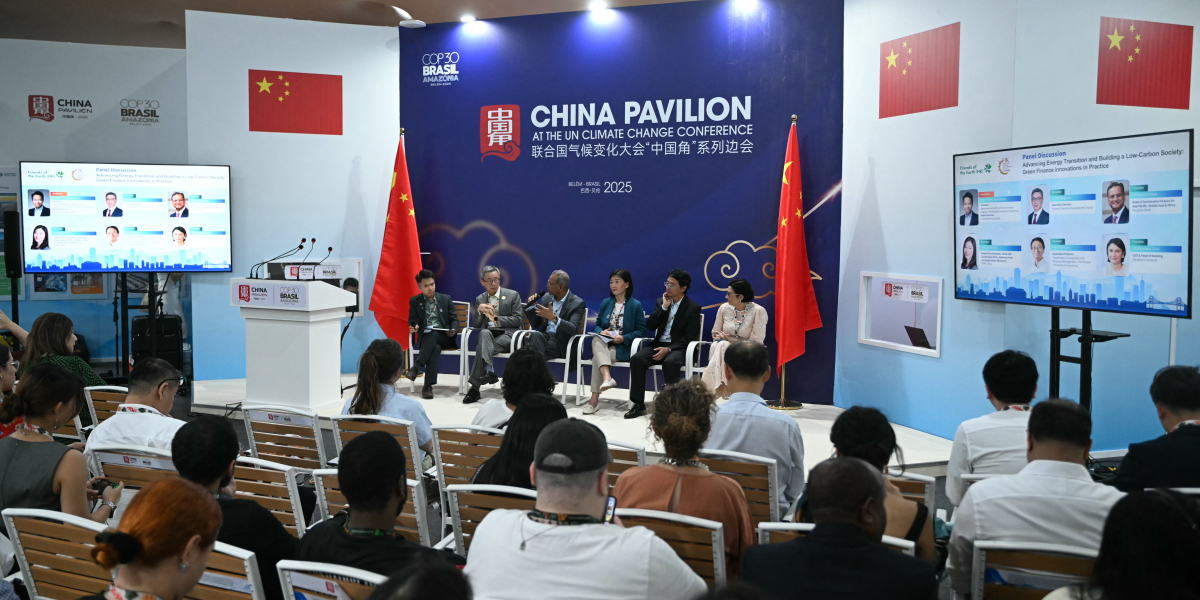
While China has moved away from overseas lending, the country’s leadership role in banks such as the Asian Infrastructure Investment Bank (AIIB) and the New Development Bank (NDB) has given it increasing weight in shaping multilateral finance instruments. At COP30, Chinese officials reaffirmed that China would continue to support global climate cooperation under the principle of common but differentiated responsibilities (CBDR), emphasising technology diffusion and green industrial capacity as core contributions.
These developments reinforce that China does not see itself as a traditional donor and continues to position itself outside the Organisation for Economic Co-operation and Development (OECD) framework, contributing primarily through South–South cooperation and avoiding formal obligations under Annex II of the United Nations Framework Convention on Climate Change (UNFCCC). Its emerging role could be better understood as that of a ‘structural enabler’, shaping the enabling conditions for clean energy finance through cost-competitive technologies, industrial capacity and financial partnerships, rather than direct budgetary transfers. In practice, this means mobilising affordable technology, co-financing with multilateral institutions and embedding green industrialisation within partner countries’ transitions.
For two decades, China’s overseas energy finance was defined by scale. From 2000–2023, its two main policy banks, the China Development Bank (CDB) and the Export-Import Bank of China (CHEXIM), extended around $209bn in loans for overseas energy projects, with activity peaking in the mid-2010s before retreating sharply. By 2022, lending had slowed so dramatically that no new energy loans were issued. This retreat signalled the end of the ‘big-ticket’ era of debt-heavy fossil projects, and it coincided with a marked shift in the composition of what China was financing abroad.
Read the full op-ed here.