
This post was originally published on this site.

Massachusetts residents lost at least $77 million dollars in Bitcoin ATM scams last year, and stand to keep losing money in 2026, despite a bill lingering in the State House that could help prevent the schemes.Janice Peltz is one of those victims, as previously reported by 5 Investigates. A scammer posing to be from her bank kept 86-year-old Peltz on the phone for hours while she withdrew $18,000 in cash and deposited it into a Bitcoin ATM. The scam launched her younger brother into a monthslong journey to get the money back, until he finally landed an $18,000 refund from Bitcoin Depot, the machine Peltz used to deposit the money. “I opened the envelope and I couldn’t … I was so blown away by what was inside it, which was a check for $18,000,” Peltz said, adding that she never thought she’d get the money back. Most Bitcoin ATM scam victims aren’t lucky like Peltz. A bill that would implement daily transaction limits, refunds for fraud victims and fee caps would help, but it’s been lingering in the Massachusetts legislature for nearly a year. Meanwhile, one New England state acted fast and has seen results. Over the summer, the Maine legislature passed an emergency bill that immediately limited Bitcoin ATM daily transactions, capped fees and provided remedies for victims. It didn’t stop there. Less than six months after the bill passed, the Maine Bureau of Consumer Credit Protection announced a nearly $2 million settlement with Bitcoin Depot, which will be used to compensate victims. Bureau Superintendent Linda Conti hammered out the deal with Bitcoin Depot, which had previously been operating in Maine without a license.”I said, ‘Well, in order to get a license here, you’re going to have to make good on the people who have been victimized at your kiosk machines,'” Conti said. Bitcoin Depot has since voluntarily removed all its machines from the state of Maine, according to Conti.When asked why Massachusetts can’t act as quickly as Maine, Rep. Thomas Stanley said, “Just because a state’s doing it quickly doesn’t mean they’re doing it the best.”Stanley is one of the sponsors of the Massachusetts bill that puts in place some of the same restrictions as Maine. But instead of a settlement to pay back victims, the bill would establish a commission to develop more recommendations.The bill was first filed in February 2025. It was recently approved by the finance committee. Stanley said he’s hopeful it will pass this year. “The system is just set up this way because people come in with good ideas, but finding the proper, the best solution isn’t the easiest because we don’t want to create unintended consequences that create more problems,” Stanley said.As for Peltz, she said state lawmakers should “get on the ball, realize what a serious problem this is.” Bitcoin Depot did not respond to a request for comment.
Massachusetts residents lost at least $77 million dollars in Bitcoin ATM scams last year, and stand to keep losing money in 2026, despite a bill lingering in the State House that could help prevent the schemes.
Janice Peltz is one of those victims, as previously reported by 5 Investigates.
Advertisement
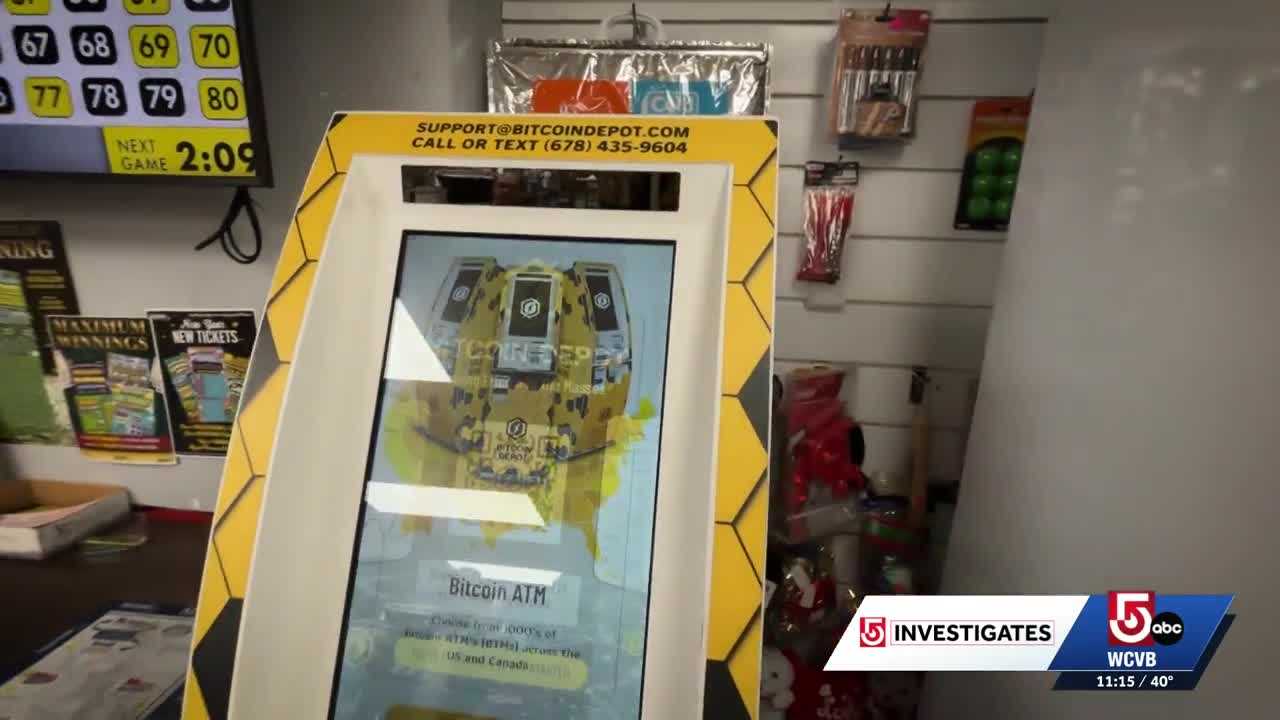
A scammer posing to be from her bank kept 86-year-old Peltz on the phone for hours while she withdrew $18,000 in cash and deposited it into a Bitcoin ATM.
The scam launched her younger brother into a monthslong journey to get the money back, until he finally landed an $18,000 refund from Bitcoin Depot, the machine Peltz used to deposit the money.
“I opened the envelope and I couldn’t … I was so blown away by what was inside it, which was a check for $18,000,” Peltz said, adding that she never thought she’d get the money back.
Most Bitcoin ATM scam victims aren’t lucky like Peltz.
A bill that would implement daily transaction limits, refunds for fraud victims and fee caps would help, but it’s been lingering in the Massachusetts legislature for nearly a year.
Meanwhile, one New England state acted fast and has seen results.
Over the summer, the Maine legislature passed an emergency bill that immediately limited Bitcoin ATM daily transactions, capped fees and provided remedies for victims.
It didn’t stop there.
Less than six months after the bill passed, the Maine Bureau of Consumer Credit Protection announced a nearly $2 million settlement with Bitcoin Depot, which will be used to compensate victims.
Bureau Superintendent Linda Conti hammered out the deal with Bitcoin Depot, which had previously been operating in Maine without a license.
“I said, ‘Well, in order to get a license here, you’re going to have to make good on the people who have been victimized at your kiosk machines,'” Conti said.
Bitcoin Depot has since voluntarily removed all its machines from the state of Maine, according to Conti.
When asked why Massachusetts can’t act as quickly as Maine, Rep. Thomas Stanley said, “Just because a state’s doing it quickly doesn’t mean they’re doing it the best.”
Stanley is one of the sponsors of the Massachusetts bill that puts in place some of the same restrictions as Maine.
But instead of a settlement to pay back victims, the bill would establish a commission to develop more recommendations.
The bill was first filed in February 2025. It was recently approved by the finance committee. Stanley said he’s hopeful it will pass this year.
“The system is just set up this way because people come in with good ideas, but finding the proper, the best solution isn’t the easiest because we don’t want to create unintended consequences that create more problems,” Stanley said.
As for Peltz, she said state lawmakers should “get on the ball, realize what a serious problem this is.”
Bitcoin Depot did not respond to a request for comment.