
This post was originally published on this site.
Four fake deals worth arguing about as trade season gets messy
It’s very hard to create a realistic but exciting fake trade in today’s NBA, with a collective bargaining agreement that’s seemingly designed to shred just about every appealing hypothetical that’s run through the trade machine. Tax implications and apron restrictions turn every proposition into a jigsaw puzzle. And that’s before you throw in actual outgoing talent and what every potential buyer needs. Alas, with the deadline less than two weeks away, I’ve bravely taken it upon myself to try to do the impossible. Here are a few compelling hypotheticals that are, at the very least, worth arguing over.
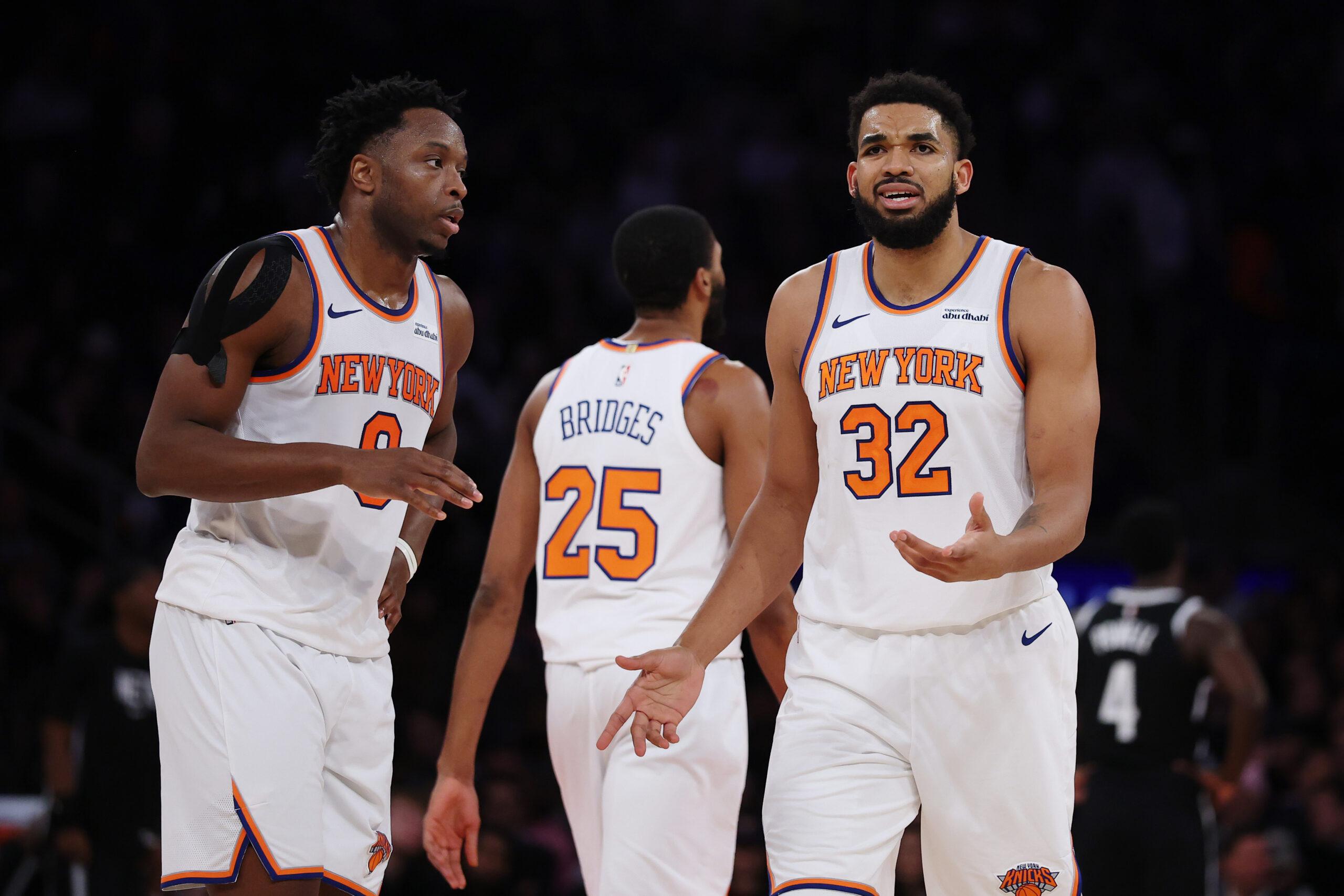
Are the Knicks ready for a Karl-Anthony Towns divorce?
Coming off a magical playoff run in 2025, New York was a popular preseason pick to reach this season’s Finals. Its broad array of high-end complementary talent inspired the most Knicks optimism in decades, particularly with the East being more diluted than usual. (Tyrese Haliburton isn’t around to re-create their darkest nightmare.) But for all the offensive options New York has at its disposal—seemingly unleashed in a more egalitarian system—the inherent flaws that ultimately cut last season short still exist. Last week’s loss against the broken Dallas Mavericks was rock botto for a group that ranks 24th since Christmas in defensive rating, struggles to get stops when its two best players are on the court, and is 3-9 in its past 12 games.
The championship-caliber dynamic duo of Karl-Anthony Towns and Jalen Brunson hasn’t hit the point of no return yet, but one of these two is familiar with seeing his name in trade rumors and can realistically be moved before this deadline. Towns is not the All-NBA big man he was last season. His 3-point percentage has not been this low since he was a rookie. His 2-point percentage is teetering into a ditch, particularly at the rim. The Karate Kid routine against Dallas was almost like a subconscious temper tantrum to release whatever frustrations Towns has felt in new head coach Mike Brown’s system all season long. This doesn’t mean KAT is bad. He’s on the bubble of making his second straight All-Star team, and in competitive minutes, New York is better on both ends when he’s on the court. But, for all the reasons listed above, a breakup may benefit both parties.
Trading him obviously won’t be simple. The Knicks must connect with a team that is interested in Towns, has the contracts to make the deal, and has the type of surrounding talent that will bring New York closer to a Finals appearance. From the outside looking in, it is definitely easier for KAT to work things out with Brown and arrive at some kind of détente. Towns is 30 years old and guaranteed $118 million over the next two season Rumored suitors, like Charlotte, Memphis, and Orlando, either can’t cobble together a package that will grab New York’s attention or don’t have the money to make anything legally work without involving a third team. Enter: a franchise that might not be thinking with a clear head.
Milwaukee Bucks receive: Karl-Anthony Towns
New York Knicks receive: Myles Turner, Kyle Kuzma, and a top-five protected pick in 2031
If your first reaction to this was “That makes no sense,” you are 100 percent correct. A blockbuster trade between New York and Milwaukee that doesn’t include an increasingly melodramatic Giannis Antetokounmpo would belie rational thought. The Bucks should absolutely not do this. But the Bucks should absolutely not have done a bunch of other stuff they thought was a good idea, so let’s operate in that reality for a minute.
New York (marginally) upgrades on defense without sacrificing all the space Towns is able to create as a 3-point-shooting center, and the Bucks receive a vastly superior offensive threat who can prop up their attack when Giannis isn’t on the floor and [chokes back laughter] maybe even give them a puncher’s chance to escape the play-in. Say what you want: Towns is a physically imposing star whose exact skill set is a key ingredient for any team that wants to maximize Antetokounmpo (who lives in the paint and can’t shoot).
If Giannis ultimately refuses to sign an extension this summer, I’d rather have Towns than Turner and Kuzma. The Knicks, meanwhile, add some financial flexibility (Turner will make about $30 million less than Towns in 2028) and get a pretty good asset for the trouble. Their odds to reach the Finals this season would probably dip a little bit, but there’s a definite world where those two work better in New York’s existing rotation. It also opens the door for more trade scenarios over the summer.
To be clear, no sane general manager in the league should give up a first-round pick to take on Towns’s contract. But the Bucks have been operating in an upside-down universe for the past six months. Why not triple down on the mess they’ve made and see what happens?
While we’re talking about the Knicks, if you happen to root for them and have a low tolerance for pain, feel free to cover your eyes and scroll down to the next trade. I know how untenable it would be to even gauge Brunson’s trade value—he’s an All-Star starter who took a pay cut so New York could build a championship-level roster around him—but actually winning it all may not be possible so long as he’s the team’s best player. My mind wanders. What could they get for him? This would almost definitely never happen, but if it did, Knicks fans would absolutely storm Madison Square Garden. When Brunson is on the court, New York’s offensive rating is 8.1 points per 100 possessions above the league average. The only players who rank above him play for the Denver Nuggets.
But he’s also an increasingly problematic defender who will turn 30 in August and seems to be walking off an ankle injury once a week. For the second season in a row, the Knicks have a bad defense when he’s on the court regardless of whether Towns is out there. (Meanwhile, for the second season in a row, the Knicks have a good defense when Towns is on the court without Brunson.)
There may be a path to the Finals that doesn’t go through the player with such a paradoxical impact. As great and beloved as Brunson is, winning a championship with him as your best player is an exceptional challenge—like having the most powerful left hook in the world but stepping into the ring with your right arm tied behind your back. In last year’s playoffs, he ranked first in offensive estimated plus-minus and last in defensive plus-minus. The Knicks obviously aren’t even thinking about cashing out right now, but what if they disappoint during the playoffs? What if there’s a deal out there that can shore up New York’s defense and give the team a ton of draft equity without drowning the offense? Say, something along the lines of Fred VanVleet, Dorian Finney-Smith, and six first-round picks? That sounds ludicrous. Maybe it is! Even if New York’s defensive issues are never resolved with Brunson on the roster, he’s a floor-raising, messianic figure with a universally positive approval rating.
Watching him is fun. It’s an unavoidable dilemma.
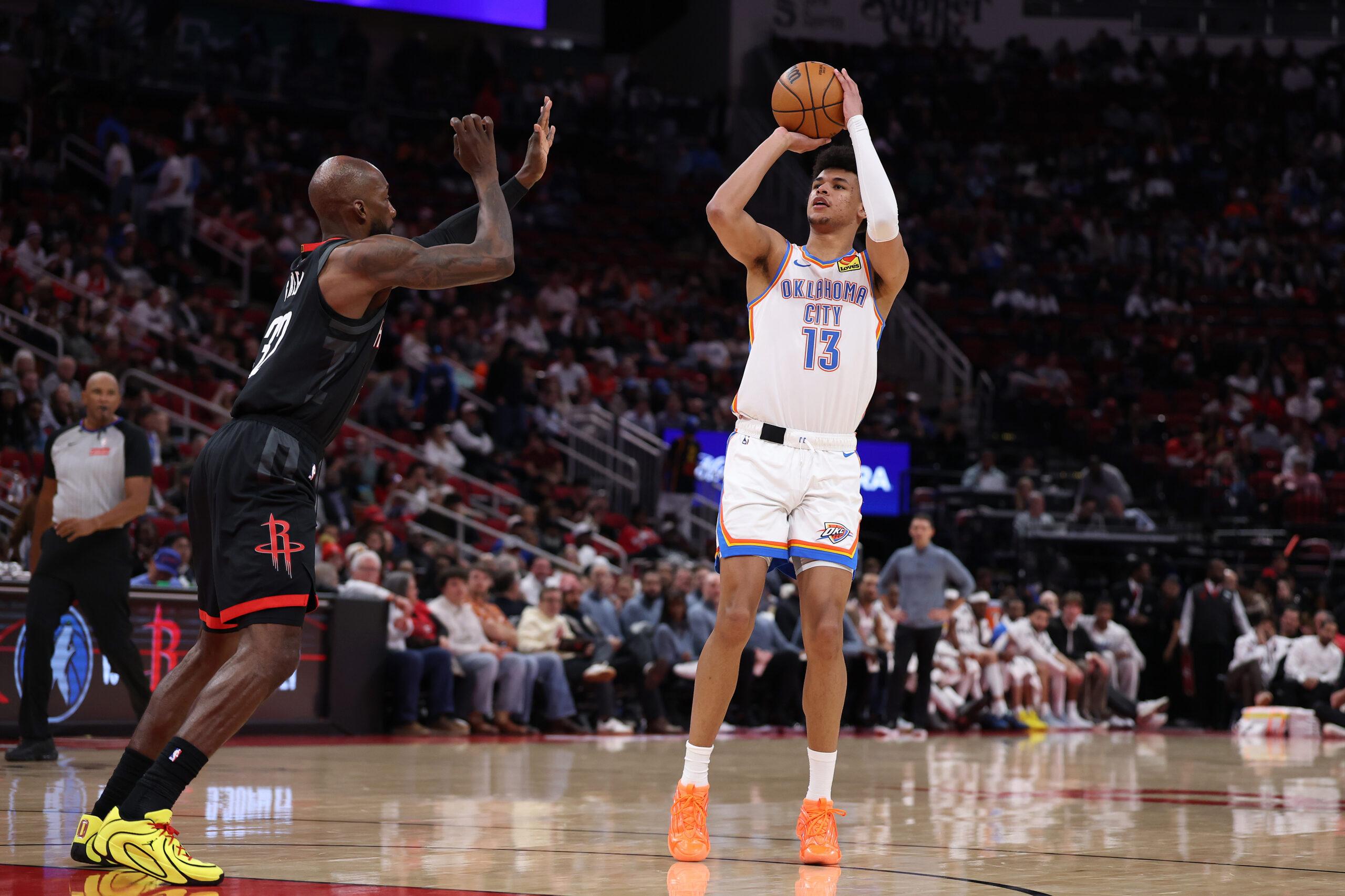
The Thunder shouldn’t get cute with their title defense.
Chicago Bulls receive: Ousmane Dieng, Philadelphia’s 2026 top-four-protected pick, and Denver’s 2026 top-five-protected pick
Oklahoma City Thunder receive: Ayo Dosunmu
The pick compensation here sounds like a lot, but it’s actually not that stee when you consider the stakes. Championship windows in the NBA are unpredictable and unforgiving. Even when the runway looks clear and there isn’t a cloud in the sky, the opportunity to acquire a dynamic downhill driver who’s also been one of the better 3-point shooters this season should not be taken for granted.
OKC can afford to take chances—or can’t afford not to, depending on how you look at it—especially under these circumstances. Let’s consider the picks it would give up. The Sixers are pretty good and currently in line to receive the 18th pick in this year’s draft. The Nuggets will pick somewhere in the 20s next year. The Thunder, meanwhile, have Nikola Topic and Thomas Sorben—their two most recent first-round picks—waiting in the wings, and they own the Clippers’ first-round pick in this year’s draft with swap rights in next year’s draft, swap rights with the Dallas Mavericks in 2028, another protected first from Denver in 2029, and approximately 6 million second-round picks incoming from half the league.
There’s always risk as a small-market team surrendering draft capital for a short-term gain (OKC can’t realistically re-sign Dosunmu with Chet Holmgren’s and Jalen Williams’s extensions kicking in next year). But by doing this trade, the Thunder can stay under the tax (not for nothing, considering how close they are to that line and the amount of belt tightening that’s to come) and exchange someone who will never see meaningful minutes in the playoffs for a solid two-way player who’s talented enough to win them a game. Instead of losing Dieng for zilch this summer, they can grab Dosunmu and lessen the downside of another Jalen Williams injury.
If you’re the Bulls, just smile and say thank you. Draft capital and young talent are exactly what this organization is starved for. Dieng is four years younger than Dosunmu and, with both being on expiring contracts, will almost definitely cost a whole lot less going forward.
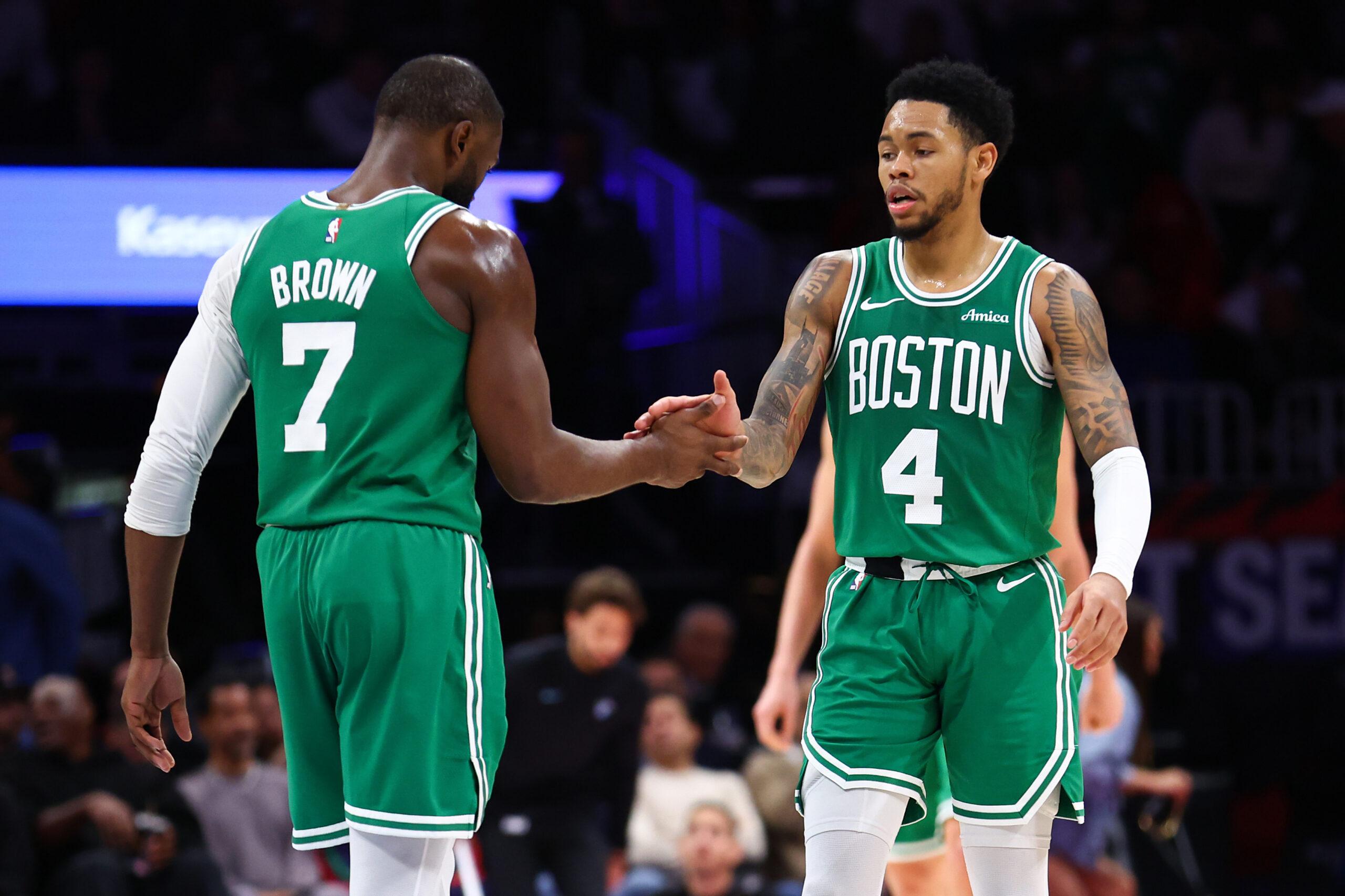
Should the Celtics make a win-now move?
This isn’t the sexiest name out there, but if the Brooklyn Nets put Day’Ron Sharpe on the trade market, there’s a very good chance they’ll have a bidding war on their hands. The Celtics, Rockets, Lakers, and Raptors are four playoff teams off the top of my head that could really use an inexpensive depth piece to bolster their frontcourts. Sharpe is a magnet for offensive rebounds, sets terrific screens, is comfortable as a hub on the perimeter, and can really see the floor. Few backup bigs are better at making quick reads out of a short roll or turning a second-chance opportunity into a wide-open 3-pointer.
Boston’s odds of making a lengthy playoff run would improve if Sharpe were its backup center. (With all due respect to Luka Garza, there’s a decent chance he’ll get played off the floor in the postseason.) Houston needs some insurance for Steven Adams, and Sharpe is a perfect fit with its crash-the-glass mentality. L.A. is … unserious with Deandre Ayton and Jaxson Hayes. Toronto can’t leave Jakob Poeltl’s back pain to chance.
Like I said, a potential bidding war. Here’s my favorite hypothetical:
Boston Celtics receive: Day’Ron Sharpe and Ziaire Williams
Brooklyn Nets receive: Anfernee Simons and three second-round picks
The on-court upgrade matters a ton, but don’t overlook the financial implications: By doing this, the Celtics duck the luxury tax without hemorrhaging the type of talent that can really help in the playoffs. Simons isn’t bad, but his value will shrink considerably when Jayson Tatum returns; there’s no evidence that he’ll even be playable on the defensive end in a seven-game series.
Now, the Rockets can probably blow this offer out of the water with all the picks and swaps they own (including a swap with the Nets in 2027), but how far would they go here for a backup big with Clint Capela already on the roster? Do the Lakers actually want to win this season? Do the Raptors believe they can? Sharpe is 24 years old and very good at what he does. Someone should go get him. Boston is good enough to try.
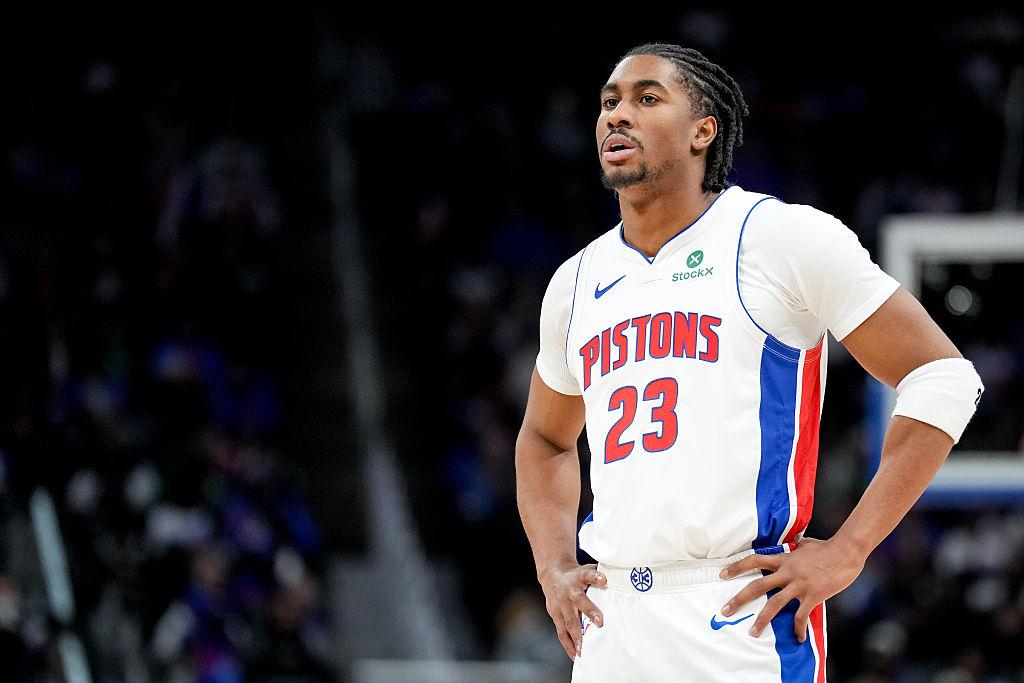
The Pistons need to act like the contenders they are.
Detroit Pistons receive: Michael Porter Jr. and Haywood Highsmith
Brooklyn Nets receive: Tobias Harris, Jaden Ivey, and an unprotected first-round pick in 2028
I was a little jealous when my boss Bill Simmons first mentioned Michael Porter Jr. as a logical trade target for the Pistons earlier this month. He’s somehow become the Eastern Conference’s version of Lauri Markkanen, an awesome player whom, since the offseason, I’ve all but begged Detroit to pursue. Fast-forward a few months, and the price for Markkanen is almost definitely too high for a Jazz team that’s starting to gain traction with an intriguing young core. Enter Porter, an A-plus-plus 3-point shooter who accentuates teammates without needing the ball. And unlike Markkanen, he’s logged more than zero seconds of playoff basketball as the third-leading scorer and rebounder on a team that won the championship.
The phrase “all in” is thrown around quite a bit, often incorrectly. This situation certainly doesn’t qualify. The Pistons would part with a reliable veteran and excellent locker-room presence on an expiring contract, an intriguing recent lottery pick who had two major surgeries in a year and hasn’t been a major contributor to this season’s success, and one future first-round pick. That’s not nothing. It also doesn’t come close to eliminating flexibility from a team that owns all of its picks. What it would do, probably, is catapult Detroit’s payroll past the first apron for a player with a checkered injury history. But when you’re a young title contender sitting atop a down conference, shoot your shot. Fortune favors the bold!
All signs point to Detroit being patient at the deadline, and I can understand that logic. As my colleague Zach Lowe said on his podcast earlier this week, the Pistons can do nothing and still reach the Finals. The East is that weak, and patience is typically a mindset I won’t argue with. But I also hope this team isn’t comparing itself to where the Oklahoma City Thunder were a couple of years ago, finishing breakfast as a 1-seed that was eliminated by the Maverick in Round 2. The Pistons ate breakfast a year ago when they nearly beat the Knicks in an extremely competitive first-round slugfest—sans Isaiah Stewart and Ivey!
They should know who they are and what they have. Regular-season dominance does not always guarantee playoff malleability. Porter is not a high-usage ball handler or a traditional second option. What he is, though, is someone who directly assuages Detroit’s primary concern. What this team needs to seriously compete in the playoffs is more shooting. Porter can check off that box with permanent ink. He’s shooting 39.8 percent behind the arc on 9.5 attempts per game. That’s ridiculous on its own, but it gets even more impressive when you learn that 68.7 percent of his catch-and-shoot jumpers are tightly contested, per Sportradar. That puts him in the 100th percentile and helps explain why he ranks seventh in overall gravity.
MPJ can grease the wheels for humongous lineups that will encounter serious spacing issues throughout a seven-game series. Imagine him with Cade Cunningham, Ausar Thompson, Jalen Duren, and Isaiah Stewart. That five-man unit rules. Or you can replace Ausar or Beef Stew with Duncan Robinson and watch Cade frolic through the paint with more room than he’s ever had in his life. Brooklyn’s offensive rating sits in the top 10 with Porter on the court and falls several points below the last-ranked Indiana Pacers when he’s out. That gap makes him one of the most positive difference-makers in the league this season, sandwiched between Donovan Mitchell and Jalen Brunson. (It also puts him just in front of Robinson, which isn’t a coincidence. The Pistons average the fifth-fewest 3s per 100 possessions.)
Given how great MPJ has been this season, there may be better offers out ther but turning Cam Johnson into two unprotected first-round picks, Harris, and Ivey would be a staggeringly impressive sequence of events for a rebuilding team.