
This post was originally published on this site.
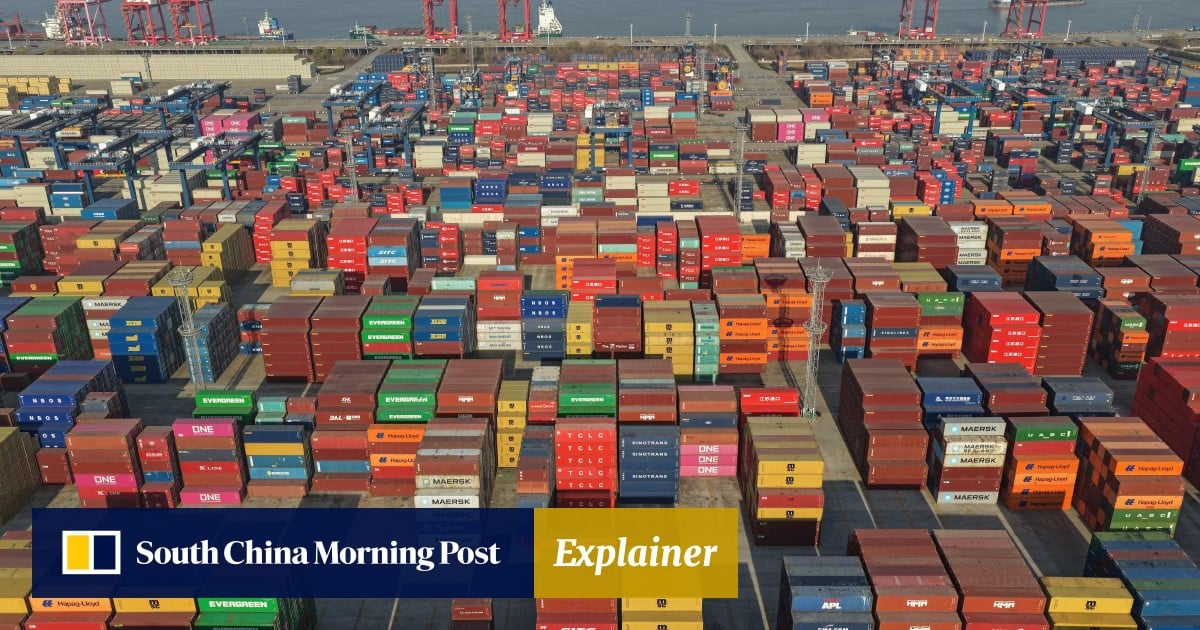
Despite a slowing economy, recurring trade frictions and intensifying price competition, the value of China’s exports rose in 2025 by 6.1 per cent, year on year, to a record 26.98 trillion yuan (US$3.87 trillion) – cementing its position as the world’s largest trading nation.
Behind that growth, China’s export machine is increasingly being shaped by coastal concentration and industrial upgrading, with market diversification cushioning external shocks at the cost of weaker prices and thinner margins.
How has China’s export landscape changed?
Export momentum remains highly concentrated in a handful of coastal manufacturing provinces and municipalities. Guangdong retained its position as China’s largest exporting province, with shipments reaching 6.03 trillion yuan in 2025, followed by Jiangsu and Zhejiang.
Advertisement
While traditional contract manufacturing and industries heavily reliant on a single overseas market faced mounting pressure, exports of electromechanical equipment, new energy products, high-end manufactures and intermediate goods remained relatively resilient.
Advertisement
In 2025, hi-tech exports grew by 13.2 per cent, year on year, contributing 2.4 percentage points to overall export growth. Exports of specialised equipment rose by 20.6 per cent, those of high-end machine tools were up 21.5 per cent, and industrial robots registered an increase of 48.7 per cent, according to customs data, with production and exporters concentrated in Guangdong, Jiangsu, Zhejiang and Shanghai.