
This post was originally published on this site.
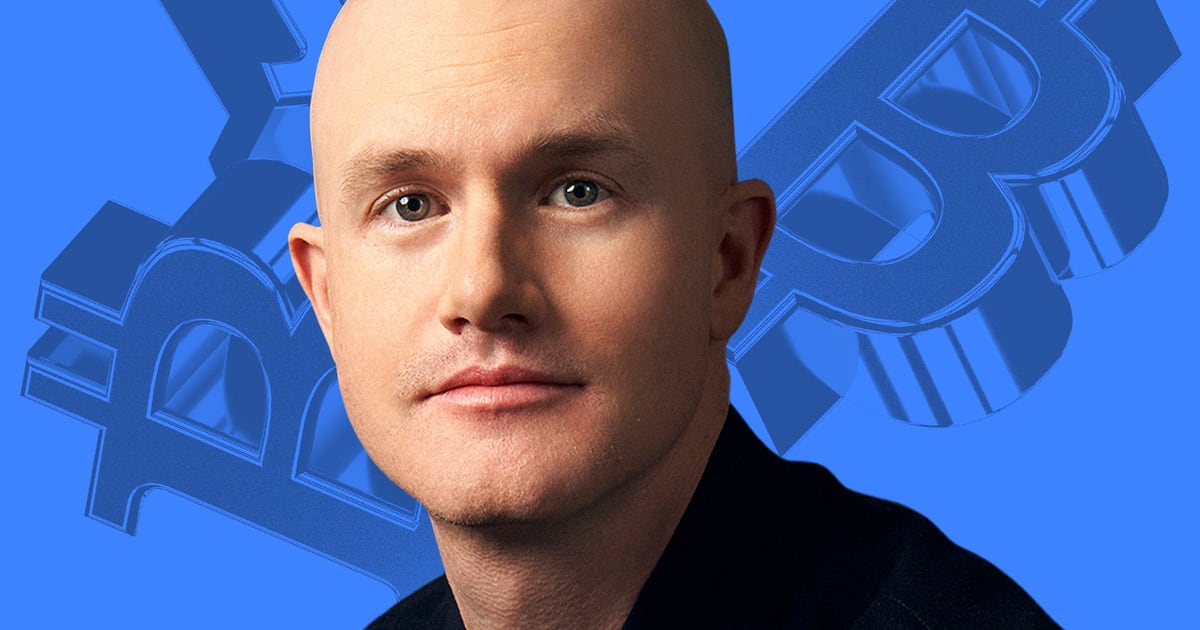
- Coinbase CEO Brian Armstrong butted heads with the head of the French central bank over trust in Bitcoin and fiat currencies.
- Armstrong said Bitcoin serves as a check and balance against deficit spending.
- The quarrel exposes a fundamental chasm between central bankers and crypto advocates.
What is Bitcoin’s role in the global monetary system?
That question sparked a tense exchange between Coinbase CEO Brian Armstrong and French central bank governor François Villeroy de Galhau at the World Economic Forum in Davos, Switzerland this week.
“Bitcoin is the greatest accountability mechanism on deficit spending,” said Armstrong.
“If we lose public control over money, you lose a key function of democracy,” returned Villeroy.
The rapid-fire exchange between Armstrong and Villeroy de Galhau at Davos exposed a fundamental rift between Bitcoin hardliners and proponents of the existing system: who should control money in the 21st century?
At the core of the debate was the question of whether Bitcoin can coexist with — or directly replace — traditional fiat currencies controlled by central banks. A fiat currency is government-issued money, like the dollar or the euro, that derives its value from state decree.
The skirmish reflects a growing global tension over who should control money in an era of persistent inflation, rising debt, debasement fear, and the US’ increasingly frequent weaponisation of its financial dominance.
While policymakers in advanced economies continue to frame inflation as a temporary deviation from their stated target, hundreds of millions of people live under double-digit inflation, capital controls, or unstable currencies — conditions that make Bitcoin’s fixed supply and censorship resistance less ideological and more practical.
Defenders of the existing financial system, meanwhile, counter that government-issued money is designed to be flexible. Central banks exist to manage crises, stabilise economies, and act as lenders of last resort, all of which are roles that a rules-based protocol cannot perform.
Check and balance
For Armstrong, Bitcoin has plenty of good to serve people who struggle financially around the world.
“Bitcoin is good as a check and balance on deficit spending because when there is a lack of trust or people are worried about inflation — maybe in places like Argentina or Turkey or Nigeria — they are going to flee to the thing that they believe is going to store value more,” Armstrong said.
In Argentina, the country recorded a 31% inflation rate in 2025. Still high, it’s a considerable drop from the nation’s hyperinflationary experience before President Javier Milei took office in 2024.
Turkey’s inflation rate came in at around 30% in 2025, while Nigeria had a 15% inflation rate.
With their ability to issue money as they please, those figures are likely to remain high — and damaging to citizens, Armstrong argued.
“Bitcoin doesn’t have a money printer. The supply is fixed and people will go to it in times of uncertainty kind of like they did with gold,” Armstrong said.
Democracy vs decentralisation
Villeroy rejected the premise entirely.
“I am a bit sceptical about this idea of the Bitcoin standard,” Villeroy said. “We left the gold standard. But the gold was only a technical mean. What is important is that monetary policy and money is part of society and we live in democracies and I think the public role is key.”
He warned that losing public control over money threatens democratic governance.
“Sorry to say that I trust more independent central banks with a democratic mandate than private issuers,” Villeroy said.
Villeroy failed to point out one minor detail: around the world, governments are attempting to put pressure on central banks, weakening that independence he referred to.
Take the US. President Donald Trump has repeatedly tried to goad Federal Reserve chair Jerome Powell into resigning in order to install someone who will push to lower interest rates more aggressively.
But Armstrong quickly corrected him: “Bitcoin is a decentralised protocol. There’s actually no issuer of it. There’s no country or company or individual who controls it in the world.”
He then turned Villeroy’s independence argument against him.
“In the sense that central banks have independence, Bitcoin is even more independent,” Armstrong said.
Pedro Solimano is aDL News’markets correspondent based in Buenos Aires.Got a tip? Email them atpsolimano@dlnews.com.