
This post was originally published on this site.
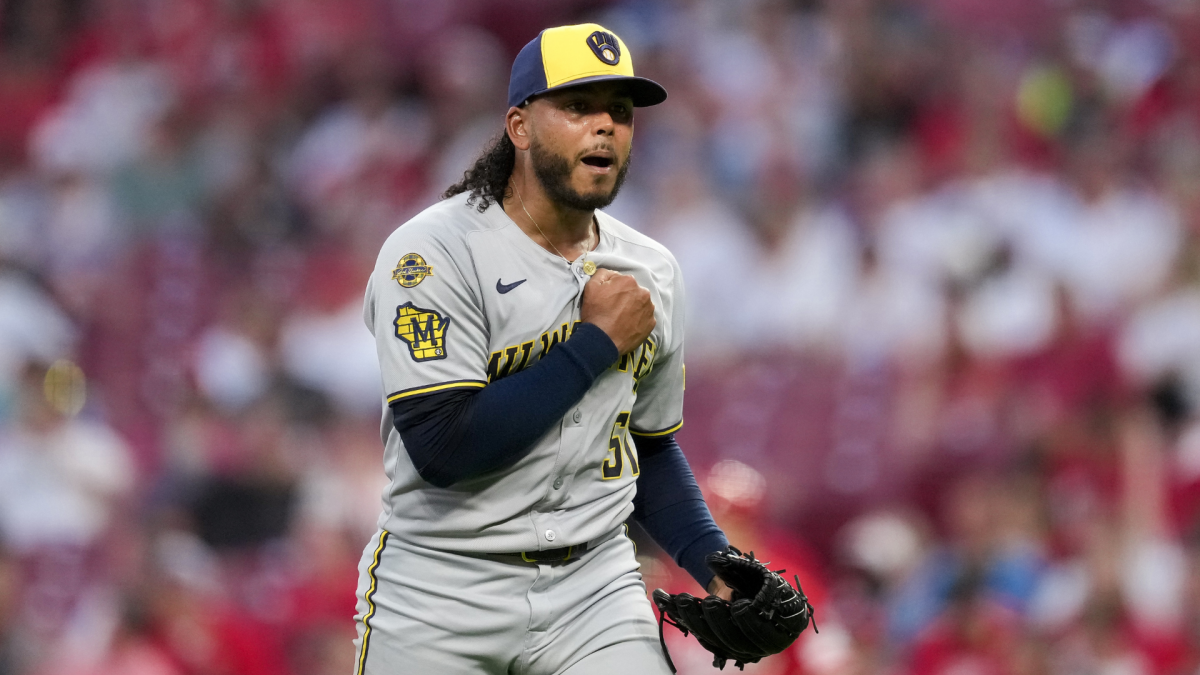
The New York Mets and Milwaukee Brewers have agreed to a four-player trade headlined by right-handed starter Freddy Peralta. The Brewers will net two prospects in return, in right-hander Brandon Sproat and utility player Jett Williams, while the Mets receive an additional big-league piece in the form of right-handed pitcher Tobias Myers.
As is the case whenever a notable trade happens during Major League Baseball’s offseason, I’m here to break down the deal from all angles. That means providing analysis on every player changing hands, as well as passing judgement in the form of a letter grade assigned to each side. The letter grade, it should be noted, is the least important part of the exercise and should be treated as such.
Before getting to the fireworks factory, here once again is the deal in its entirety:
- Mets receive: RHP Freddy Peralta, RHP Tobias Myers
- Brewers receive: OF/INF Jett Williams, RHP Brandon Sproat
Let’s proceed.

Mets grade: A
This is another easy trade to like for the Mets, their second in 24 hours after they obtained outfielder Luis Robert Jr. in a no-brainer swap with the Chicago White Sox late Tuesday. In essence, the Mets landed a season of an above-average starter and a depth arm without moving anyone from their big-league roster or the tippy-top of their farm system.
Peralta, 29, is coming off the best season of his career. In 33 starts, he managed a 2.70 ERA (154 ERA+) and a 3.09 strikeout-to-walk ratio. He earned his second All-Star Game designation and his first Cy Young Award consideration. Should he revert to his prior form, his 111 ERA+ would still have ranked third among Mets pitchers with at least 10 starts. Peralta needn’t maintain last year’s output to be a welcomed addition to a New York rotation that should feature some combination of blossoming star Nolan McLean, David Peterson, Kodai Senga, Clay Holmes, and Sean Manaea.


Peralta conducts his business with a four-pitch arsenal: a mid-90s fastball that features more cutting action than you’d expect; a changeup that he’ll deploy versus both hands; and two breaking balls (a slider and curveball). It’s a quality arsenal, if one that he can struggle to command. He threw a below-average frequency of strikes last season, which helps explain why he’s never been a big inning compiler — his 176 innings last year represented a new personal best. Peralta makes it work anyway because he’s adept at missing bats and suppressing hard contact. (He ranked in the 83th percentile in whiff rate last season and in the 80th percentile in average exit velocity.)
Whether or not the Mets are willing to pony up to keep Peralta in town beyond 2026 is to be seen. At minimum, they should be able to recoup draft-pick compensation if he walks.
Myers, 27, is a well-traveled right-hander who logged nearly 190 innings of 132 ERA+ ball for the Brewers over the past two seasons. He’s not big and he doesn’t throw particularly hard (his fastball sits around 93 mph), but he gets far down the mound and throws from a steep arm angle to create an odd visual. Myers has four pitches he leaned on last year: the aforementioned fastball (which generates nearly 20 inches of induced vertical break, albeit from a six-foot release height), a cutter and slider tandem (the slider features more downward action), and a splitter/changeup that led his repertoire in whiff rate.
Peak Myers throws a lot of strikes and avoids scary fly ball outcomes despite generating about 37% ground balls. He wasn’t as effective dodging barrels last season, with his hard-hit percentage increasing from 38.7% to 44.8%. He has a minor-league option remaining, and that, plus his experience as both a starter and reliever, should make him a useful depth piece for the Mets.

Brewers: B
This is what the Brewers do. They take impending free-agent pitchers and convert them into package deals, usually involving an unheralded, if near-ready player. They usually get more mileage than expected from that player too. They did it with Joey Ortiz in 2024 (after netting him in the Corbin Burnes trade) and they did it with Caleb Durbin last year (following his inclusion in the Devin Williams deal). That doesn’t ensure the Brewers will succeed with either Sproat or this other Williams, but it does suggest their front office has a handle on how to successfully navigate these situations.
With that established, you can make the case this return is light and that they should be docked a grade. Not accessing the tip-top of the Mets system despite Peralta’s low salary ($8 million) and Myers’ inclusion is tough. Would Milwaukee have been better off keeping Peralta, maximizing their World Series chances in 2026, and then netting a draft pick at year’s end? Maybe so. The math would seem to support the approach the Brewers took, though, especially if you’re not sold on them again being the best team in the majors.
There’s a funny incongruity between Williams’ basic biographical data (he’s a 5-foot-7 up-the-middle defender with speed) and his offensive game. You would be within reason to guess that he’s all about putting the bat on the ball. You would also be wrong.
Williams, 22, has instead embraced the art of pulling and lifting the ball. That’s how he batted .261/.363/.465 with 17 home runs and 34 stolen bases split across the upper minors last season, all the while putting up pedestrian marks in exit velocity (86 mph in Triple-A) and hard-hit percentage (34.3%). Predictably, he swings and misses a fair amount, too. His 22% in-zone whiff rate would’ve finished beneath the MLB average by about four percentage points. Combined with an otherwise patient approach, he’s going to punch out a fair amount of the time against top-level pitchers.
Nevertheless, I ranked Williams as the 14th-best prospect in the National League East because of his bundle of skills. He’s going to walk, hit for power, steal bases, and play quality defense wherever the Brewers elect to plunk him down at. That’s a nifty player, no matter how much he defies expectation.


Sproat, 25, made his big-league debut last season, compiling a 4.79 ERA (85 ERA+) and a 2.43 strikeout-to-walk ratio in four games. In 26 prior Triple-A appearances, he had notched a 4.24 ERA and a 2.13 strikeout-to-walk ratio. He would’ve appeared in my aforementioned ranking of the top 20 NL East prospects were it not for the Miami Marlins‘ late acquisition of outfielder Owen Caissie.
Sproat is a hard-throwing right-hander (his average four-seamer checked in at 96 mph in the majors) with a whippy arm action and a broad arsenal. To wit, he showed six pitches last season — that’s two fastballs, a changeup, and three breaking balls — and everything averaged 80 mph or harder. His fastballs aren’t particularly impressive, velocity aside, and he’s battled his command of them. He has shown a feel for placing his breaking balls in the zone, however, allowing him to steal strikes.
Sproat feels like a back-end starter, or maybe even a reliever to me in his present form. Few teams are better at meeting their players’ strengths and extracting a little extra from them in turn than the Brewers. Whether or not they can pull off with Sproat what they did with, say, Quinn Priester last year is to be seen. But I’ll allow for the possibility that there’s a little chicken left on the bone, with a big-league floor remaining in place all the same.