
This post was originally published on this site.
COLUMBUS, Ohio — A recent change in state law now permits high school students in Ohio who work in school credit union or bank branches to receive academic credit toward their required financial literacy graduation course, highlighting the state’s expanding focus on practical money management skills for young adults.
The legislative change, included in the state budget that passed in June, supports a growing national trend recognizing the importance of financial education. Some credit unions have been running public and private school branches for years.
READ MORE: Budding entrepreneurs: High school finance lessons blossom for brothers into business success
Ohio is one of 30 states that now requires a semester-long financial literacy class for high school graduation, a requirement that took effect three years ago.
This push toward mandatory financial education reflects a national rise from only 9% of high school students receiving such instruction in 2017 to 73% today, according to the National Endowment for Financial Education.
READ MORE: Financial literacy now required in 30 states, including Ohio, for high school graduation
The following are five key takeaways from the focus on financial literacy and the recent legislative change in Ohio:
1. State law now grants credit for in-school banking work
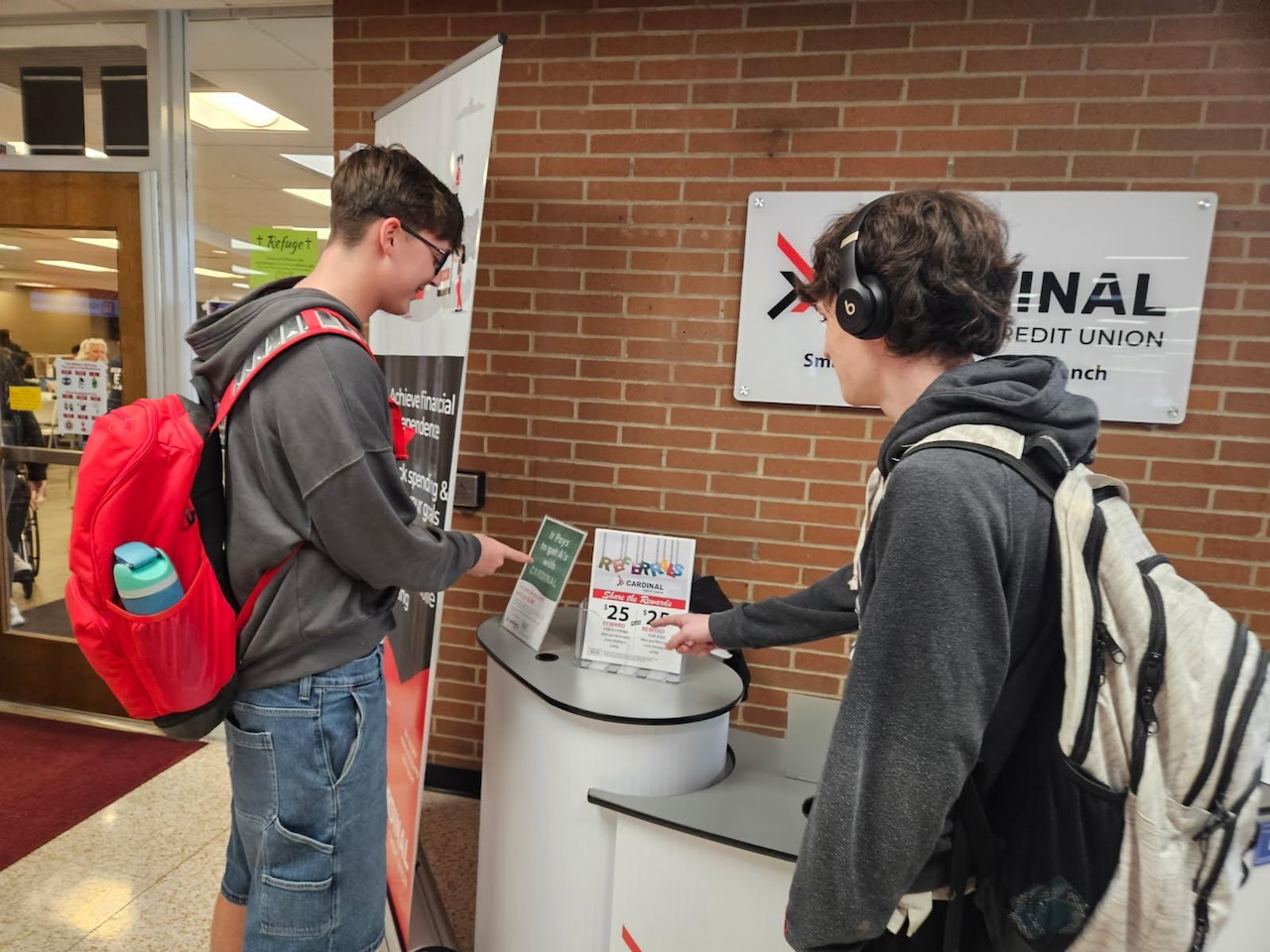
The state budget passed in June permits high school students who work in school-based branches of banks or credit unions to earn credit toward their mandatory financial literacy graduation requirement. The Ohio Credit Union League is working with officials at the Ohio Department of Education and Workforce to figure out what that policy will look like.
2. Financial education is new and part of a national trend
Ohio’s mandate for a semester-long financial literacy course is new, beginning with students who entered high school in the summer of 2022. This aligns with a significant national increase in required financial education, driven by recognition that students need a baseline knowledge—covering topics like budgeting, debt, credit and fraud—to navigate complex financial choices after graduation.
3. Credit unions lead practical instruction and branch operations
Northeast Ohio institutions, including Cardinal Credit Union and Theory Federal Credit Union, have been operating in-school branches and providing financial literacy curriculum to students for years. Students who volunteer at these branches gain practical experience by performing basic banking activities such as making deposits, withdrawing funds and processing loan payments. Cardinal Credit Union, for example, operates five high school branches.
4. Safe practice environment promotes learning through mistakes
To enhance learning, some credit unions deposit small amounts of money in student accounts, allowing them to practice managing funds, writing checks, and making transactions in a safe, low-stakes environment. Michael DeSantis, educational finance coordinator for Cardinal Credit Union, noted that this allows students to “afford to make minor mistakes” as part of the learning process.
5. Foundational knowledge has already spurred entrepreneurial success
Former students who took these financial literacy courses have cited the instruction as foundational to their later success. Derek and Dominik Zirkle, 24-year-old twins who took a Theory Federal Credit Union course at Madison High School, used the financial principles to launch their honey wine business, D & D Meadery, in 2024. The business now distributes to more than 300 retail locations, and the twins credit the class with giving them the “foundations to begin the journey.”