
This post was originally published on this site.
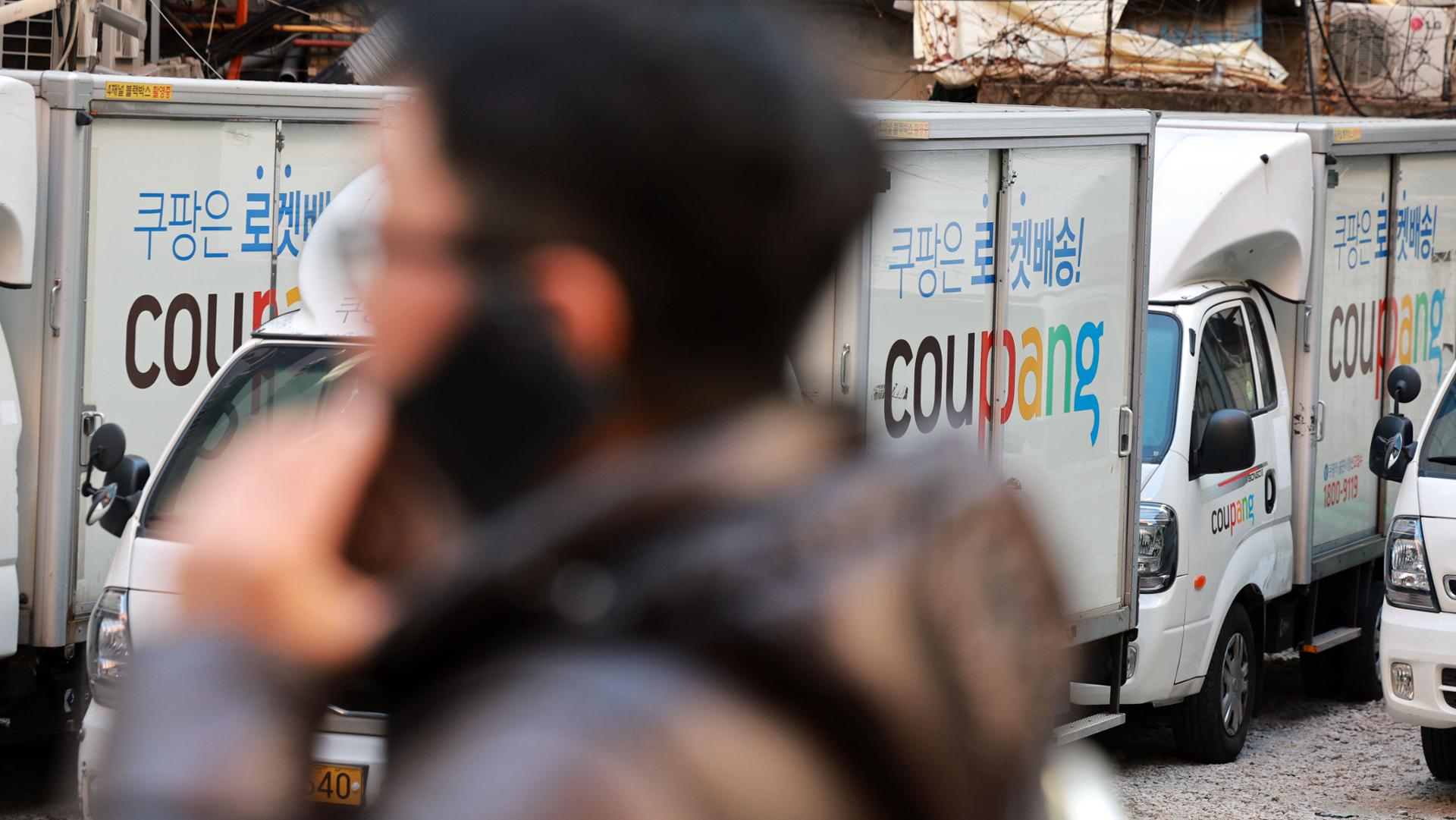
Delivery trucks are parked at a Coupang logistics center in Seoul, Thursday. Yonhap
Naver, SSG.com and other e-commerce platforms are stepping up collaborations, revamping membership programs and enhancing delivery services as they move to attract consumers seeking alternatives amid signs of user departures following a massive data breach at Coupang, industry officials said Friday.
The domestic e-commerce market has been led by Coupang with a 22.7 percent share of last year’s revenue, followed by Naver at 20.7 percent, Gmarket and Auction at 8 percent each and SSG.com at 3 percent, according to the Ministry of Data and Statistics.
Coupang, which specializes in the next-day delivery of groceries and daily necessities, revealed on Nov. 29 that the personal information of 33.7 million customers — nearly all of its users — had been leaked, including names, contact information and delivery histories. The scale of the breach means the data of 3 out of every 4 adults in Korea was exposed.
In response, users have expressed alarm, with some considering leaving the platform and others preparing to join class-action lawsuits against the U.S.-listed firm.
Industry watchers expect most departing users to shift to Naver, Coupang’s main rival in the domestic market.
Coupang has long relied on a lock-in strategy by bundling delivery, grocery shipping and streaming content within its ecosystem.
Naver is rapidly narrowing the gap by teaming up with Kurly, an online marketplace specializing in groceries and known for its dawn-delivery service, and launching Kurly N Mart in September, strengthening its fresh-food offerings and directly challenging Coupang’s Rocket Fresh service.

Naver launched Kurly N Mart, a premium grocery shopping service on Naver Plus Store, in partnership with Kurly, Sept. 4. Courtesy of Naver
A Naver official said that more than 80 percent of Kurly N Mart users are already Naver Plus subscribers, signaling that Naver’s own lock-in effect is taking hold. Additional perks, including partnerships with streaming platforms like Netflix, further enhance the appeal of its membership program.
SSG.com, Shinsegae Group’s online shopping platform, is also working to attract new users by overhauling its membership offerings. The company has strengthened its competitiveness through Emart’s store network and is expanding areas eligible for pre-7 a.m. delivery.
Another e-commerce platform, 11st, is growing its customer base through a free membership program that offers monthly discounts and reward points when linked to family bundles. The service has amassed 1.2 million subscribers within a year of its launch.
According to industry tracker IGAWorks, Coupang’s daily active users stood at 17.78 million on Tuesday, down slightly from 17.98 million the previous day, marking the first daily decline since the e-commerce giant disclosed the data breach.
Expectations that competitors like Naver will benefit if Coupang’s user departures materialize have pushed CJ Logistics’ share price to its highest level in a year.
According to the Korea Exchange, CJ Logistics closed at 101,300 won ($69) on Wednesday, up 8.46 percent from the previous day and hitting a new 52-week high, though the shares inched down 1.81 percent Friday to close at 97,500 won. The KOSPI rose 1.78 percent to finish at 4,100.05.
Unlike Coupang, which operates its own delivery network, rival e-commerce platforms rely on contracted couriers such as CJ Logistics to handle shipping.

A CJ Logistics truck and a delivery person / Courtesy of CJ Logistics
Choi Go-un, an analyst at Korea Investment & Securities, said CJ Logistics’ share price is “more sensitive to developments at Coupang than to the retail sector as a whole,” adding that Korea’s largest logistics company is poised to benefit from the fallout of the breach.
Oh Jeong-ha, an analyst at Daol Investment & Securities, said CJ Logistics could see a significant increase in parcel volume if even a fraction of customers preparing a class-action lawsuit against Coupang shift to the company.
“As of Wednesday morning, if about 1.5 percent of the members organizing the lawsuit were to move to CJ Logistics’ client companies, the firm could see about a 4 percent increase in volume,” Oh said.