
This post was originally published on this site.
Building a fully functional eCommerce app used to require massive budgets, long development cycles, and highly specialized teams. Today, open-source tools have transformed the landscape by making feature-rich development faster, more affordable, and far more flexible. With readily available frameworks, libraries, and community-backed platforms, developers can create robust shopping applications that match modern user expectations. From seamless checkout experiences to secure payments and scalable backend systems, open-source solutions play a key role in shaping the architecture of digital commerce.
Open-source technologies offer transparency, enabling businesses to inspect, modify, and optimize the source code depending on their needs. This freedom eliminates vendor lock-ins, provides cost benefits, and encourages rapid innovation. Whether you’re building a small online store or a large-scale enterprise system, open source provides the building blocks to create high-performing, scalable, and secure solutions.
As businesses continue improving their digital presence, many teams rely on open-source frameworks to accelerate Ecommerce App Development while reducing overhead expenses. These tools help streamline processes, automate repetitive tasks, and ensure stable performance across both web and mobile platforms.
Why Open Source Tools Matter in eCommerce Development
Open-source solutions provide unmatched flexibility. You can tweak the UI, modify backend functions, or integrate custom APIs depending on your business model. For startups, they lower entry barriers by offering high-quality resources without licensing fees. For enterprises, they offer deeper customization and unlimited scalability.
Another major benefit is community support. Most open-source frameworks have millions of users, contributors, and documentation resources to help resolve technical challenges quickly. This results in faster development and continuous platform improvements, which positively impact security and performance.
Midway through the development lifecycle, many organizations choose to collaborate with an experienced ecommerce app development Company to ensure their app is built using optimized tools and follows industry best practices. These companies leverage open-source ecosystems to deliver stronger, more reliable digital commerce solutions.
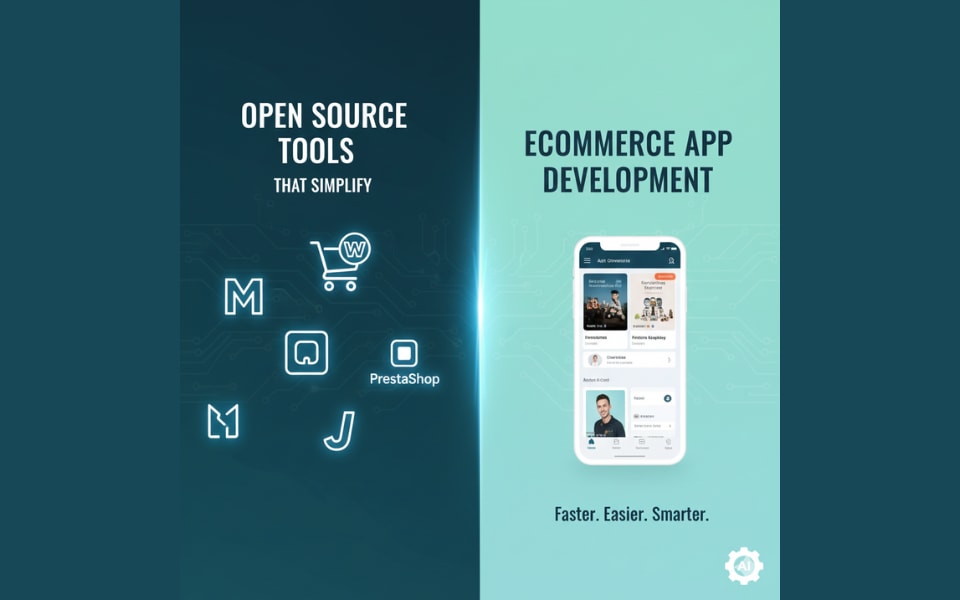
Top Open Source Tools That Simplify eCommerce App Development
1. Magento Open Source
Magento is one of the most powerful open-source eCommerce platforms. It offers advanced product management, checkout customization, and scalability fit for enterprise-grade solutions. Developers often choose Magento for its flexible architecture and ability to handle large stores with thousands of SKUs.
2. WooCommerce
Built on WordPress, WooCommerce is perfect for small and mid-sized online stores. It’s lightweight, customizable, and supported by an extensive marketplace of plugins and themes. It remains the top choice for businesses wanting a fast, low-cost launch.
3. React Native
For mobile commerce apps, React Native is a game-changer. This open-source framework allows developers to build cross-platform apps for iOS and Android using a single codebase. It improves speed, maintains app performance, and reduces development costs.
4. Flutter
Flutter has become widely popular for shopping app interfaces. With its rich widget library, beautiful UI capabilities, and fast rendering engine, developers can build visually appealing and smooth-running mobile apps in less time.
5. Node.js
Node.js is essential for building real-time, scalable backend services. Its event-driven architecture ensures fast processing—ideal for handling large traffic spikes during sales events or holiday bursts.
6. Django
Django is a secure, high-level Python framework designed for building scalable eCommerce systems. It includes built-in admin dashboards, user authentication, and database support, making it easy to set up complex applications quickly.
7. PostgreSQL
Reliable databases are crucial for storing customer data, inventory, transaction histories, and more. PostgreSQL is an open-source relational database known for stability, extensibility, and powerful indexing capabilities—essential for large stores.
8. ElasticSearch
Search functionality directly affects user experience in shopping apps. ElasticSearch allows instant search results, real-time filtering, category suggestions, and improved product discovery.
Benefits of Using Open Source Tools in eCommerce Development
Cost Efficiency
Open-source eliminates expensive licensing fees. Whether you’re building storefront features or integrating payment options, most tools are free, reducing total project costs significantly.
Rapid Development
Tools like Laravel, Django, and React streamline coding processes through ready-made modules, allowing developers to launch products faster. Speed matters in competitive markets, and open-source tools enable quicker iteration cycles.
Customizability
Every eCommerce business is unique. Open-source solutions offer full customization of UI, API logic, payment features, and backend workflows, giving companies flexibility to innovate freely.
Scalability
As your customer base grows, your digital infrastructure must adapt. Open-source platforms like Magento, Node.js, and PostgreSQL are highly scalable and ideal for growing businesses.
Security
Because thousands of developers inspect and update open-source projects, bugs and vulnerabilities are detected and patched frequently. This continuous improvement ensures strong protection against cyber threats.
How Open Source Supports Advanced eCommerce Features
Today’s eCommerce apps require much more than product listings. They need real-time notifications, order tracking, AI-powered search, dynamic pricing, and seamless checkout systems. Open-source tools make building these capabilities smoother.
For example:
- AI and Recommendations: TensorFlow & PyTorch
- Real-Time Notification Systems: Firebase alternatives like Appwrite or Supabase
- Payment Integrations: Open-source libraries for Stripe, Razorpay, PayPal
- Backend Automation: Celery, RabbitMQ, or Redis
- Content Delivery: NGINX, OpenLiteSpeed
These tools empower developers to deliver smooth user experiences that feel premium, modern, and highly optimized.
Who Should Use Open Source Tools?
Open-source is ideal for:
- Startups seeking fast launch and low budgets
- Small businesses wanting customization
- Enterprises requiring advanced scalability
- Developers building multi-platform shopping apps
- Companies migrating from legacy systems
Regardless of business size, open-source solutions provide a strong foundation for modern digital commerce.
Conclusion
Open-source tools are reshaping the way eCommerce applications are built. Their flexibility, community-driven innovation, strong security frameworks, and cost-effectiveness make them an invaluable asset for developers and businesses alike. Whether you’re designing a new marketplace, improving user experience, or modernizing backend systems, open-source frameworks and libraries can significantly streamline development and enhance performance.
From UI components to payment APIs, database engines to search tools, open-source ecosystems support every stage of app development. As businesses strive to deliver fast, user-friendly, and scalable solutions, these technologies offer a dependable path forward. For companies planning to expand their digital sales channels, open-source platforms provide a future-ready foundation backed by global contributions and continuous improvements. Modern shoppig app development services rely heavily on this ecosystem to build powerful, adaptable, and innovative eCommerce experiences that meet evolving customer expectations.