
This post was originally published on this site.
COLUMBUS, Ohio — Ohio is among 30 states that require a semester-long financial literacy class for high school graduation.
Students in financial literacy learn about saving, building credit, debt, budgeting and fraud.
As with many states, Ohio’s financial literacy requirement is new, taking effect for students who entered ninth grade on July 1, 2022.
Nationally, 73% of high school students will have received financial literacy education before they graduate, according to an August report by the National Endowment for Financial Education.
This is up from only 9% of high school students in 2017, the organization said.
But in recent years, state legislatures have increasingly passed laws requiring students to obtain financial literacy, recognizing the complex financial choices teens face as they graduate and enter adulthood, according to the Council for Economic Education.
From budgeting and managing debt, to banking and fraud prevention and understanding the economy, students need a baseline of knowledge to navigate their financial futures, the council stated in a 2024 report.
States of all political stripes are requiring financial literacy to graduate, according to the National Endowment for Financial Education, including Ohio’s neighbors: Michigan, Indiana, Kentucky, West Virginia and Pennsylvania.
In the state budget the General Assembly passed in June, lawmakers made a change to financial literacy, permitting students who work in public and private school-based branches of credit unions to earn credit toward their graduation requirement.
Read More: Budding entrepreneurs: High school finance lessons blossom for brothers into business success
Some credit unions have run school branches for years, as well as offer financial literacy education.
The push for financial education is already helping former high school students who used the foundational knowledge to launch businesses.
In Lake County, twins Derek and Dominik Zirkle relied on the financial literacy education they received at Madison High School, provided in part by Theory Federal Credit Union, to start D & D Meadery, a honey wine business that opened in 2024 and distributes to more than 300 retail locations.
The class provided the Zirkle twins, now 24, “the foundations to begin the journey,” Dominik Zirkle said. The twins began their business by using their savings, living leanly and reinvesting profits. They sought help from a Theory certified financial counselor who had previously visited their high school class.
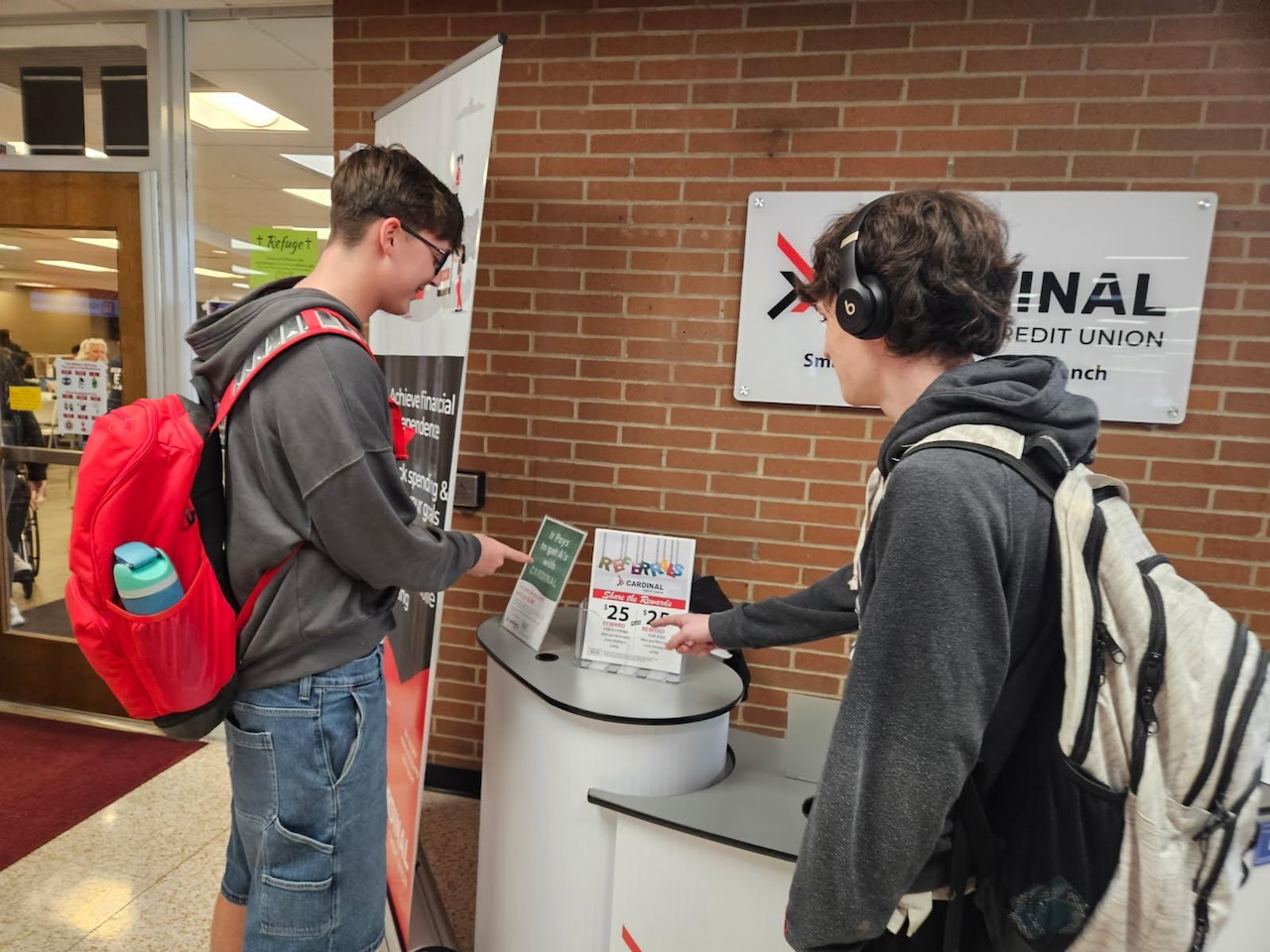
Lake County-based Cardinal Credit Union has run school branches for years.
A Cardinal employee runs the branches, but students can volunteer as tellers to gain hands-on experience, performing activities such as making deposits, withdrawing money and paying loans.
Credit unions, including Cardinal, deposit small amounts of money into student accounts so students can practice moving funds, writing checks, and making mistakes in a safe environment.
This allows them to “afford to make minor mistakes,” said Michael DeSantis, Cardinal’s educational finance coordinator.