
This post was originally published on this site.
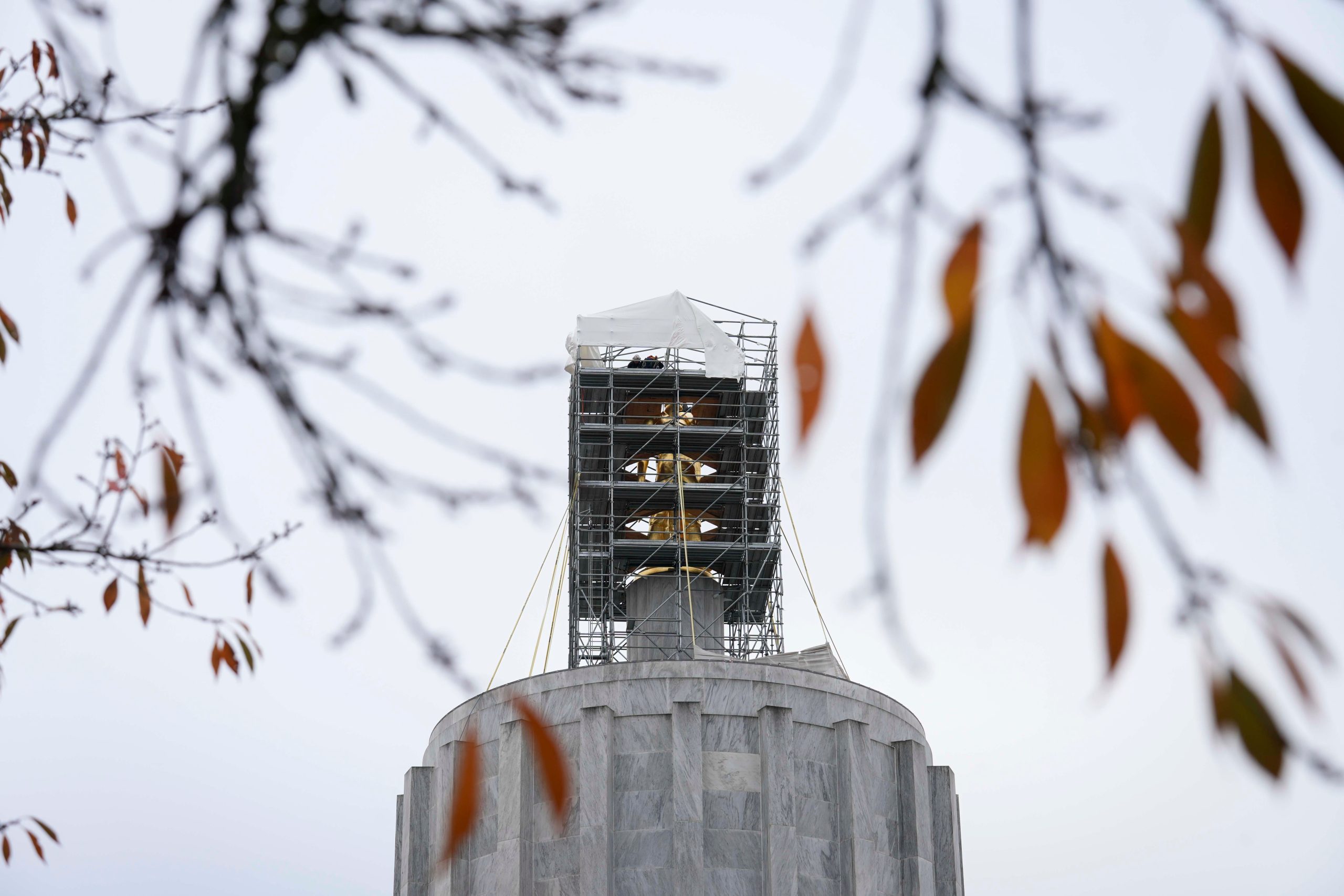

Video shows iconic Gold Man after regilding at Oregon State Capitol
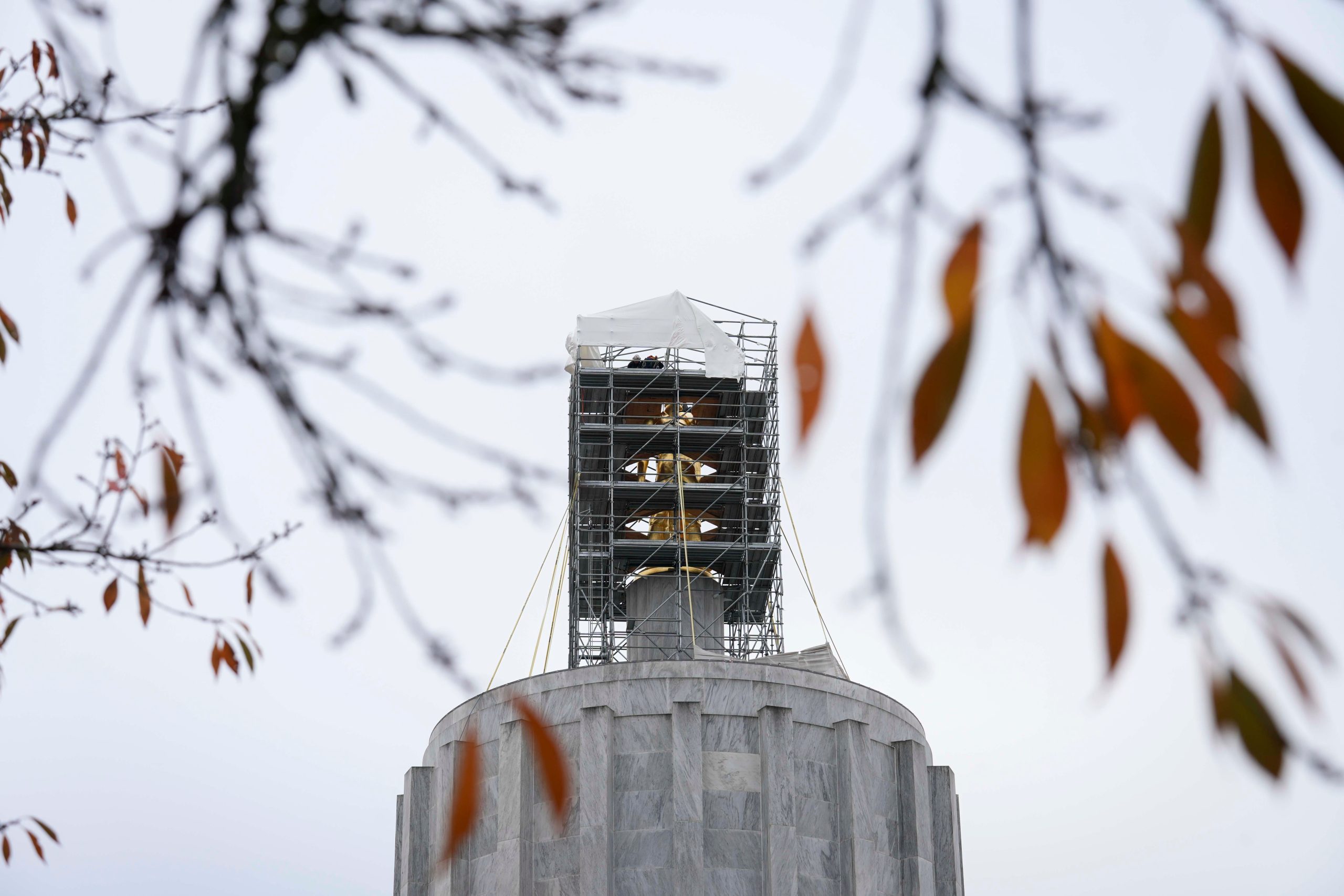
The iconic Gold Man at the Oregon State Capitol was last gilded in 2000. Work to refresh the statue was part of the ongoing CAMS project.
Overhauling Oregon’s campaign finance system could require a quarter million dollars to meet the Jan. 1, 2027 deadline when changes to the state’s contribution limits are set to begin.
The Secretary of State’s Office requested $25 million as a placeholder to replace the current campaign finance system, ORESTAR, as part of implementing a sweeping 2024 campaign finance reform bill, Oregon Secretary of State Tobias Read said.
“ORESTAR was not built for this new era and it cannot implement House Bill 4024 as intended,” he said.
The legislation includes new limits on contributions, including capping individual spending on statewide candidates each cycle at $3,300, and other changes. Parts of the bill are set to go into effect in 2027 and 2028.
Oregon is one of a handful of states that does not have limits on individual or corporation contributions. HB2024 changes that.
The Secretary of State’s Office is seeking additional clarifications from the legislature on the bill in order to finalize what is needed in a new system. The challenge of finding a contractor able to create the needed system and meet the state’s timeline could limit the state’s ability to negotiate a lower price than $25 million.
“The $25 million is our best guess,” Read said.
The bill takes Oregon’s campaign finance “from zero to 100,” Read told the Senate Interim Committee On Rules and Executive Appointments Jan. 13.
Read said the new system will need to be able to collect contributor information and carry out the new limits and committees by the end of the year.
Read highlighted concerns with the legislation’s ambiguity and implementation timeline in June 2025. A bill amendment that would have given the state until 2030 and 2031 to start the new limits did not pass in the 2025 session.
Additional clarification on terminology and intentions for some aspects of the legislation is needed to prevent potential legal issues and confusion on the bill, the Secretary of State’s Office said.
To meet the bill’s timelines, lawmakers will need to hammer out those details in the upcoming legislative session, where they will be busy tackling other issues, like transportation and the state budget.
The Secretary of State’s Office would then be able to use those updates to narrow their funding request and ask for that amount before the end of the five week session, Read confirmed.
“To avoid costly litigation and to make this program work, we need the legislature to resolve several core issues,” Read said.
Deputy Secretary of State Michael Kaplan requested the Joint Subcommittee on General Government recommend fulfilling the $25 million request.
The subcommittee ultimately voted to defer approving the funds until the 2026 session, which begins Feb. 2. Their recommendation goes to the Joint Interim Committee on Ways and Means for a decision on Jan. 15.
“We view this as the highest risk thing we’re working on right now,” Kaplan said.
The Secretary of State’s Office also requested $2 million to update the state’s voter registration database. The system is outdated and, as a result, is becoming more expensive to maintain, Kaplan said.
An additional request for $591,210 would support an administrative position for the Secretary of State’s office in the Capitol and digitization of business records.
The subcommittee voted to recommend Ways and Means approve both of those requests.
Anastasia Mason covers state government for the Statesman Journal. Reach her at acmason@statesmanjournal.com or 971-208-5615.