
This post was originally published on this site.
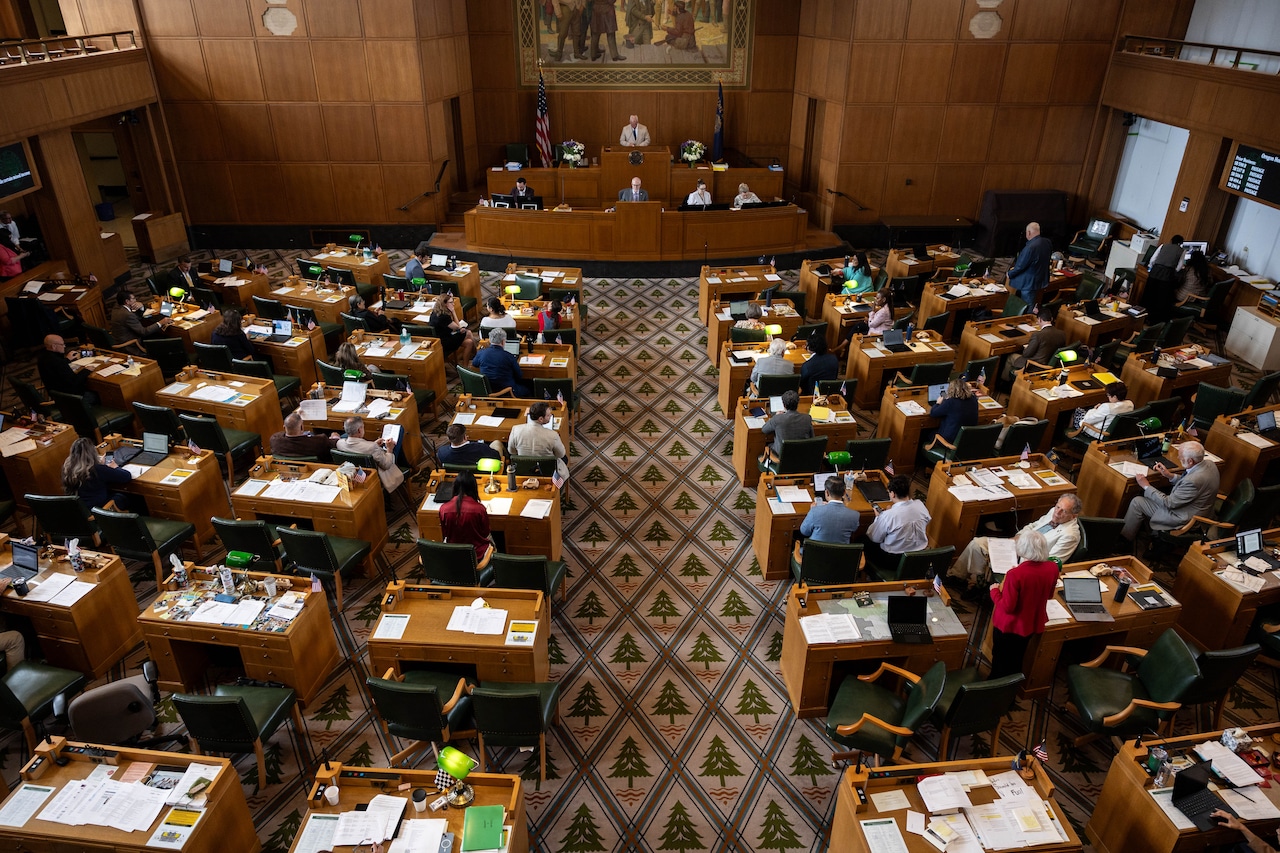
Multiple Oregon lawmakers of both parties have expressed support for delaying implementation of the state’s historic law that will limit political contributions and increase the transparency of spending in Oregon politics.
The Secretary of State’s Office has less than a year to stand up some of the key provisions of the law, which legislators passed in 2024 but haven’t revisited since despite promising to make technical fixes. Giving the agency more time, some lawmakers say, would help the state avoid a disastrous rollout of a revitalized system to limit, monitor and track political contributions.
“I think Oregonians would be appreciative of us being thoughtful about this and not rushing,” Rep. Thủy Trần, a Democrat from Portland, said Tuesday in a Joint Subcommittee on General Government meeting. “Because the voters don’t know how hard this project is, I think they would be appreciative of us taking our time and doing the project right.”
Top officials of the Secretary of State’s Office have requested $25 million from lawmakers in the upcoming five-week legislative session to keep the implementation of the law on track. But they have said that amount is only a “placeholder” estimate, largely because the agency has not yet hired a contractor to create some of the technological infrastructure required by the law.
Without further guidance and additional funding, agency officials have warned the rollout of the law could be botched. Oregon has a weak track record of standing up large technology-linked systems, most notably the state’s massive failure to launch the online health exchange Cover Oregon about a decade ago.
“The problem with this strategy is that we are short on time,” Deputy Secretary of State Michael Kaplan told lawmakers Tuesday. “But the law is the law. We are prepared to take more risk, enormous risk, to try and fulfill the deadline as it’s currently stated.”
As written, the law will limit the amount of money that political candidates, corporations, unions, individuals and other groups can give to each other starting in 2027, among other provisions. It will also require the state to maintain a comprehensive, modernized system to track political contributions between such groups starting in 2028.
It’s unclear whether lawmakers would delay the rollout of the entire law or only certain provisions that are set to go into effect next January. Campaign finance advocates have asserted that the Secretary of State’s Office doesn’t need additional funding or time to prepare the provisions that will take effect next year, while the agency has said that it does require more resources to ensure those provisions function as intended.
Lawmakers also have not to date considered alternatives to make implementation easier, such as adjusting Oregon’s law to require a system that more closely resembles campaign finance tracking systems already in use in several other states, such as Washington.
Since they passed the law in 2024, lawmakers have known that they would have to fund its implementation and address numerous technical inconsistencies and flaws. Yet they have taken no action on the law other than allocating about $5 million to the Secretary of State’s Office shortly after it passed.
In the final week of last year’s five-month legislative session, lawmakers briefly considered delaying some of the bill’s provisions. But they quickly nixed that proposal after receiving intense backlash from campaign finance reform advocates.
Secretary of State Tobias Read told a Senate committee Tuesday afternoon that delaying the required deadlines would almost certainly lower the cost of implementation because only a limited number of businesses will likely be willing to take on such an ambitious, high-stakes project in the narrow timeframe.
Any such delay would likely spark massive opposition from campaign finance reform advocates, who argue that the current deadlines have provided more than enough time for officials to prepare for the law’s implementation. They point out that some of the bill’s more technically-heavy provisions aren’t set to go into effect until 2028.
“Our top priority is to make sure we don’t have any delays in implementing what Oregonians want and deserve, which is stopping millionaires and billionaires from giving unlimited political contributions,” Jason Kafoury, a longtime campaign finance reform advocate, told The Oregonian/OregonLive last week.
Oregonians have long expressed support for restrictions on political spending. In 2020, voters with 78% approval passed Measure 107 to amend the state constitution to allow such limits, paving the way for the 2024 law.
With no campaign finance limits, Oregon has seen massive political contributions flow to candidates of both parties. For example, Read, a Democrat, raised nearly $1 million in 2024 while running for secretary of state. Sen. Christine Drazan of Canby, a Republican who proposed the delay in setting contribution limits last year, raised more than $22 million during the 2022 gubernatorial race that saw a record $70 million in spending.
A spokesperson for House Speaker Julie Fahey, a Eugene Democrat who led the process to pass the 2024 law, didn’t immediately respond to a request for comment regarding whether Fahey would support a delay. Gov. Tina Kotek’s office also didn’t immediately respond to a similar request.
The process by the Secretary of State’s Office to prepare the law’s implementation has been marked by inconsistent oversight and a lack of guidance from lawmakers.
One main reason that the agency hasn’t yet hired a contractor for the technology overhaul is because Read’s predecessor, LaVonne Griffin-Valade, had planned for the agency to carry out that work internally, agency officials say. It wasn’t until May of last year, five months after Read entered office, that agency staff determined they would have to hire an outside contractor to carry out the project. At that point, the agency laid off 13 employees who had been hired to undertake that assignment.
Making matters more complicated, the Secretary of State’s Office has not yet finished a months-long rulesmaking process that aims to address numerous inconsistencies and flaws in the law. The agency has warned that without legislative changes, the law could have severe unintended consequences, such as unfairly punishing Oregonians who unknowingly violate the law when making political contributions.
Several lawmakers from both parties Tuesday said they support delaying some of the law’s provisions. Lawmakers are preparing to tighten agency budgets and address projected budget deficits in the upcoming short session, and delaying the cost of implementing the bill could save them some money in the short-term and potentially the long-term.
“In my view, we would be wise to slow up and to figure out what the true environment is, give our secretary of state time to work through the issues that are before us,” said Rep. Greg Smith, a Republican from Heppner. “In my view, this is something we should be looking at in a future session, but not at this point.”