
This post was originally published on this site.
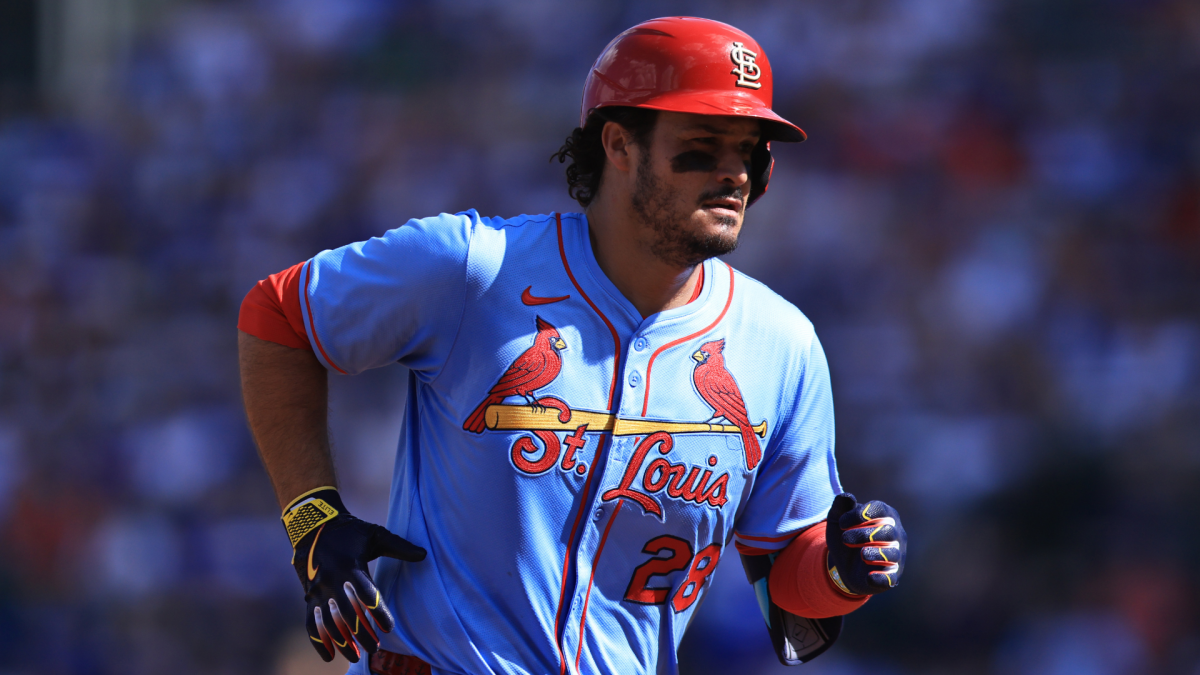
The St. Louis Cardinals continued their offseason retooling on Tuesday, agreeing to a trade with the Arizona Diamondbacks that sends third baseman Nolan Arenado back to the National League West. In exchange for Arenado and more than $30 million in cash considerations, the Cardinals received right-handed pitching prospect Jack Martinez, an eighth-round pick in last summer’s draft.
As is always the case here at CBS Sports, whenever a notable trade happens I pop up to provide my thoughts on every player involved in the deal. You’ll find those below, along with a letter grade that summarizes my general feelings on how each team fared. Please note that the grade itself is the least important part of the exercise and should be treated as such.
Nolan Arenado trade: Diamondbacks acquire former All-Star from Cardinals after lengthy saga
Dayn Perry
Before getting to the analysis, here’s the trade again in its entirety:
- Diamondbacks receive: 3B Nolan Arenado, $31 million in cash considerations
- Cardinals receive: RHP Jack Martinez
Let’s get to it.
Diamondbacks grade: A
Sure, why not?
Arenado, 34, is one of the most accomplished position players in the league. He’s an eight-time All-Star with 10 Gold Gloves and five Silver Sluggers to his credit. There’s a real chance that someday you’ll be able to visit Cooperstown and see his plaque. And while most of his story has been written and he’s no longer an impact-level talent, there’s just enough remaining to think this is a fine deal for Arizona.
The hot corner is a time machine for Arenado, who remains a skilled third baseman. He’s recorded at least five Defensive Runs Saved in 12 of his 13 big-league seasons and there’s no reason to doubt him improving on that mark in 2026. For reference, Arizona’s collection of third basemen checked in at minus-seven DRS last year, suggesting the Diamondbacks pitching staff should benefit from installing Arenado at the hot corner.


Where Father Time has collected rent from Arenado is at the plate. He continued his multi-year offensive descent last season, batting .237/.289/.377 with 12 home runs in 107 games. His 87 OPS+ represented the second-worst mark of his full-season career and his lowest figure since his rookie season in 2013. He continues to possess a good feel for contact, running a zone-contact rate north of 90% for a second year in a row, but he doesn’t hit the ball hard and he’s prone to expanding the plate.
Arenado also employs one of the longest swings in the majors, but he lacks the kinetic propulsion needed to hit for power. If there is a pathway for him to enjoy a rebound season at the plate, it’s to be found in the ballpark fit. Arenado is prone to pulling the ball in the air, something that ought to play better in his new ballpark. To wit, Arizona’s Chase Field has tied for the fifth-best offensive environment for right-handed batters over the last three seasons; St. Louis’ Busch Stadium ranks 20th.
That doesn’t guarantee anything, but it does provide Arenado with the opportunity to do his best impersonation of Isaac Paredes if he wants to find himself on the sunny side of the league-average offensive line again.
Even if Arenado just repeats last season this year and next, the Diamondbacks should walk away without much regret. They’re paying him low-leverage reliever money to serve as a placeholder until Jordan Lawlar (or another option) knocks him off the roster.
Cardinals grade: A
The most impressive part of Chaim Bloom’s first winter in charge of the Cardinals has been his ability to engender buy-in from ownership. This represents the third time he’s traded away a veteran player while including enough money to ensure a better return than he would’ve received otherwise. In fact, add the sum attached to Arenado with the nearly $30 million shipped out in the Sonny Gray and Willson Contreras deals and the Cardinals are within earshot of paying other teams’ players as much as the Miami Marlins ($73 million) will pay their entire 26-player roster in 2026.
History suggests that a lot of owners would rather either keep the players if they have to pay them anyway, or trade those players away for minimal returns in what amounts to a salary dump. The Cardinals have been able to net interesting pitchers in return, several of whom could pay immediate or near-immediate dividends as they continue their retooling process. That’s some nifty operating by Bloom and company to make it happen.
Martinez, 22, was picked in the eighth round last summer after splitting his collegiate days between Trinity, Louisiana-Lafayette, and Arizona State. In 15 starts, he compiled a 5.47 ERA and a 3.33 strikeout-to-walk ratio. He’s a well-built right-hander with good arm strength and some feel for secondary pitches. His delivery is messy, however, as he combines a long arm stroke with a tendency to land wide open, sometimes with his lead foot pointing toward first base. Predictably, that delivery has hampered his strikethrowing ability, resulting in him walking five batters per nine as an amateur.
Martinez spent most of his collegiate career in the bullpen and it’s probable that he returns there as a professional. The Cardinals can afford to give their player development staff some time and space to see what magic they can or cannot work with him. Truthfully, St. Louis did well to walk away with a player who has a non-zero chance at achieving a big-league future down the road.
Otherwise? Shedding Arenado creates more opportunity for internal options. The Cardinals will be better suited giving those at-bats to Nolan Gorman, Thomas Saggese, or even former first-round pick JJ Wetherholt, one of the top candidates to win the National League Rookie of the Year Award in 2026.