
This post was originally published on this site.
The Trae Young deal was the first major domino to fall this trade season, and with weeks remaining before the Feb. 5 deadline, more are sure to follow. But The Athletic NBA staff figured this was also a good time to look back instead of ahead.
We asked our staff for one trade each NBA team’s fan base would most likely want to undo. Their responses are below. (And to be clear, this list is far from comprehensive. For some teams, we had several options. If there are other deals not reflected that stand out to you, let us know in the comments.)
Advertisement
Atlanta Hawks
Steve Smith for Isaiah Rider, Jim Jackson (1999)
The Hawks won playoff rounds in 1996, 1997 and 1999 but inexplicably traded Smith to the Portland Trail Blazers for Rider after that last season and immediately cratered to 28 wins. Smith became a key starter for a 59-win Blazers team; Rider, the key returning player, was a locker room cancer who was waived before he completed a full season despite leading the team in scoring. — John Hollinger
Boston Celtics
Isaiah Thomas, Jae Crowder, Ante Žižić and a first-round pick for Kyrie Irving (2017)
Was Irving productive in Boston? Absolutely. Still, his short tenure burned down in a blaze of locker room drama. Irving wasn’t to blame for all of the dysfunction, but he didn’t help matters, either. Things couldn’t have looked more promising when he declared he would re-sign with the Celtics before his second season with the team, but he backed off that claim midway through the season and never stopped pointing his finger at his younger teammates. His tenure turned into a disaster. It’s a testament to the Celtics organization that they were able to turn the page and pull themselves back together after the damage of his second season. — Jay King
Brooklyn Nets
Gerald Wallace, Kris Humphries, Keith Bogans, MarShon Brooks, Kris Joseph, three first-round draft picks and a first-round pick swap for Kevin Garnett, Paul Pierce, Jason Terry, D.J. White (2013)
The Nets have had a few trades they’d probably want back. The James Harden deal, while an understandable bet, did not age well, for instance. But there is nothing that lives on in Nets lore quite like this deal. If not for the Thunder-Clippers SGA trade, it might be the worst ever in recent NBA history. The Nets traded three first-round picks and a pick swap to get the two aging Hall of Famers. All the Nets got out of the deal was one playoff series win. Pierce just played one year in Brooklyn. Garnett appeared in 96 games. It set the franchise back years and also helped build another title contender in Boston. The Celtics used the draft picks to select Jaylen Brown and Jayson Tatum, and they used another to acquire Irving. — Mike Vorkunov
Charlotte Hornets
Kobe Bryant for Vlade Divac (1996)
This was actually a surprisingly more difficult decision than you would expect for a trade that sent out Bryant. (The Hornets also drafted and then traded another future MVP — Shai Gilgeous-Alexander.) The Hornets selected Bryant with the 13th pick in 1996 and then traded him to the Los Angeles Lakers on draft night. Woof. And may I add: Oof. Vlade Divac was a salary dump in the deal by the Lakers; they needed to clear space to sign Shaquille O’Neal. When Divac found out about the proposed trade, he threatened to retire. Maybe the Hornets should have listened. Instead, they did it anyway. Divac played two seasons in Charlotte. Bryant won five NBA titles and is one of the greatest players of all time. — Mike Vorkunov
Advertisement
Chicago Bulls
LaMarcus Aldridge for Tyrus Thomas and Viktor Khryapa (2006)
Jerry Krause did some ungodly things once the sun set on Michael Jordan’s Bulls. But hindsight hasn’t been kind to John Paxson’s draft-night trade of Aldridge, whom Chicago originally took second overall in 2006. Aldridge became a five-time All-NBA player and a seven-time All-Star. Yes, of course, the butterfly effect exists, and a world where Aldridge blossoms into a franchise player in Chicago probably isn’t a world where the Bulls get to draft Derrick Rose — those odds were already impossibly slim. But for this exercise, imagine a pick-and-roll (and pop!) partner for Rose like Aldridge. It would’ve erased the need for Carlos Boozer and his lucrative deal, given Rose’s Bulls more offensive firepower and relieved pressure off Rose in late-game situations. The dynasty set an unfathomably high bar, but Rose’s Bulls are the blip of hope in a long line of misery since. — Joel Lorenzi
Cleveland Cavaliers
Don Ford for Butch Lee and James Worthy (1980)
The Cavs made so many terrible deals during their early years that a rule still exists today named after their former owner (Ted Stepien). But the worst was easily this trade from 1980, when they sent Lee and the team’s 1982 first-round pick to the Lakers in exchange for Don Ford, who lasted two and a half years in Cleveland and started one game. The pick became the top selection in the ’82 draft, and the Lakers selected Hall of Famer James Worthy. Whoops. — Jason Lloyd
Dallas Mavericks
Is this a trick question? (2025)
The ripple effects of the Luka Dončić trade were profound. A challenger to the Oklahoma City Thunder in the West was neutralized. The Mavericks did serious damage to their relationship with their fan base. Coach Jason Kidd flirted with the idea of leaving to coach the New York Knicks before Dallas blocked him and gave him an extension. Former general manager Nico Harrison was fired in November. Dallas is expected to ramp up the search for his successor this spring, but before that, the team’s interim front office will field trade offers on Anthony Davis. — Christian Clark
Denver Nuggets
First-round pick (13th) for Trey Lyles and first-round pick (24th) (2017)
Denver decided to move down on draft night 2017. It had the 13th pick, which was sent to Utah in exchange for Trey Lyles and the 24th selection. The Nuggets took Tyler Lydon with the pick, and both Lydon and Lyles played only two years with Denver. Lyles left in free agency, and Lydon was so bad that they declined the team options on his rookie deal. The 13th overall pick Denver gave up to Utah? That was Donovan Mitchell. — Zach Harper
Detroit Pistons
Chauncey Billups, Antonio McDyess and Cheikh Samb for Allen Iverson (2008)
While McDyess was waived, bought out and returned to Detroit and Samb was rerouted from Denver to the LA Clippers, this was undoubtedly the worst Pistons trade in recent memory. Billups, the 2004 NBA Finals MVP, was a pillar of Detroit’s “Goin’ to Work” era and in the midst of four consecutive All-Star selections. He had been named to All-NBA and All-Defensive teams before the trade. Billups elevated Carmelo Anthony and the Nuggets to the Western Conference finals in his first season with the franchise. Iverson, on the other hand, was past his prime and relegated to a reserve role before taking a leave of absence during the Pistons’ postseason run. He left the following summer in free agency. Detroit brought Billups back for the final year of his career and eventually retired his jersey, but the trade was a dud. — Hunter Patterson
Advertisement
Golden State Warriors
Robert Parish and No. 3 pick for No. 1 and No. 13 picks (1980)
It’s easier to remember more former first-rounders who didn’t pan out compared to trades, but this particular deal is memorable given that the Warriors sent Parish and the No. 3 pick that would become Kevin McHale to Boston. In exchange, they got back the No. 1 pick that would become Joe Barry Carroll and the No. 13 pick that would become Rickey Brown. This trade helped set up a dynasty; it just wasn’t the one the Warriors were hoping to build for themselves. — Nick Friedell
In 1982, Moses Malone won his second NBA MVP, then was traded to Philly. (Malcolm Emmons / USA Today Network)
Houston Rockets
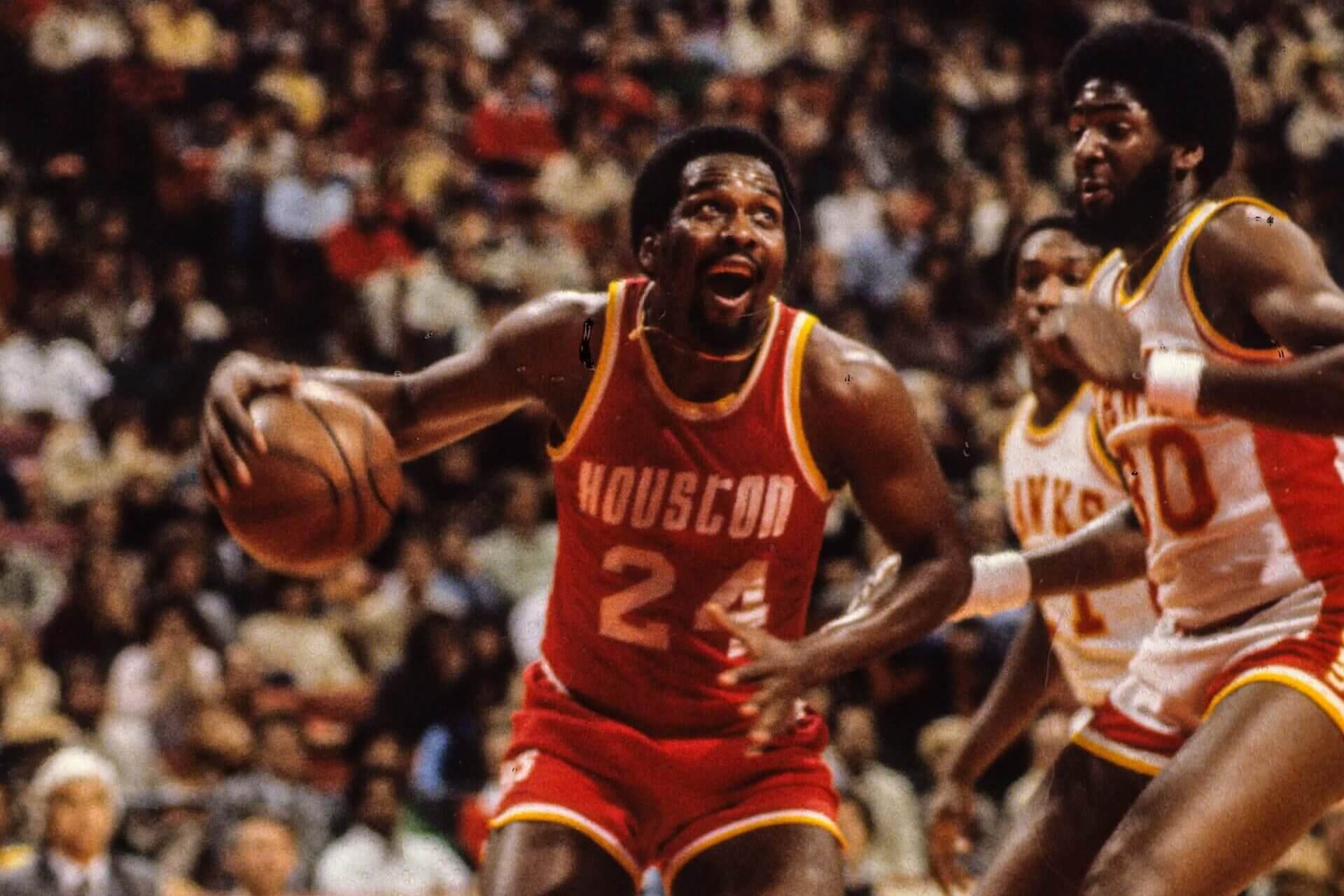
Moses Malone for Caldwell Jones and first-round pick (1982)
During his six seasons in Houston, Malone won two NBA MVP awards and carried the Rockets to the 1981 NBA Finals. But once Malone hit restricted free agency in the summer of 1982, the Philadelphia 76ers gave him a lucrative offer sheet, and the Rockets chose to go in a different direction. They traded Malone to Philly for Caldwell Jones and a 1983 first-round pick. The following season, the Sixers won the title, and Malone won his third MVP. Houston lost 68 games and had the worst record in the league. — William Guillory
Indiana Pacers
Future first-round pick for Tom Owens (1981)
After making their first NBA playoffs appearance in 1981, the Pacers lost center James Edwards to the Cleveland Cavaliers in free agency. Needing someone in the pivot, they traded a 1984 first-round pick to the Portland Trail Blazers for 32 year-old-center Tom Owens, who had played for then-Pacers coach Jack McKinney, who was an assistant during Owens’ time in the Pacific Northwest. Owens played in 74 games for the Pacers, started 40 and was out of the NBA after a season with the Pistons in 1983. Fast forward to the 1984 draft, and there was Portland, sitting at No. 2 with the Pacers’ pick. The Houston Rockets selected Hakeem Olajuwon. The Blazers selected Sam Bowie. And at No. 3 … Michael Jordan went to the Bulls. The Blazers famously passed on Jordan because they had Clyde Drexler. The Pacers, had they retained the pick, had two centers on the roster and no shooting guard who had ever averaged more than 13.4 points per game. Oof. — Rob Peterson
LA Clippers
Paul George for Shai Gilgeous-Alexander, Danilo Gallinari, five first-round picks and two pick swaps (2019)
There’s a Haudenosaunee Confederacy proverb that states, “In every deliberation, we must consider the impact of our decisions on the next seven generations.” In the Clippers’ case, they made a decision that impacted control of seven first-round picks when they traded Gilgeous-Alexander after his rookie season and Gallinari to the Thunder to acquire All-NBA first-team selection George, a maneuver deemed necessary to sign then-reigning NBA Finals MVP Kawhi Leonard. The last of those first-round picks the Clippers owe Oklahoma City comes this year, with the Clippers in the bottom five of the West, George in Philadelphia after winning only three playoff series in LA and Gilgeous-Alexander now as the reigning NBA Finals MVP for the defending champions. — Law Murray
Los Angeles Lakers
Russell Westbrook for Kyle Kuzma, Montrezl Harrell, Kentavious Caldwell-Pope and a first-round pick (2021)
Coming off a disappointing playoff series against Phoenix, the Lakers went all-in on firepower and ignored basketball fit. Westbrook, LeBron James and Anthony Davis never figured it out on the court, and the Lakers needed to use another first-round pick to undo the deal after less than two seasons. — Dan Woike
Memphis Grizzlies
Top-one protected first-round pick for Otis Thorpe (1997)
The Grizzlies finished second in the LeBron James lottery in 2003 but ended up with no draft pick at all because of this deal years earlier while the franchise was still in Vancouver. Thorpe played 47 games for a team that went 19-63, but his acquisition cost the Grizzlies a chance at Carmelo Anthony, Chris Bosh or Dwyane Wade with the second pick in 2003. The fact that the Pistons chose uber-bust Darko Miličić with the pick doesn’t make the deal any better. — John Hollinger
Miami Heat
Terry Rozier for Kyle Lowry and first-round pick (2024)
That’s the elephant in the room, right? The Heat gave up a first-round pick to acquire Rozier from the Charlotte Hornets two years ago, but the returns have been less than ideal. Rozier has been charged with wire fraud conspiracy and conspiracy to commit money laundering as part of a federal gambling investigation and was placed on unpaid leave by the NBA days after he was arrested. Before that, Rozier had his worst season in almost a decade in 2024-25. He’s an expiring contract this season, but the Heat are still waiting on clarity as to whether he can be traded ahead of the deadline. — James Jackson
Advertisement
Milwaukee Bucks
Ray Allen, Ronald Murray, Kevin Ollie and a first-round pick for Gary Payton and Desmond Mason (2003)
Allen was 27 years old and nearing the middle of his prime. Payton was 34 and had only two months remaining on his contract. But George Karl, Payton’s former coach in Seattle, believed the Bucks needed better defense in the backcourt, so he persuaded Milwaukee to trade for his old superstar point guard in an attempt to save the 2002-03 season. The Nets eliminated the Bucks in the first round, Payton signed with the Los Angeles Lakers and Karl was out as head coach just five months later. And the Bucks were forced to move forward without their most promising young player. They wouldn’t win a playoff series again until 2018. — Eric Nehm
Minnesota Timberwolves
Kevin Garnett for Al Jefferson, Ryan Gomes, Sebastian Telfair, Gerald Green, Theo Ratliff and two first-round picks (2007)
This was a heartbreaking development, one brought on by three straight years of playoff-less basketball after a 2004 run to the Western Conference finals. One of the draft picks acquired was the Wolves’ own draft pick that they had previously sent to Boston in a 2006 trade. Jefferson showed promise early, but a knee injury derailed his path to becoming a star player. Gomes, Telfair, Green and Ratliff were not difference -akers. And the two draft picks became Wayne Ellington and (gulp) Jonny Flynn, one pick ahead of Steph Curry. Meanwhile, Garnett helped lead the Celtics to the NBA title and became a legend in Boston and was estranged from the Wolves organization until recently. — Jon Krawczynski
New Orleans Pelicans
Ömer Aşik for first-round pick (2014)
I get it. Anthony Davis hates playing center. At the time, acquiring Aşik for a 2015 first-round pick seemed like a decent way to keep the face of the franchise happy and double down on interior defense. In reality, Aşik turned out to be an awful fit in New Orleans. The front office decided to double down again by giving Aşik a five-year, $60 million extension in the 2015 offseason. The Pelicans’ failure to surround Davis with better talent during some of his best years was largely due to moves like this, and, of course, Davis would end up in Los Angeles in 2019. —William Guillory
New York Knicks
Tim Thomas, Michael Sweetney, Jermaine Jackson, 2006 first-round pick, future second-round picks and 2007 first-round pick swap for Eddy Curry and Antonio Davis (2005)
There are a lot of options to go with here, but the Knicks giving up that much draft capital for Curry and paying him $60 million over six years has to be the worst. Curry was dealing with health issues in Chicago when then-Knicks president Isiah Thomas made the move to add the center. Two of the draft picks New York gave up later became LaMarcus Aldridge and Joakim Noah. The Knicks’ 33 wins during the 2006-07 season were the franchise’s most during Curry’s time. — James L. Edwards III
Shipping away James Harden in 2012 is one deal OKC might want to have back. (Matthew Emmons . USA Today Sports)
Oklahoma City Thunder
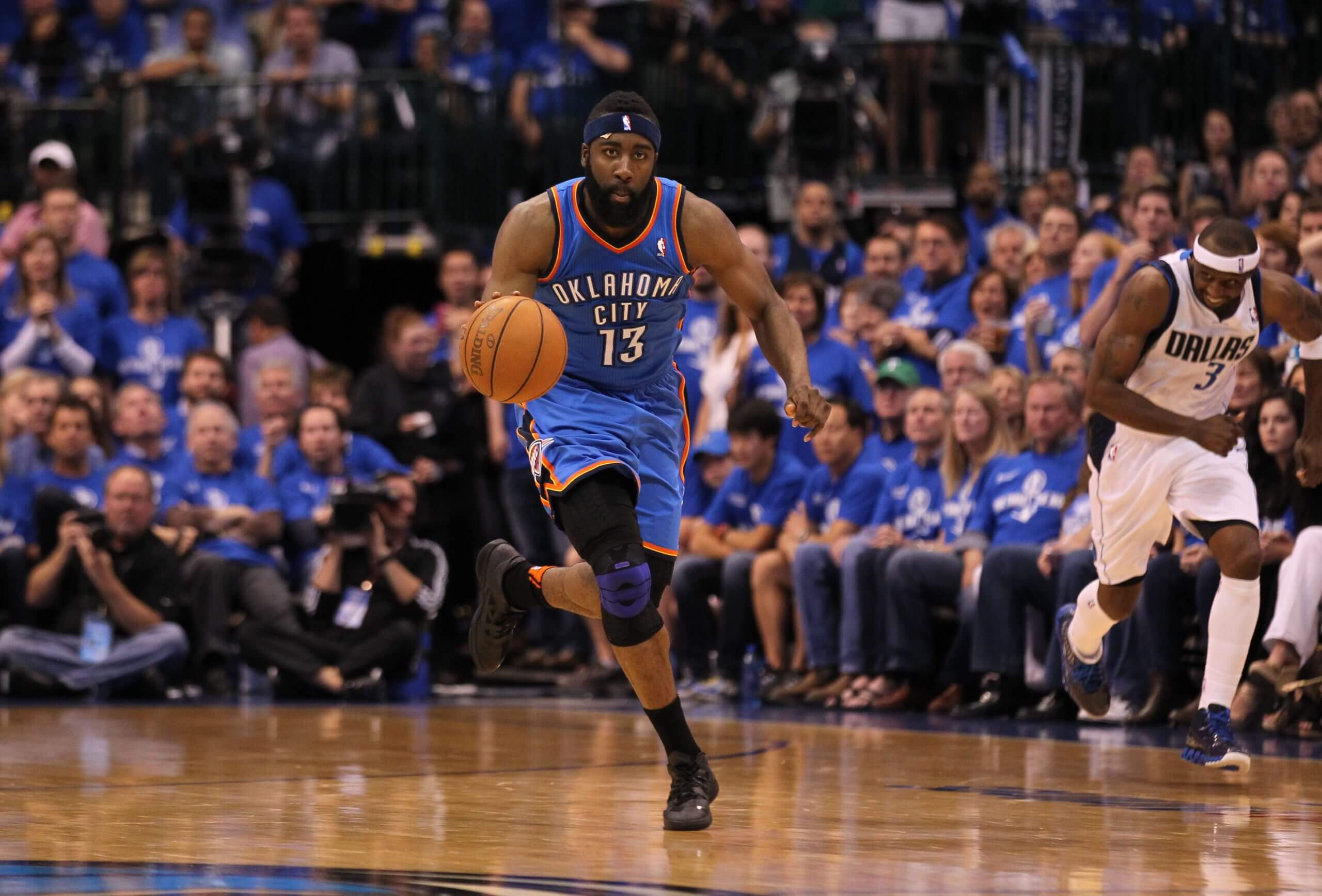
James Harden, Cole Aldrich, Daequan Cook, Lazar Hayward for Kevin Martin, Jeremy Lamb, two first-round picks and a second-round pick (2012)
Thunder fans and employees alike will probably be upset that I’m writing about the Harden trade. You’re bringing that up again? Fourteen years later? With no good reason? Well, what else am I supposed to do here? The Thunder have won every significant deal they’ve pulled off for the past decade. What am I supposed to do? Assume that after winning a title and owning the NBA’s best record this season, Sam Presti is on his sofa, rocking back and forth, eyes red, bottom lip quivering and repeating aloud to no one in particular, “I can’t believe I gave up multiple second-rounders for Gordon Hayward that one time.”? The Thunder have learned from the Harden trade, which means I’m sure, in some capacity, they would like to go back to 2012 and undo it. — Fred Katz
Orlando Magic
Victor Oladipo, Ersan Ilyasova and draft rights to Domantas Sabonis for Serge Ibaka (2016)
In retrospect, this was a desperation move intended to catapult the Magic out of a four-year-long rebuild. Ibaka did not want to be in Orlando, and his tenure there was a huge disappointment, lasting only 56 games before Orlando traded him to Toronto for Terrence Ross and what would become the 25th pick in the 2017 draft. Sabonis has gone on to make two All-NBA teams and earn three All-Star selections, while Oladipo, a No. 2 overall pick, went on in 2017-18 to an All-Defensive first-team selection and an All-NBA third-team selection. — Josh Robbins
Philadelphia 76ers
Charles Barkley for Jeff Hornacek, Tim Perry and Andrew Lang (1992)
To be clear, Barkley demanded a trade, so he would have eventually been moved regardless. But the Sixers received such a light return that it’s now clear that they should have held on to him longer. Sir Charles went on to become the MVP of the league with the Phoenix Suns. Hornacek, the best piece Philly returned in that deal, went on to make his mark as one of the best shooters in the league … for the Utah Jazz. Philadelphia needed to get a king’s ransom of a return, and the Sixers simply did not accomplish that. — Tony Jones
Advertisement
Phoenix Suns
Shawn Marion and Marcus Banks for Shaquille O’Neal (2008)
Kevin Durant? Bradley Beal? Both strong options. But let’s go back. The 2008 Suns had the best record in the West when they made this blockbuster. They had Steve Nash running Mike D’Antoni’s “Seven Seconds or Less” system, but no one was happy. The versatile Marion felt under-appreciated. Then-coach D’Antoni felt pressure to win a title. Fans were tired of losing to Tim Duncan and the Spurs. GM Steve Kerr called it what it was — a gamble. It didn’t turn out well. With Shaq, the Suns suffered the same postseason fate, losing to San Antonio in five games in the first round. After the season, D’Antoni left to coach the Knicks. O’Neal lasted two years before he was traded to Cleveland. Phoenix surged in 2009-10, losing to Kobe and the Lakers in the Western Conference finals, then went 10 seasons without making the playoffs. — Doug Haller
Portland Trail Blazers
Jermaine O’Neal and Joe Kleine for Dale Davis (2000)
Coming off a heartbreaking collapse to the Lakers in Game 7 of the Western Conference finals, the Blazers thought Davis, a 10-year veteran coming off an All-Star season, would help them combat the immovable force that was Shaquille O’Neal. Instead, they made a franchise-altering mistake. Davis was serviceable in his four seasons in Portland, averaging 7.1 points and 7.2 rebounds, while the 22-year-old O’Neal blossomed into one of the NBA’s best big men in Indiana. O’Neal won the NBA’s Most Improved Player in his second year in Indiana and would become an All-NBA selection three times and a six-time All-Star while averaging 18.6 points and 9.6 rebounds in eight seasons with the Pacers. — Jason Quick
Sacramento Kings
Oscar Robertson for Flynn Robinson and Charlie Paulk
The then-Cincinnati Royals traded “The Big O” at his peak in April 1970, with 10 All-Star berths to the 31-year-old’s name and his best still yet to come. A rift with coach Bob Cousy was reportedly a driving force in the deal, as were financial constraints and an uncompetitive roster. After joining forces with Kareem Abdul-Jabbar in Milwaukee, the league’s newest dynamic duo won it all in their first season together. — Sam Amick
San Antonio Spurs
Kawhi Leonard and Danny Green for DeMar DeRozan, Jakob Poeltl and first-round pick (2018)
How do you find a trade to undo for a franchise that doesn’t really have any in recent times? The only plausible answer is the Leonard deal to the Raptors, but it’s for every reason besides the decision to trade Leonard. Sure, they could have found a way to smooth things over before the relationship ruptured, but has the rest of his career indicated that was possible? The trade had to be made, but it could have been done differently. Spurs fans still mourn losing Green. DeRozan and Poeltl were good players but kept the team on the treadmill of mediocrity instead of letting it tank and rebuild. The lasting memory of this deal was the pick used to take Keldon Johnson, now the team’s heart and soul. And that treadmill of mediocrity eventually led to Victor Wembanyama, so maybe it was the right call after all. — Jared Weiss
Toronto Raptors
Norman Powell for Gary Trent Jr. and Rodney Hood (2021)
The Vince Carter trade likely tops the list, but that has been dissected beyond recognition in Toronto. In 2021, the Raptors traded Powell, set to become an unrestricted free agent, for Trent, who would become a restricted free agent. Since the trade, Powell has improved despite aging into his 30s, shooting better than 41 percent as a high-volume 3-point shooter. He is in the last year of a five-year, $90 million deal that was very team-friendly. Trent had his moments in Toronto but not enough to make him more than a minimum guy in Milwaukee two years in a row. Since he left, the Raptors have needed a player with Powell’s shooting and driving next to their army of long-armed forwards. — Eric Koreen
Utah Jazz
Gail Goodrich, first-round pick and second-round pick for three first-round picks (1976)
Free agency started in 1976, and the then-New Orleans Jazz signed Goodrich from the Lakers. The Jazz had to swap some draft compensation as part of the signing, as the NBA discouraged free agency at the time. The Jazz received a second-rounder in 1977 and a first in 1978 from the Lakers. Los Angeles received firsts in 1977, 1978 and 1979. The pick in the 1979 draft? Magic Johnson. All that for three decent years of Goodrich at the end of his career. — Zach Harper
Washington Wizards
Ben Wallace, Terry Davis, Tim Legler and Jeff McInnis for Isaac Austin (1999)
After three mostly undistinguished seasons in Washington, Wallace eventually developed into one of the best interior defenders in league history, a four-time NBA Defensive Player of the Year and a five-time All-NBA selection who became a key force on the 2003-04 Pistons’ championship team. The Wizards kept Austin for only one season before they traded him to Vancouver. The 1998 trade to send 25-year-old Chris Webber to Sacramento for 32-year-old Mitch Richmond and 35-year-old Otis Thorpe ranks as a close second as the worst trade in Wizards history. Calling the Webber trade the worst trade in franchise history would be a fair take. — Josh Robbins