
This post was originally published on this site.
ANN ARBOR, MI – Ann Arbor Public Schools is still healing.
In the nearly two years since first addressing its $25 million budget crisis, the district has continued to run into other challenges.
Public pushback on new school construction, rising costs of teacher healthcare, distinct staffing shortages and downsizing, and a small revolving door of litigation — all of it things that could remain front of mind as 2026 gets underway.
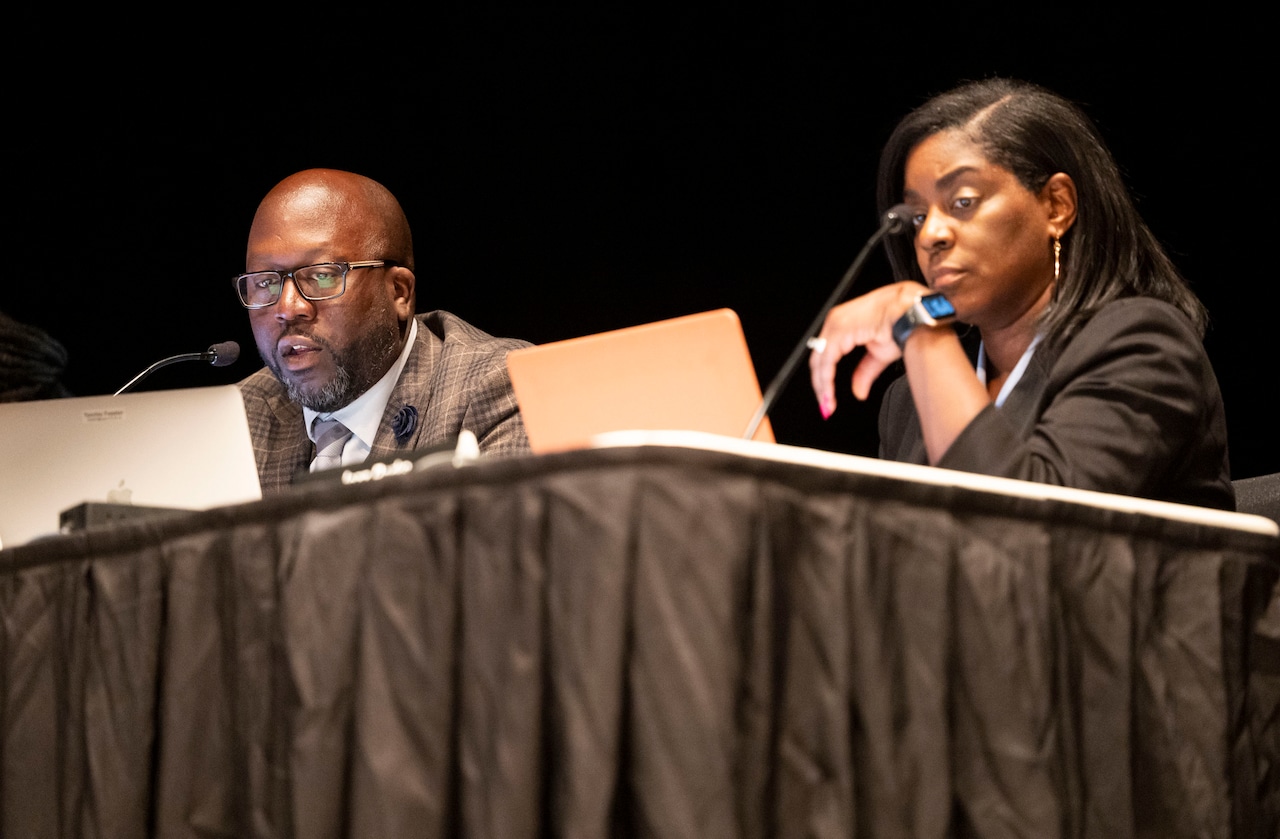
For Ann Arbor School Board President Torchio Feaster, who may be staring down the final few days as the board’s leading officer, the biggest goals for the new year also share ties to the past in different ways.
They’ve made progress in areas like transparency and financial stability, he said, but also had plenty of room for improvement.
“With our three new trustees, we’ve done a better job of being open and communicating more clearly and being more respectful and being able to be a more efficient board,” Feaster said during an interview Tuesday, Jan. 6. “Now, we still have a long way to go. There’s still a lot of pain and anger and resentment from trustees.”
The school board will host its first full meeting of 2026 on Wednesday, Jan. 14, when board officer positions, including president, vice president, secretary and treasurer, will be appointed.
Feaster has been president for two years. He admitted he initially expected to transition someone else into the job in 2026, his final year on the board, adding he knew “at least one person who would like to be president” and would “do a fine job.”
But other people have asked him to stay on, he said.
“So, I don’t know what’s going to happen. I have not made a decision yet,” Feaster said. He was still waiting for trustees, he said, to tell him what they preferred.
Either way, there were a few key things Feaster hoped would be a priority for AAPS board members and administrators this year.
Financial security remains top priority
Weeks after emerging from a state watchlist because of its low fund balance, Feaster said he expects AAPS finances to remain the board’s “first primary responsibility.”
In December, ahead of a mid-year budget amendment, district officials refuted criticism that it was dealing with another, albeit it smaller, budget crisis, particularly a $7.8 million budget for reimbursement in special education that wasn’t coming because of cost reductions the previous year.
Shortly after laying off staff and making other cuts to address its 2024 deficit, the district started the 2024-25 school year with a fund balance, or rough savings, at 2.2% of its spending ― far below the average levels among districts across Michigan.
Ann Arbor Public Schools’ audited balance by the end of 2024-25 was at $21.6 million or just over 7% of school spending. It is projected to be $15.8 million or over 5%, which is the state minimum.
Feaster never wants to fall below 5% and wind up back on the state’s radar again.
He also thinks the district needs to hire a chief financial officer ― a position that’s been open for two years.
Also called the assistant superintendent of finance in the past, the position has been open since late 2023 with the departure of then-Assistant Superintendent for Finance and Operations Jill Minick.
Former CFO Marios Demetriou has previously returned to consult with AAPS on the interim, and the department still has directors of finance in payroll, business services and treasury on staff. The current CFO posting for the vacancy has been up since May of last year.
Regrouping with teachers post-negotiations
AAPS and its teachers’ union agreed on a tentative deal in early 2024 that gave educators hired before 2024 a 1.5% salary hike while longer-term contract talks continued.
However, since last year ended without a finalized deal, teachers are working in 2026 without a contract, according to the Ann Arbor Education Association.
Feaster said he wanted administrators to be able to have conversations with union officials to “brainstorm together after negotiations are finished.”
“How we can get our district to a better place to be able to get teachers everything they want and need in terms of how they’re working, living, and their wages,” he said Tuesday. “… I think that relationship with our staff and our teachers needs to improve. I think that might be from different conversations with union leadership, that might be from town halls with teachers and giving their input as the things they want to see us do better.
But when you lay off a lot of your staff and you have the negative input and bad blood that had been in this district, I think we need to start to prioritize fixing that bad blood.”
Addressing gaps in student achievement, disciplinary issues
Ann Arbor Public Schools released data about student discipline, primarily suspensions, last spring for the first time in several years. The latest report showed the district going from 415 suspensions in 2021-22 to 683 in 2023-24.
Feaster said the increase showed more “issues than I would like to see,” adding he’s talked to Superintendent Jazz Parks about ways to reach students who are impacted.
“And she’s pulled together a group of people who are working on some programming,” he said, “both during school hours and after school hours to be able to help reach the students who are finding themselves the most vulnerable and most subject to (disciplinary actions).”
Although the district also routinely has higher state assessment scores than the statewide average and results in neighboring schools, Feaster said he also wanted to better target gaps in achievement.
Results for the 2025 tests like M-STEP, SAT and PSAT, according to district officials last fall, showed students of color, English-language learners and those who may be economically disadvantaged or have a disability continue to lag behind their classmates.