
This post was originally published on this site.
When Louis Brandeis inveighed a century ago against the misuse of “other people’s money,” he had in mind the humble deposit, the dollars that customers stash in banks for safekeeping and future use. Today, a new generation of bankers have precisely the same goal of getting their hands on our money—more for their benefit than ours.
Deposits are the raw materials with which bankers play, the key to unlocking market power, as giants like Bank of America and JPMorgan Chase demonstrate. More deposits increase a bank’s ability to chisel customers with fees while paying them less in interest. And a slowing economy means that wary consumers with extra cash are now more likely to save money as a cushion, boosting deposit growth.
Banks are racing to buy one another at the fastest rate in 35 years.
For these reasons and more, banks are racing to buy one another at the fastest rate in 35 years, confident that Donald Trump’s merger-friendly regulators will approve the transactions in less time than it takes to, well, plan a bank robbery. The merger wave is crashing over banks of all sizes, from community banks Plumas and Cornerstone, together worth $61.3 million, to Cincinnati-based Fifth Third and Dallas-based Comerica, which will create the ninth-largest bank in the country, in a $10.9 billion transaction.
JPMorgan Chase, already as large as its next three mega-bank competitors combined by assets, has set a goal of increasing its U.S. retail deposit share from 11 to 15 percent of all deposits. Bank of America boosted its deposit base by one-third in the last five years.
There’s one glaring tell about the intent of all this consolidating. The consultant-industrial complex—Boston Consulting Group, Deloitte, and of course, McKinsey, which bluntly calls deposits “a profitability lever”—cannot stop talking about the money banks stand to make from deposits. In other words, Wall Street is demanding that Wall Street consolidate more—and quickly.
Mergers Amid a Deposit Crisis
Wanna buy a bank? According to S&P Global Market Intelligence, nearly 150 bank mergers worth around $45 billion have closed thus far in 2025. The average approval time, including large transactions, is now about four months.
This pace of merging has not been seen since 1990, when a decade of deregulation and the savings and loan crisis accelerated matters. And just as in 1990, a crisis lurks in the background, this one from 2023.
The regional bank crisis began with the collapse of Silicon Valley Bank, as business customers spooked by the Federal Reserve cranking up interest rates rapidly took their deposits elsewhere. That failure set off a chain reaction of what economists call deposit “flightiness.” Regional banks focused on business lending like Comerica saw corporate clients, which have deposits above the $250,000 limit for FDIC insurance, move their money to other deposit-like instruments, such as money market funds, or to the too-big-to-fail mega-banks.
“The lack of a retail, more granular deposit base made our deposits a bit more flighty, a little easier to move large, chunky commercial deposits, and it took us a bit to recover from that,” Comerica CEO Curt Farmer said. The merger with Fifth Third will give the combined bank “a really great retail deposit base,” he said.
Raising Money to Make Money
To banks, deposits comprise one of the ways they raise money to make money. There are other funding mechanisms, like selling shares to the public or retaining earnings, but that dilutes the value of existing shares, which are often linked to pay packages. Borrowing more money is always an option, but that comes with regulatory and market limits.
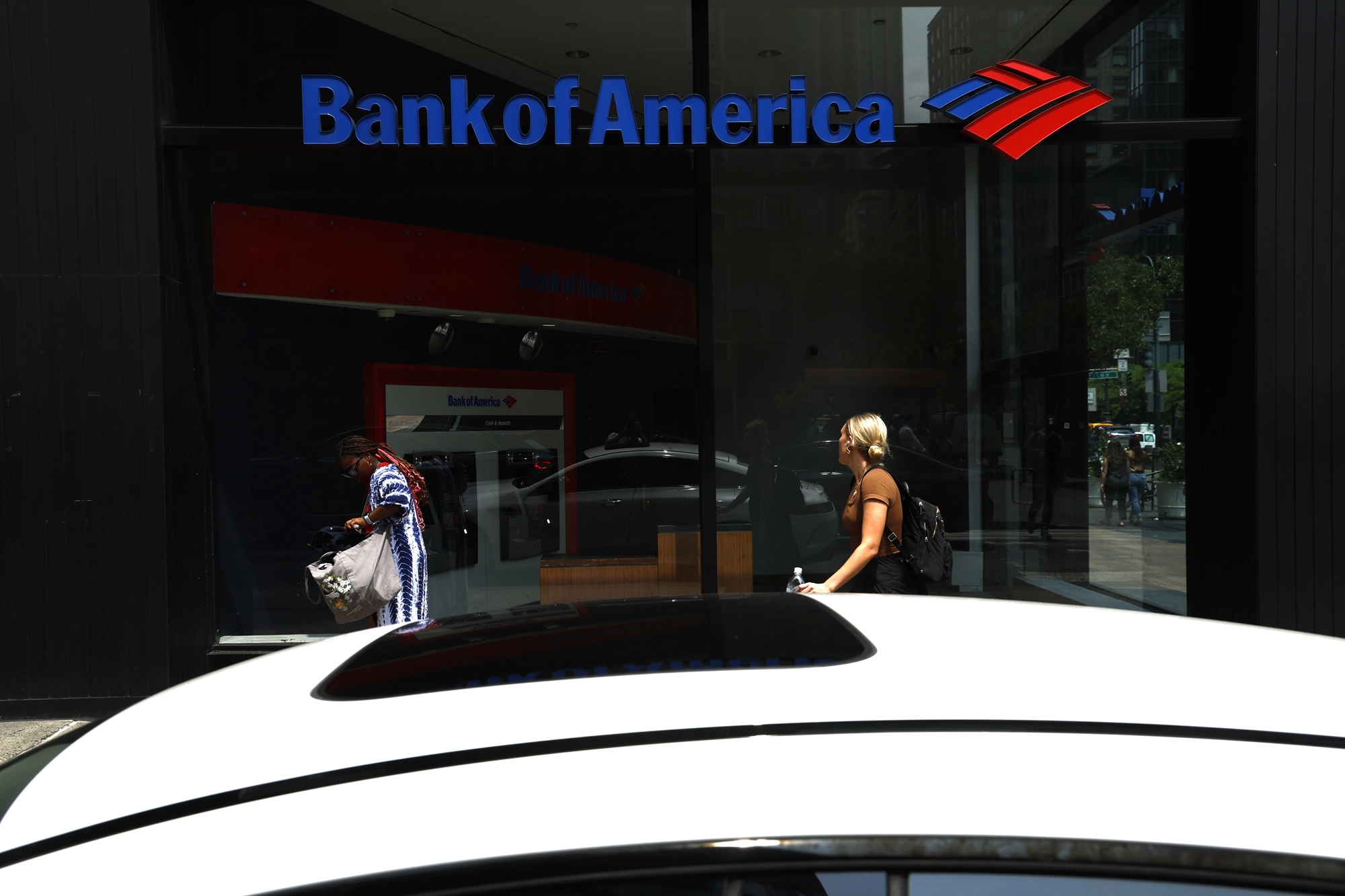
So bankers tend to rhapsodize about deposits, risk-free funds kindly provided by legions of less-informed, less-mobile customers. “That’s what drives the profitability in this company,” Bank of America CEO Brian Moynihan bragged earlier this month to finance commentator Marc Rubinstein. BofA has the largest consumer deposit base in the United States, with $949 billion and about 69 million customers. Deposit values have grown by 34 percent in the last five years, even though its customer base is only 4 percent larger, Rubinstein notes.
The top four U.S. banks, which include Bank of America, JPMorgan Chase, Wells Fargo, and Citigroup, held about 30 percent of the $18.3 trillion in active bank deposits as of June 30. The ten largest banks hold about 44 percent of that money. We’re witnessing consolidation atop consolidation.
The greater a bank’s share of deposits, the less it needs to pay in interest. (A manufacturing monopolist makes the consumer pay more for a product or service; banks exercise market power by paying customers less money for deposits.) The difference between that cost and the prevailing interest rates bankers can charge (net interest income) is pure profit for a bank. As Rubinstein notes in his analysis of Bank of America, cheap deposits drive 55 percent of the company’s revenue, about $60.4 billion of net interest income this year.
Data provided to the Prospect by S&P that breaks out the interest paid on deposits by bank size makes unambiguously clear that larger banks get away with paying less no matter what form of savings vehicle, including ones that are not technically deposit accounts, like money market funds. As of September 30, for a $2,500 savings account, a bank below $10 billion in assets pays you 20 basis points (0.2 percent). Banks above $500 billion in assets pay one-tenth of that: two basis points.
Given the Fed’s stubbornly high interest rates, this amounts to a roughly $1 trillion transfer away from depositors and into the hands of banks. And the bigger you are, the more money you get.
Fees, Fees, and More Fees
The laborious process of switching banks leads most of us to stay put. All those forms authorizing direct deposit of wages, automatic bill pay, and planned savings must be refiled. Screw up and you miss a payment, or worse, a paycheck.
Banks prefer depositors who are stuck with them, and they manipulate their branch structure to maintain stickiness, something that works despite the allure of online banking. A 20-year study of branch banking and depositors published recently found that established banks prefer to close branches in areas with “rate-sensitive customers,” generally the more affluent who are aware of other options, and move money easily. Banks have “limited ability to extract rents” from high-end customers, the authors of the study concluded.
This fundamental stickiness enables banks to rely on customers for cash that the banks can lend at a profit. It also allows banks with market power to layer junk fees onto customers, an easier way to make money than harvesting the spread between deposits and loans, which involves the painstaking, time-consuming process of underwriting.
The fees take many forms, including charging higher interest on credit cards and persistent levies on customers who overdraw their accounts. As it happens, Fifth Third has some of the highest overdraft fees around. Even as the Consumer Financial Protection Bureau (CFPB) almost succeeded in reducing overdraft fees during the Biden administration, Fifth Third did pretty well. In 2024, it collected $108 million from overdrafts, about 4 percent of its profit.
The Fifth Third-Comerica merger announcement stresses the importance of fees. It touts that the combined bank will have wealth and asset management and commercial payments lines that are “recurring and high return fee businesses.” They could say the same thing about overdrafts.
Wall Street Hearts Consolidation
Comerica went on the block and sold to Fifth Third, giving it the wherewithal to wring more money out of its customers. Why now, precisely?
Well, Wall Street. Prior to the merger announcement, Comerica came under pressure to sell from HoldCo Asset Management, a hedge fund, which revealed a 1.8 percent stake that is today worth north of $200 million. It also has stakes in two other banks. (HoldCo is now whining that Comerica didn’t hold out for the best price possible; it may have been able to extract more from Regions Bank.)
At Atlas Merchant Capital, a de facto hedge fund, the former CEO of the British bank Barclays, Bob Diamond, is fantasizing about a historic rollup of the 4,500 U.S. banks under Trump regulators. “We think that there’s going to be consolidation that takes that number of 4,500 to something closer to 1,000 or 1,500 literally over the next two to three years,” Diamond told Bloomberg. Diamond’s firm has raised a $150 million fund specifically devoted to taking stakes in regional banks and pressing for consolidation.
HoldCo and Atlas demonstrate how finance, uniquely among industries, accumulates monopoly power because it both encourages consolidation while simultaneously consolidating within itself. Wall Street loves monopoly power because nothing squeezes cash out of the end customer like a monopoly.
Examples of this dynamic abound. Private equity firms have aggressively pursued the rollup strategy, using one significant acquisition as a platform to gobble up smaller ones that together consolidate an industry. The rollup enjoys pricing power while the rest of us get higher costs and worse service. At the same time, private equity itself is becoming a business of giants. Elsewhere, Visa and Mastercard are a duopoly of card payment processing. In banking, the four largest mega-banks now harvest nearly one-half the profit, and the top ten credit card issuers hold about four-fifths of consumer balances.
Recovering From Bipartisan Failures
A first step in fighting consolidation would be a tougher line on bank mergers, admittedly unlikely under Trump. But the Biden administration was itself mostly a failure on this front. Biden’s Department of Justice tried to reassert its role in adjudicating bank mergers, but the law puts the Federal Reserve and bank regulators in the driver’s seat, and they refused to revamp the outdated bank merger guidelines, despite exhortations from financial reformers. Treasury Secretary Janet Yellen even played footsie with the idea of encouraging bank mergers. Progress in the next Democratic administration? Here’s hoping.
A second step would be giving people the opportunity to get unstuck from their banks. The CFPB took some initial steps with the open banking rule, giving customers greater rights over their own account data. It was a measure to improve competition wrapped in the mantle of consumer choice: With data more portable, new services might aid depositors in switching banks. CFPB Director Rohit Chopra said open banking “will give people more power to get better rates and service on bank accounts, credit cards, and more.”
The issue has split Wall Street and Silicon Valley. Bank lobbyists went to work on the rule in the courts, and got it suspended. Then the fintech lobby, eager to offer services that compete with banks, fought off an attempt by Russell Vought, the acting director of CFPB, to kill the open banking rule outright. Instead, the CFPB announced it will revise the rule, citing “recent events in the marketplace.” One such event was JPMorgan Chase’s plan to impose heavy fees for customers or new financial firms to access their data.
Since its origin, the open banking rule has enjoyed bipartisan endorsement, a reminder that the anti-monopoly reflex runs deep in the United States. The American Fintech Council, the lobby group of the financial upstarts, has dug in for a fight. So has the Bank Policy Institute, mouthpiece of the big banks.
The bankers sure like their depositors. They just don’t want to compete for them.