
This post was originally published on this site.
China’s trade surplus reached a historic milestone in 2025. According to data released by Chinese customs authorities, China recorded a cumulative goods trade surplus of approximately $1.08 trillion in the first 11 months of the year, surpassing the trillion-dollar mark for the first time. The figure is roughly equivalent to the combined trade surpluses of the world’s second- through tenth-largest surplus economies.
Inside China, the number has been widely celebrated as evidence of export resilience and industrial upgrading. Internationally, it has fueled renewed debate over global imbalances, trade distortions, and the effectiveness of existing policy tools aimed at addressing China’s external position.
The expansion of China’s surplus does reflect genuine structural factors, including global demand fragmentation, China’s manufacturing scale, and relative supply chain stability. At the same time, it raises a persistent and politically sensitive question: to what extent do headline trade figures fully reflect underlying commercial activity?
Within China’s export system, certain long-standing practices – shaped by local incentives and regulatory design – can amplify nominal export data at the margins. In Chinese policy and industry discussions, two terms are commonly used to describe these mechanisms: “attributed export via intermediaries” (买单出口) and “empty container exports” (空箱出口).
These practices do not define China’s trade system as a whole, nor do they suggest that most exports are fictitious. Rather, they represent edge-case behaviors that become more visible when aggregate surplus figures reach unprecedented levels.
“Attributed export via intermediaries” refers to the transfer of nominal export attribution – not ownership of goods – through intermediary firms. In practice, it reflects agency-based export activity shaped by local performance incentives.
In some regions, local governments provide fiscal rewards tied to reported export volumes. These incentives, often administered through commerce departments, can range from a few cents to several tens of cents per dollar exported. In response, some trading companies, particularly export agents, purchase export documentation from firms in other regions, typically small producers or firms lacking export tax rebate eligibility.
Exports that were neither produced nor commercially managed locally are thus reclassified under the agent’s jurisdiction, allowing the firm to claim both local subsidies and national export tax rebates. While the goods themselves are real, the statistical attribution becomes detached from underlying commercial activity. This blurs the distinction between agent exports and self-operated exports and creates conditions in which export data may be inflated or double-counted.
Chinese court records show that such practices have increasingly entered the legal system, with several cases ruled as fraud or illegal business operations. One widely cited case in central China’s Hubei Province involved the creation of more than 100 shell companies that collectively obtained hundreds of millions of yuan in subsidies while generating export figures in the tens of billions of yuan. These cases highlight how fiscal incentives, performance metrics, and statistical reporting can interact in unintended ways.
Available evidence suggests that some local governments have tacitly tolerated or even encouraged these practices, and in a limited number of cases, corruption involving local officials has been documented. These cases underscore that the issue is not hidden from Chinese regulators and reflects structural tensions between local incentives, fiscal pressures, and statistical reporting.
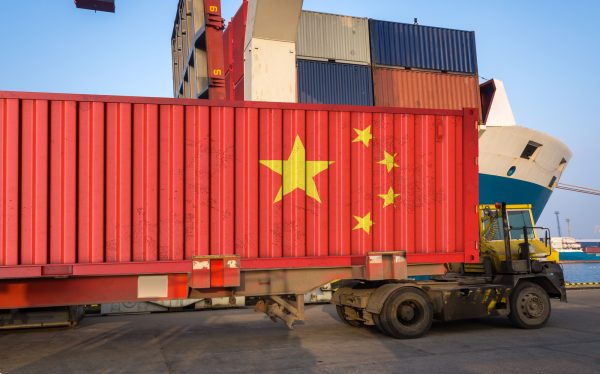
“Empty container exports” represent a more extreme and less common phenomenon. In these cases, shipping containers are declared as exported and imported without carrying actual cargo, sometimes cycling repeatedly through export-import processes. Each declaration generates recorded trade value despite the absence of physical goods.
Such practices attracted industry attention around 2015-2016 and have resurfaced in limited contexts in recent years. They are typically linked to a combination of port throughput targets, local fiscal subsidies, and export tax rebate mechanisms.
These “empty container” cases do not characterize China’s port system as a whole. However, even isolated instances can inflate trade data at the margins when aggregated across time and regions.
Because both mechanisms are inherently opaque, it’s impossible to know how much these practices inflate China’s official trade data. Chinese researchers and industry analysts typically estimate that data amplification from such practices may account for roughly 4-7 percent of reported export value.
Again, this range remains deeply uncertain. Yet even conservative estimates suggest that, at trillion-dollar surplus levels, the absolute magnitude of potential distortion warrants attention. This is not to suggest that China’s trade data is fabricated, but to provide an important analytical caveat to record-setting figures.
Chinese authorities appear increasingly aware of these distortions. Since early 2025, multiple ministries – including tax, finance, commerce, customs, and market regulation agencies – have issued joint directives prohibiting fabricated exports, misreported values, and improper use of export tax rebates.
New tax rules clarify that in agency-based exports, firms failing to accurately report and verify the true exporter will bear full corporate income tax liability, with such transactions treated as self-operated exports. This significantly raises compliance costs and reduces the profitability of document-driven arbitrage.
The policy direction is clear: improve data integrity, contain fiscal leakage, and reduce external trade friction risks. These measures suggest that Beijing views export statistics not only as an economic issue but also as a matter of governance credibility.
For policymakers outside China, China’s record surplus should be interpreted with nuance. It is neither purely a reflection of market competitiveness nor primarily the result of statistical manipulation. Instead, it reflects the interaction of structural advantages and internal governance incentives.
Understanding these mechanisms can help avoid overly simplistic conclusions about intent and improve policy calibration in an era of heightened geoeconomic competition.
The author thanks several colleagues and reviewers for their informal feedback on earlier drafts of this analysis. Any remaining errors or omissions are the author’s own.