
This post was originally published on this site.
Federal authorities say Americans lost a record $333 million in bitcoin ATM scams over the last year. The record-setting number is an increase from 2024, when scammers stole roughly $250 million using the same strategy, according to ABC News.
According to new FBI statistics, fraudulent transactions using cryptocurrency kiosks show a “clear and constant rise” that’s “not slowing down.”

Download the SAN app today to stay up-to-date with Unbiased. Straight Facts™.
Point phone camera here
How does the scam work?
Unbiased. Straight Facts.TM
According to the FBI, scammers stole $16.6 billion from Americans in 2024.

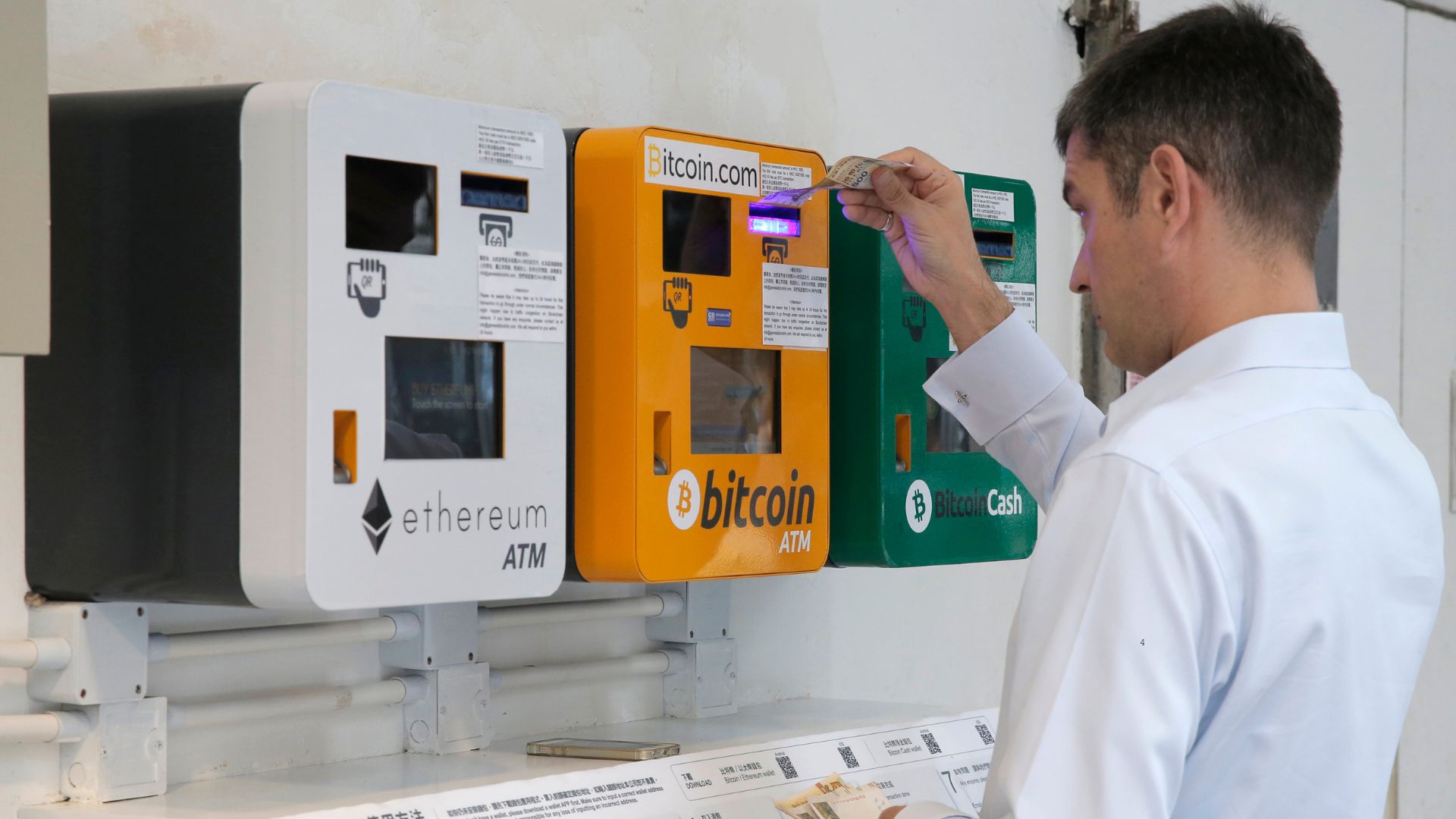
There are more than 45,000 bitcoin ATMs across America, allowing users to insert money and send it to a digital wallet. Scammers are increasingly favoring cryptocurrency ATMs as a method of fraud precisely because a key feature of digital currency — its increased difficulty to trace compared to traditional money — makes it an ideal tool for illicit activities.
Since the money is harder to trace, authorities have a nearly impossible task of finding it once the money is sent to a digital wallet.
Scammers call their mark, posing as an authority figure, like law enforcement or the government. During the call, the scammer will typically create a false sense of urgency, claiming there is an issue and they need to send money.
After scaring the victim, the scammer instructs them to withdraw money from their bank account before directing them to a nearby bitcoin ATM. During this time, the scammer will usually stay on the phone with the victim, making sure they don’t deviate from the plan. They will often use fake threats to scare them if they start to suspect something is going on.
The scammer will provide the victim with a QR code, which they are instructed to scan to send the recently purchased bitcoins directly to the scammer. After the funds are transferred, the scammer will hang up and the victim will likely never see their money again.
What is being done to prevent ATM scams?
Experts say bitcoin ATMs are the number one method scammers use to defraud victims. But authorities are taking notice, according to ABC News.
In September, the Washington, D.C., attorney general’s office sued Athena Bitcoin, one of the largest bitcoin ATM providers. The office accused the company of “pocketing hundreds of thousands of dollars in undisclosed fees on the backs of scam victims.”
The office claimed 93% of the transactions on Athena’s devices in the area “are the product of outright fraud.” It also stated that the median age for victims was 71.
The company denied the allegations to ABC News, saying it maintains “strong safeguards against fraud, including transparent instructions, prominent warnings and consumer education.”
Groups like AARP are advocating for stronger protections against bitcoin ATM scams. The group said capping the amount a user can deposit in a day could help limit the amount a scammer can get and may push them away from this method. More than 15 states have already passed laws regulating the machines, and some areas have banned them outright.
[embedded content]
How to protect against scams
Statistics show that younger Americans are more likely to experience online scams, likely because they spend more time online. However, older Americans suffer the highest financial losses from scams.
The best way to protect against scams is to understand how they work and the things scammers say. Knowing these things can help trigger alarms if scammers begin targeting someone.
Treat any unsolicited phone call, email or text message as suspicious. Most companies and official entities would never contact you urgently asking for money. If someone on the phone starts rushing or pressuring you, hang up.
Most importantly, if a caller asks for money and then asks for it in unusual ways, hang up. Most scams make the victim buy gift cards or use ATMs, since these are harder to trace. Companies will almost always have an official website that securely connects to banks for money transfers.