
This post was originally published on this site.
A New Global Trade Order
How Trump’s tariffs shaped geopolitics this year.
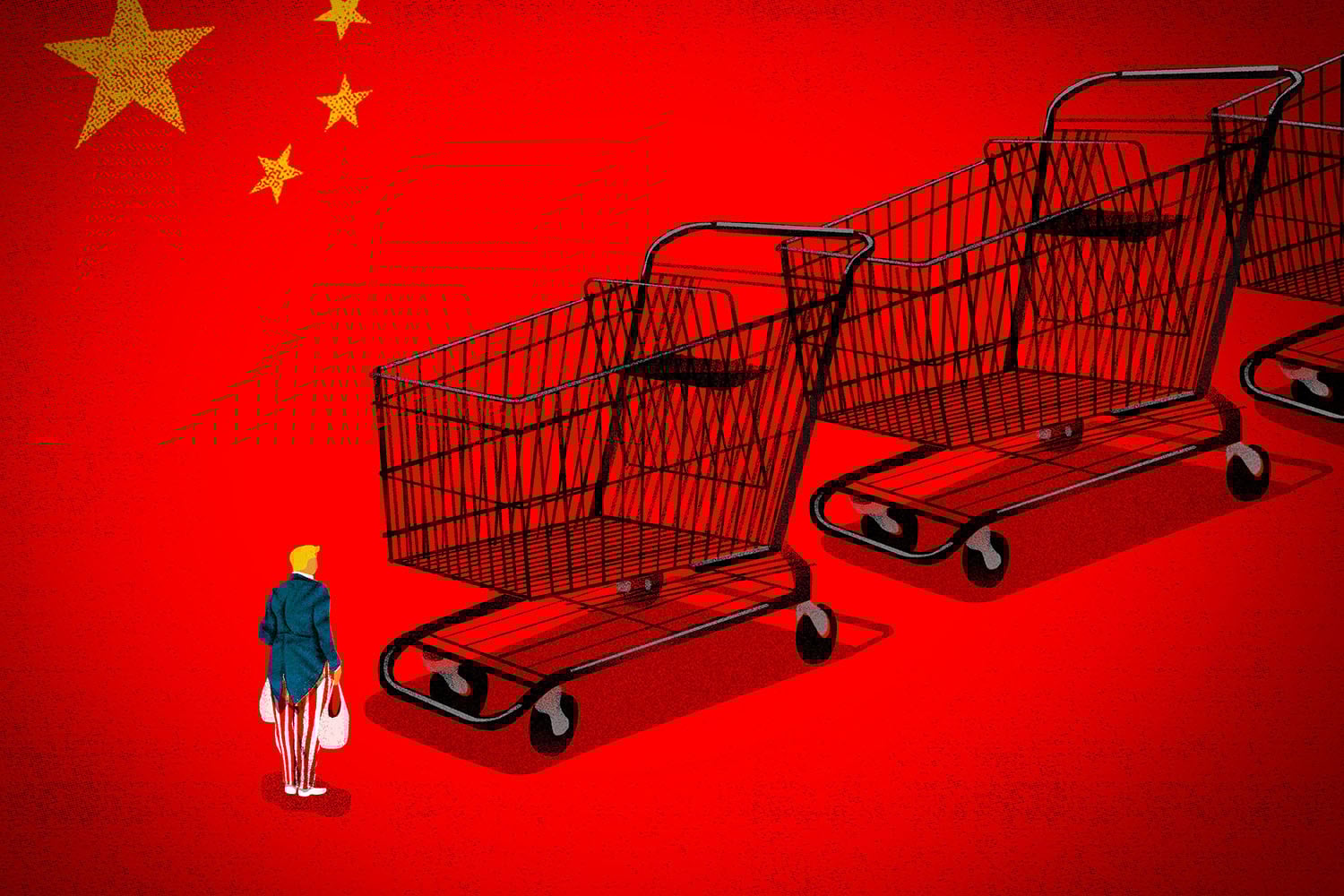
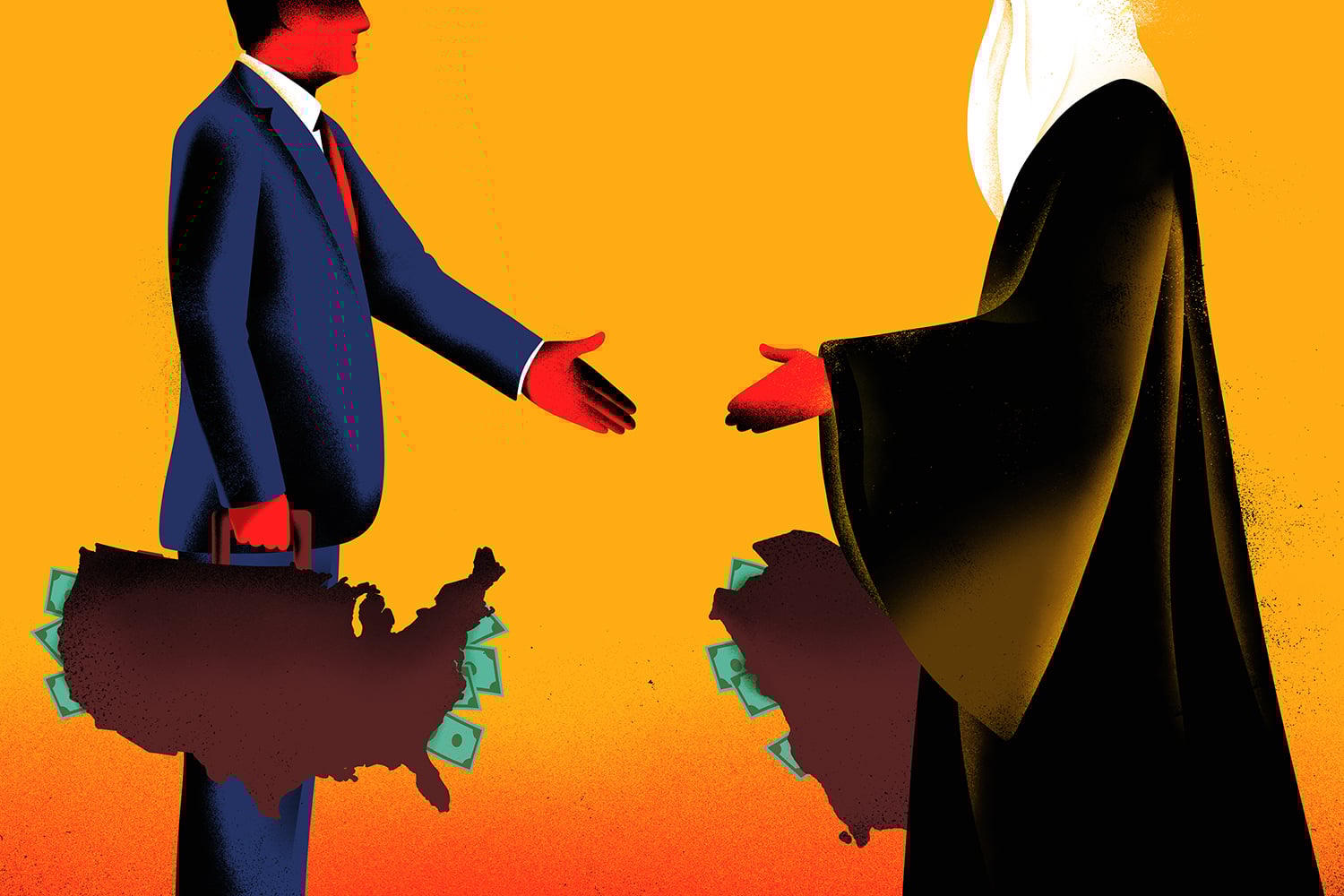
Brian Stauffer illustration for Foreign Policy
Although tariffs haven’t been in vogue since the 19th century, Donald Trump has seen them as a solution for what he perceives to be an unfair global trading system since at least the 1980s.
In 2025, Trump, now U.S. president, turned to import duties as a cure-all. But in many ways, the cure turned out to be worse than the disease. As a result of the uncertainty and chaos Trump’s tariffs engendered, the U.S. economy shrank in the first quarter of this year. And while companies have so far mostly absorbed the levies’ costs, consumers are beginning to pick up the tab.
Although tariffs haven’t been in vogue since the 19th century, Donald Trump has seen them as a solution for what he perceives to be an unfair global trading system since at least the 1980s.
In 2025, Trump, now U.S. president, turned to import duties as a cure-all. But in many ways, the cure turned out to be worse than the disease. As a result of the uncertainty and chaos Trump’s tariffs engendered, the U.S. economy shrank in the first quarter of this year. And while companies have so far mostly absorbed the levies’ costs, consumers are beginning to pick up the tab.
If Americans are confused about why their hamburgers are more expensive (ground beef prices are up 14.2 percent from a year ago), the rest of the world is even more bewildered by how Trump has upended the trade order. In April, when Trump announced steep tariffs on nearly all U.S. trading partners, administration officials promised “90 deals in 90 days.” That deadline has been extended, but deals are still few and far between. The agreements that have been struck vary in permanence and formality.
The U.S. Supreme Court is expected to rule soon in Learning Resources v. Trump, the case that will determine whether the tariffs Trump imposed pass statutory and constitutional muster. In the meantime, FP’s Keith Johnson writes that the so-called Liberation Day tariffs have created “a new reality for a country, and a planet, whose post-World War II prosperity was ushered in by a decades-long effort to dismantle barriers to trade.”
Here are five of our best reads on how Trump’s tariffs have shaped geopolitics this year.
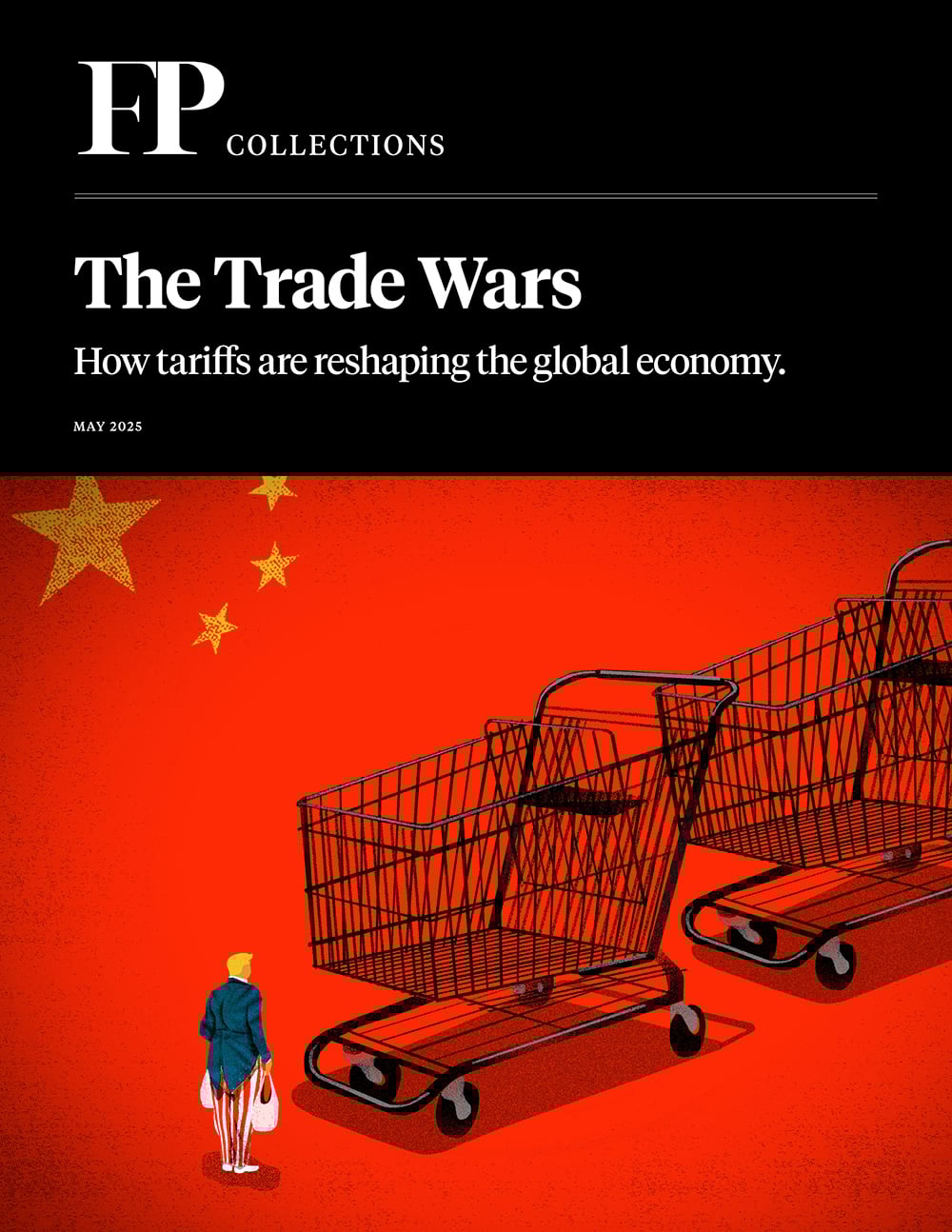
The Trade Wars
How escalating tariffs imposed by the United States and China will reshape the global economy.
By
FP Staff
1. Trump’s Shifting Tariffs Are Disrupting Global Shipping
By Elisabeth Braw, May 15
Shipping is, by definition, at the forefront of global trade. So, FP’s Elisabeth Braw wrote in May, it was also the first industry to feel the pain of Trump’s tariffs.
But “as is their wont, shipping lines have adapted their journeys and procedures,” Braw writes—and the long-term harm caused by shipping turbulence may instead hit land. She predicts looming job losses, starting with dockworkers.
2. Why Beijing Thinks It Can Beat Trump
By Scott Kennedy, April 10
Although he wrote this piece just a week after Trump’s April tariff announcement, the Center of Strategic and International Studies’ Scott Kennedy proved prescient in his analysis of how China would respond to U.S. duties.
“[Trump’s] escalation, brinksmanship, and volatility will likely be a monumental waste of time,” Kennedy writes, given China’s relative advantages in a trade war. “The real contest for systemic competition, at least for now, is over,” he adds—pointing to a more positive recent reappraisal by Chinese and international audiences about the resilience and strengths of the Chinese economic system compared to its U.S. counterpart.
3. Trump’s Long-Promised Tariffs Upend Global Trade
By Keith Johnson, Aug. 1
As promised, Trump delivered his deferred tariffs on Aug. 1, with punitive import taxes on nearly every good from countries around the world. “The issue,” FP’s Johnson writes, “is Trump’s continued misdiagnosis of both the problem and the solution.”
In this report, Johnson explains how the tariffs spell bad news for U.S. growth, inflation, and unemployment—and why experts think import duties will stick around even after Trump leaves office.
4. Who Holds the High Cards in Sino-American Supply Chain Poker?
By Graham Allison, Oct. 6
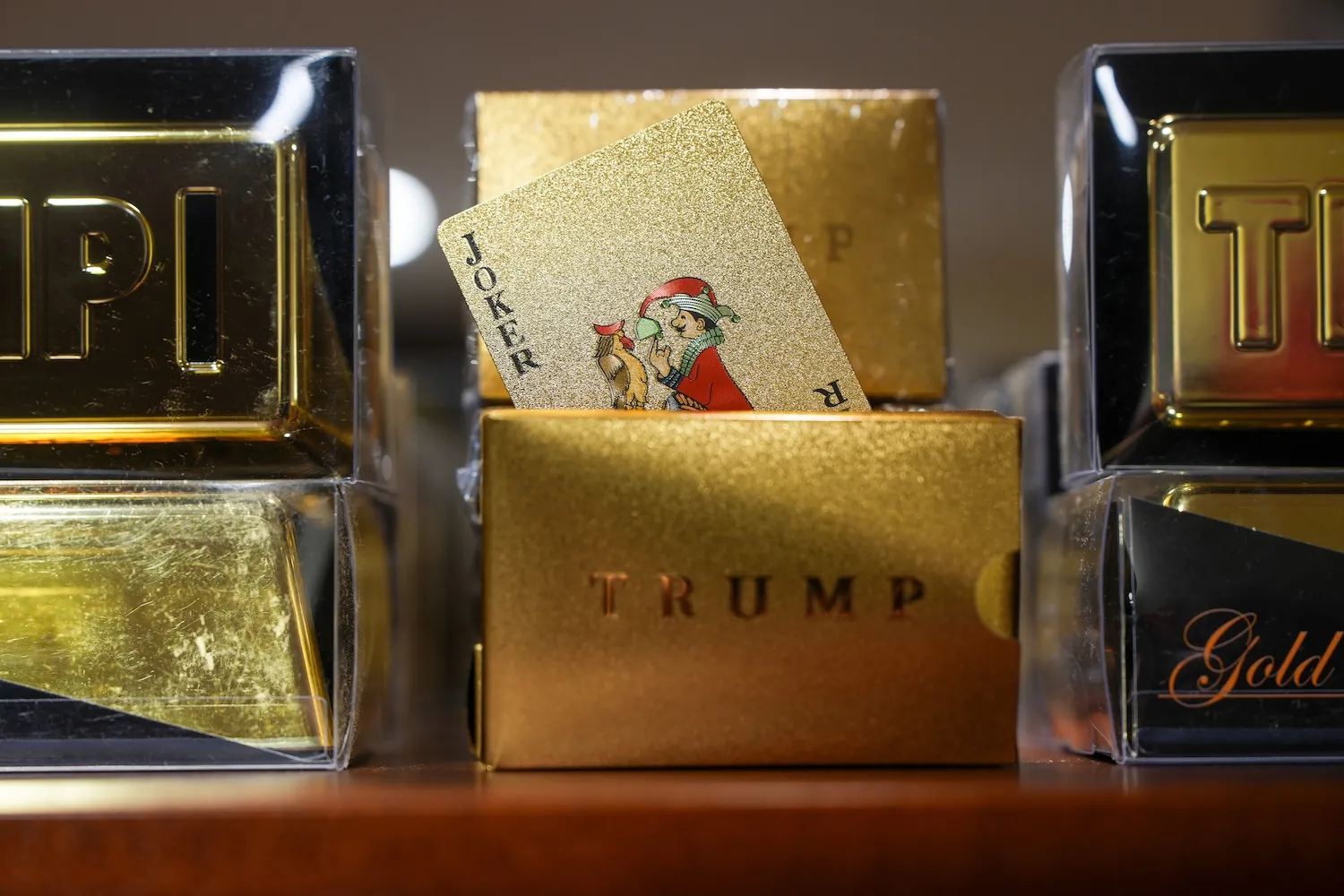
Trump-branded playing cards for sale at the Trump golf course in Turnberry, Scotland, on July 28.Christopher Furlong/Getty Images
Riffing on Trump’s apparent love of poker, Harvard University professor Graham Allison details the “last five hands” in the “Sino-American poker match” that was this year’s trade war. He begins with Trump’s initial April announcement and concludes with why Washington may yet have some high cards of its own to play.
While there is no easy way to eliminate vulnerabilities created by U.S. reliance on China for vital items, Allison writes, China also remains dependent on the United States for several things, and the U.S. dollar is still the world’s reserve currency.
Allison asks, “Could this mutual recognition of inescapable interdependence become the foundation for a new chapter in the rivalry between the United States and China?” Here’s to hoping 2026 brings a version of “mutual deterrence and coexistence” like that once enjoyed by the United States and the Soviet Union, Allison suggests.
5. Trump’s Tariffs Threaten the End of Neutrality
By Ali Ahmadi, Nov. 11
For a nation such as Switzerland—built on the pillars of neutrality, direct democracy, and financial prudence—Trump’s tariffs represent not just an economic shock but an existential one.
“In an era of economic coercion,” argues the Geneva Centre for Security Policy’s Ali Ahmadi, “Switzerland’s carefully cultivated exceptionalism no longer offered protection.”
Switzerland’s struggle signals a broader collapse of the postwar bargain that allowed small, wealthy nations to remain politically unaligned while economically prosperous. Middle powers everywhere, Ahmadi writes, will now be forced to choose sides in an increasingly bipolar world order.
Amelia Lester is a deputy editor at Foreign Policy.
Stories Readers Liked
-
An illustration with Donald Trump listening as Marco Rubio leans in with a hand cupped to whisper in Trump’s ear. Around the circular images are headshots of four men and one woman. -
A lone soldier in combat fatigues is seen from behind as he walks through a barren forest at dusk, surrounded by splintered, leafless tree trunks, with most of their branches blown off. -

A man is silhouetted from behind in front of a bright window as he walks down a dark, empty hallway. -
An illustration shows two men against a bright yellow background. One man wears a Western-style business suit and the other wears a black robe and white head covering. The men are shaking hands. Each holds a briefcase with money spilling out, the left man’s briefcase shaped like the United States’ and the right man’s like the Arabian Peninsula. -
A man in a coat outside of a glass office building, with high rise buildings under construction in the background. -
An illustration shows the seal of the United Nations with a shadow across it. Laurel leaves fall onto the ground from the seal as a person sweeps them up. -
us-restraint-realism-europe-military-withdrawal-mark-harris-illustration -

A silhouetted figure with a military hat is seen in front of a high red wall at night. -
An illustration shows the back of a person wearing a graduation cap with a globe motif on it. A hand reaches in to move a locator pin on the top of the cap/map. -
Photos of two men speaking each shown as a negative color inside a red and blue circle.

A Look Back at 2025
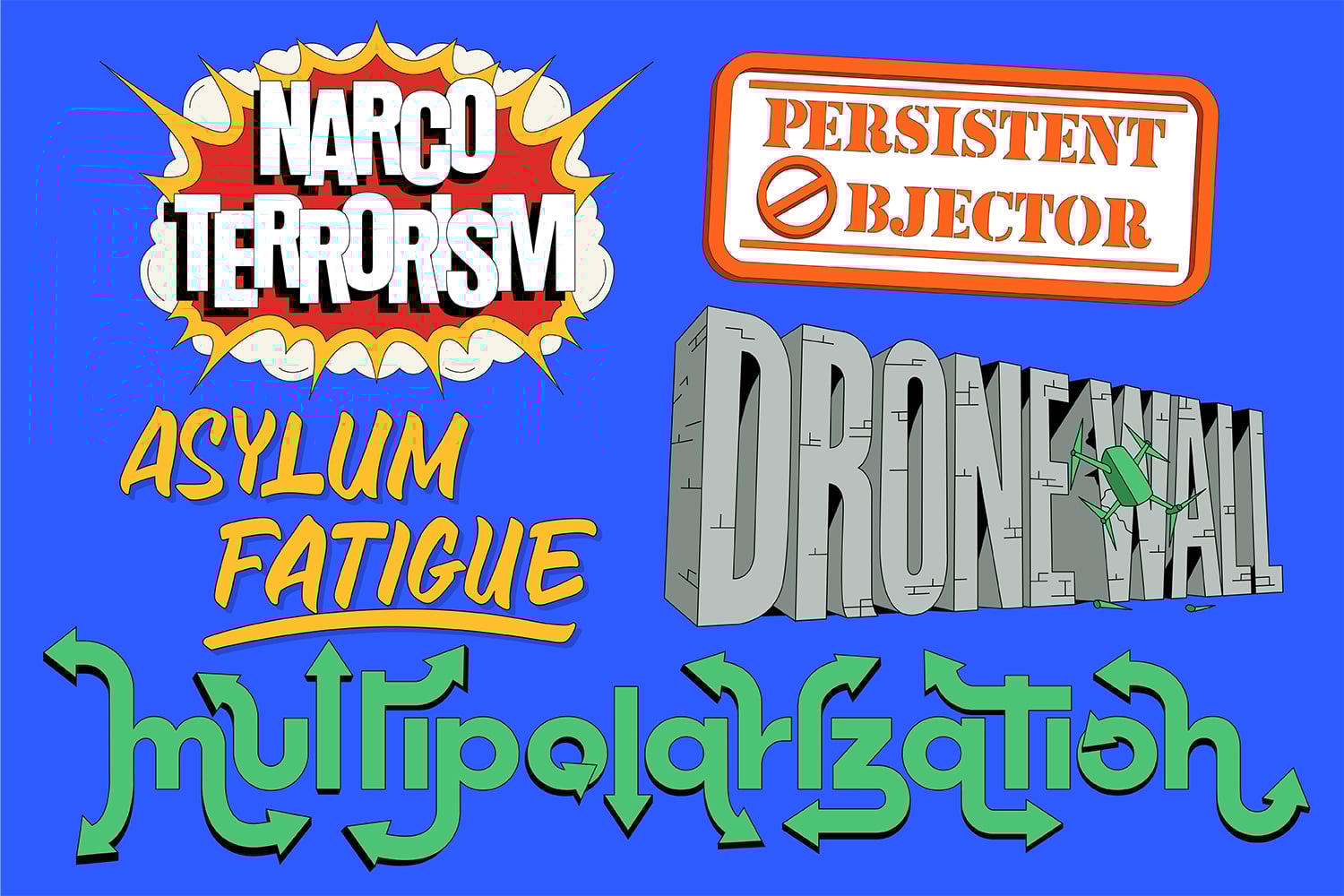
New Geopolitical Words We Learned in 2025
When it’s TACO time, no one wants to be a persistent objector.
-
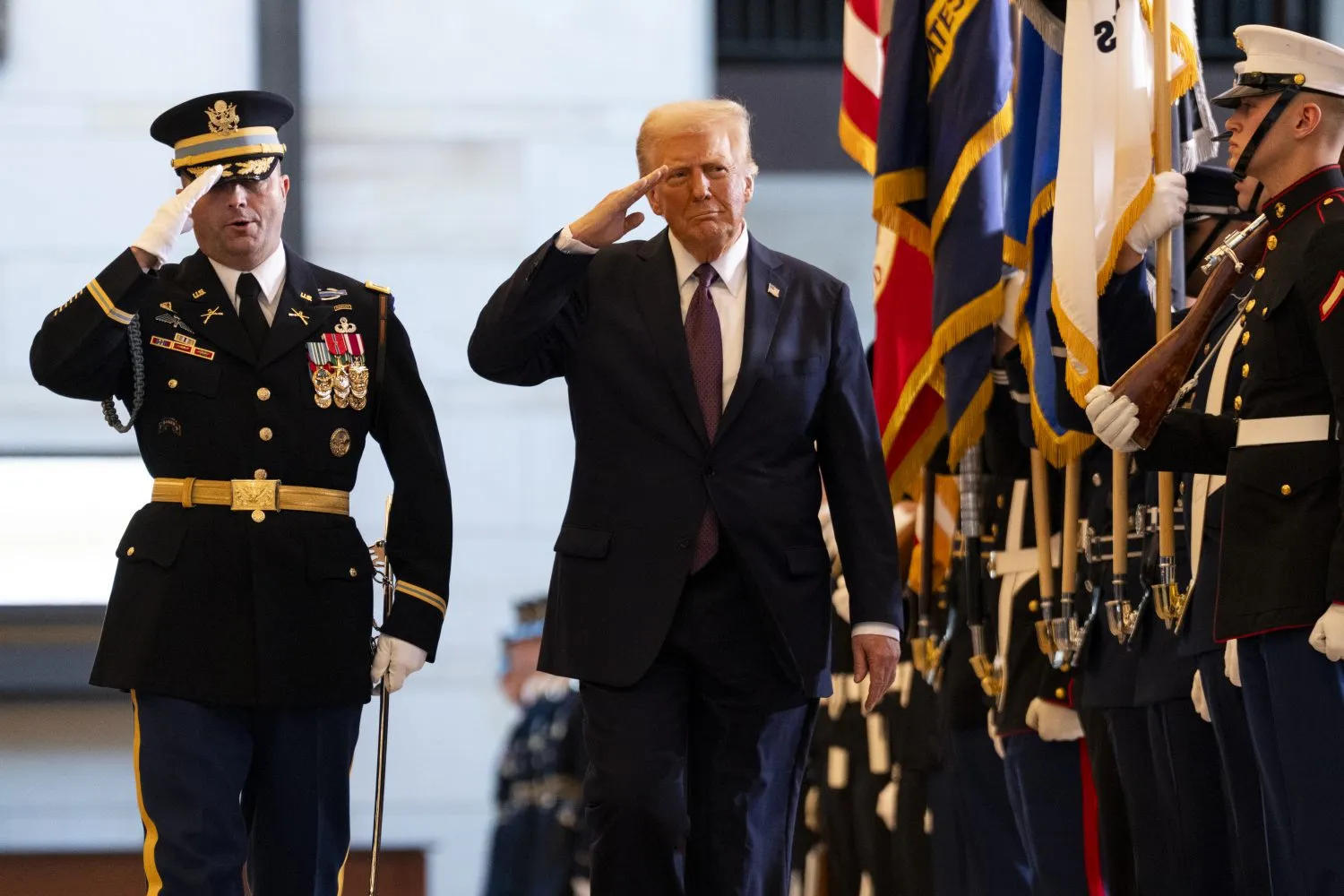
U.S. President Donald Trump reviews troops during his inauguration ceremony at the U.S. Capitol in Washington on Jan. 20. -
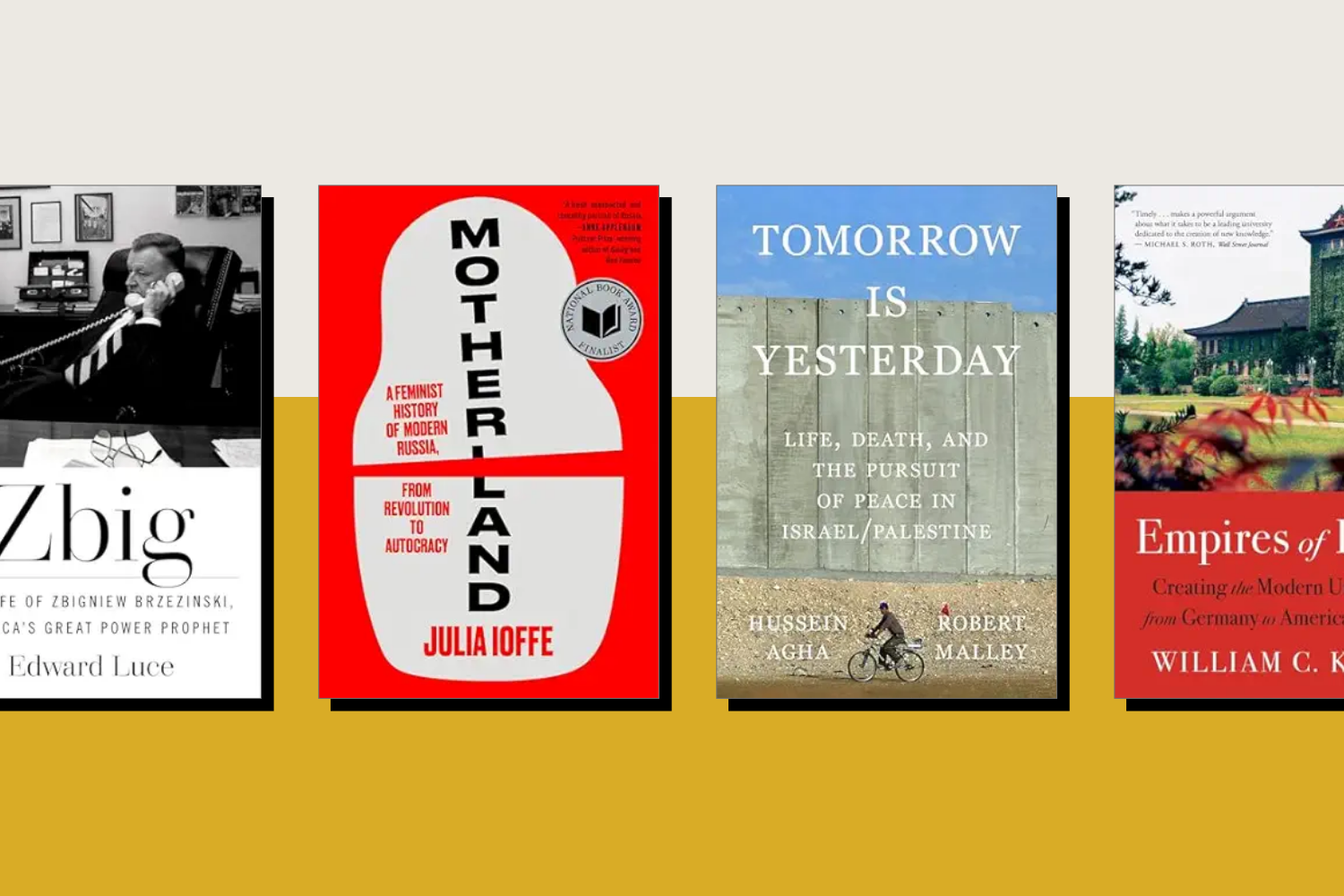
A grid of four book covers on a yellow background
Join the Conversation
Commenting is a benefit of a Foreign Policy subscription.
Subscribe
Subscribe
Already a subscriber?
.
View Comments
Join the Conversation
Join the conversation on this and other recent Foreign Policy articles when you subscribe now.
Subscribe
Subscribe
Not your account?
View Comments
Join the Conversation
Please follow our comment guidelines, stay on topic, and be civil, courteous, and respectful of others’ beliefs.
View Comments
Change your username |
Log out
Change your username:
CANCEL
Confirm your username to get started.
The default username below has been generated using the first name and last initial on your FP subscriber account. Usernames may be updated at any time and must not contain inappropriate or offensive language.