
This post was originally published on this site.
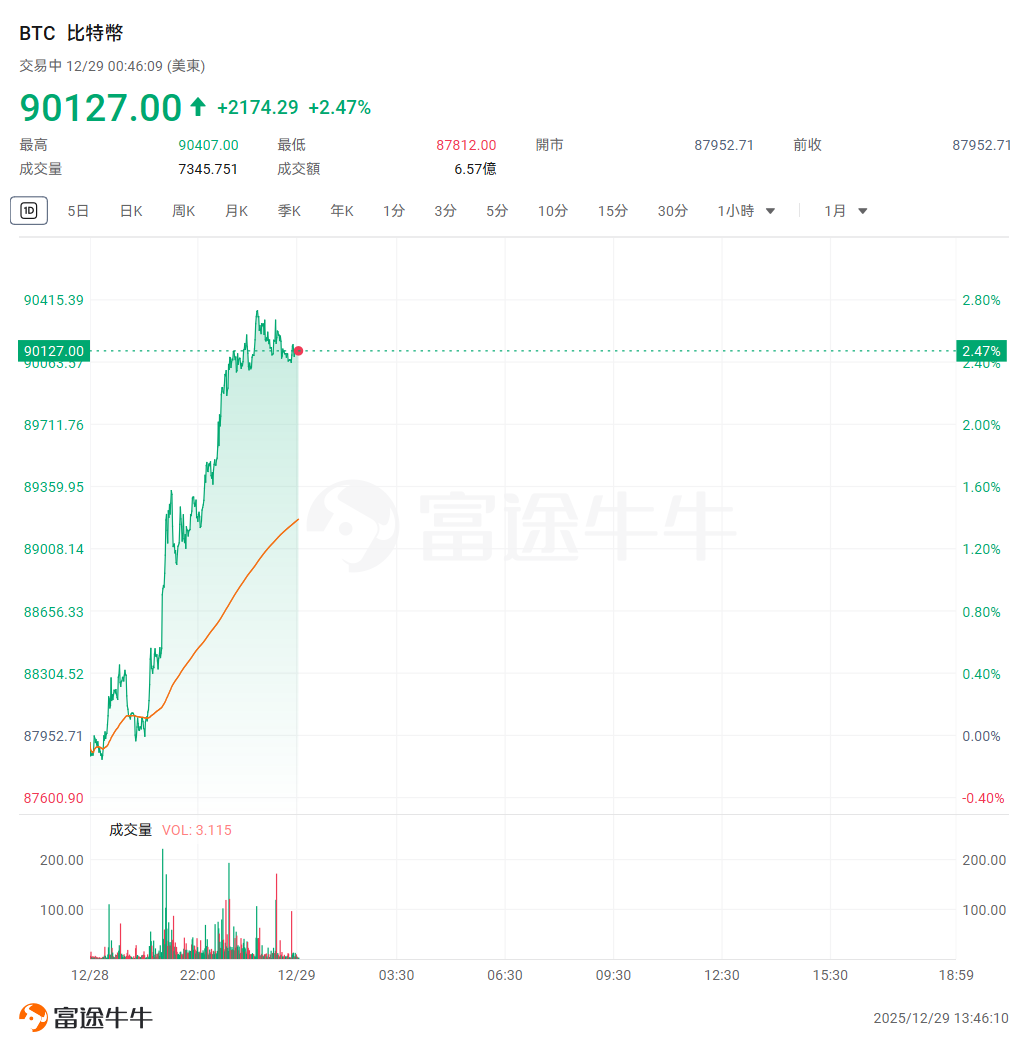
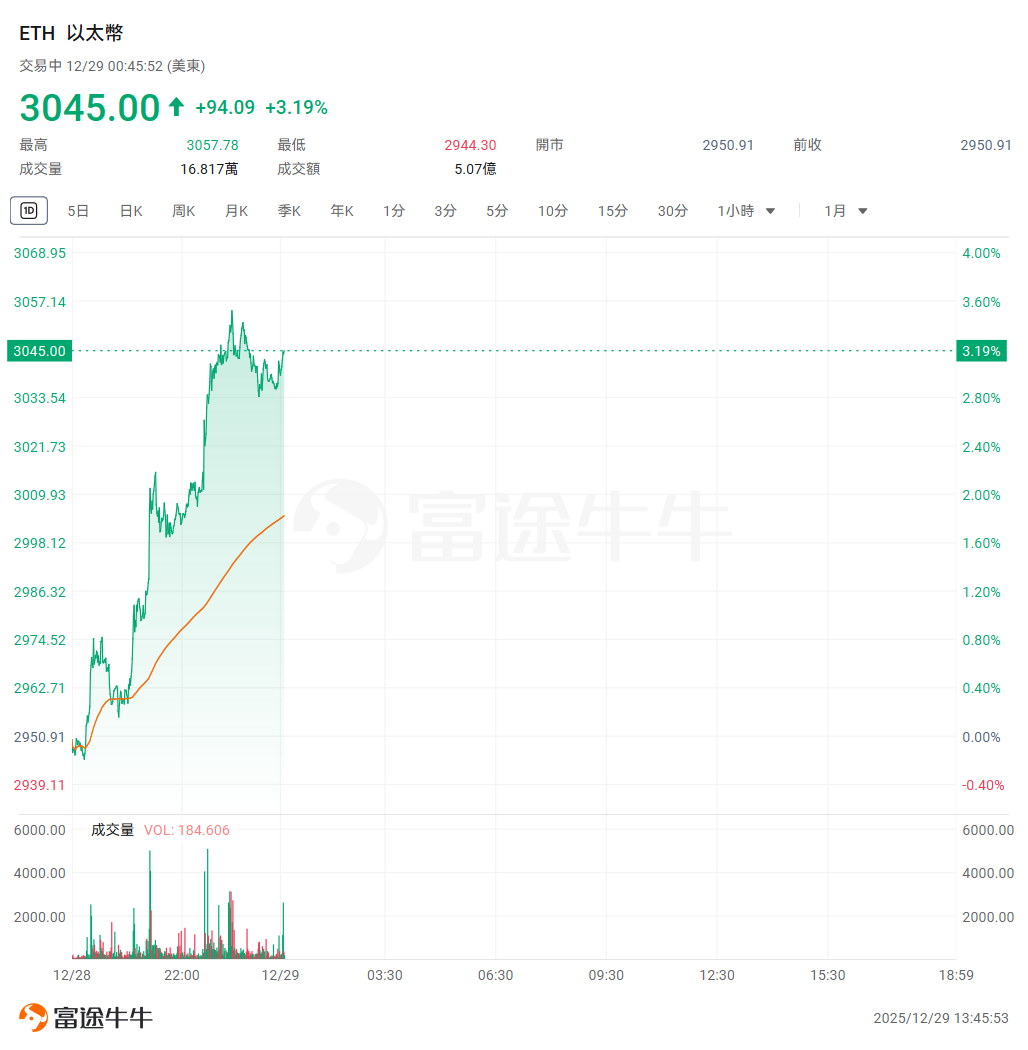
December 29 news: The cryptocurrency market is experiencing volatile upward movement. As of press time, $Bitcoin (BTC.CC)$Bitcoin rose by 2.47%, trading at $90,127; $Ethereum (ETH.CC)$Ethereum increased by 3.19%, trading at $3,045.
The latest analysis indicates that the share prices of Bitcoin treasury companies $Strategy (MSTR.US)$ remain low, while Bitcoin premium indicators are also declining. A critical decision regarding whether MSCI will remove Strategy from its index in January next year is approaching. Against this backdrop, Strategy is shifting to a ‘defensive mode’ and has recently established a cash buffer of approximately $2.2 billion to withstand the challenges posed by Bitcoin investments. This fund is expected to be used for preferred stock dividends and debt interest payments rather than acquiring more Bitcoin.
$Coinbase (COIN.US)$ Brian Armstrong, CEO of Coinbase, posted on the X platform stating that banks are lobbying the U.S. Congress to amend the GENIUS Act. Coinbase will not permit any amendments to the act, as it represents a red line for the company, and they will continue to safeguard the interests of customers and the cryptocurrency industry. Brian Armstrong added that he personally predicts that within a few years, once banks realize the enormous business opportunities presented by stablecoins, they will change their stance and lobby Congress to allow interest and returns on stablecoins. Therefore, current efforts are futile (and unethical), and the innovator’s dilemma persists.
It is reported that the current GENIUS Act prohibits stablecoin issuers from offering stablecoin rewards, but intermediary platforms such as Gemini, Coinbase, and Kraken can do so and have already been incorporated into the existing legislation. If traditional bankers revise the act to ban such practices, it would stifle innovation in stablecoins.
According to Forbes, since hitting a historical high in October, Bitcoin and the overall cryptocurrency market have seen a significant pullback. Bitcoin’s price is currently hovering around $90,000 per coin, down from its all-time high of $126,000. In contrast, gold, silver, and U.S. stocks have accelerated upward toward the end of the year. The market is showing a rare “split trend.” This situation is not merely driven by risk-aversion sentiment but is more likely a “strategic response” by institutions and capital to the global monetary system.
Ramnivas Mundada, Head of Economic Research and Corporate Research at GlobalData, predicts that amid global central banks continuously adjusting their reserve structures and reducing reliance on dollar-denominated assets, the de-dollarization process will accelerate. By 2026, gold could rise by an additional 8%-15%, while silver might increase by 20%-35%.
-
Analyst: Historically, there has been a divergence in correlation between Bitcoin, U.S. equities, and gold. After the last such occurrence, BTC prices surged tenfold.
Crypto analyst Plan B posted on the X platform that Bitcoin’s current price correlation with U.S. equities and gold has deviated. This phenomenon has occurred historically when Bitcoin was below $1,000, after which its price increased tenfold. Although price correlation is not absolute, and current market conditions may differ, time will tell.
In response, another analyst, Willy Woo, commented that the theft incident at Mt.Gox in late 2013 pressured Bitcoin’s price, and the deadlock over block size disputes in 2014 triggered whale selling. The question now is whether investors will view quantum computing as an obstacle equivalent to the “block size debate.”
A recent report by Coinbase Institutional indicates that the cryptocurrency market is transitioning from traditional boom-and-bust cycles to a model driven by structural forces, with activities increasingly concentrated in a few key areas. These domains are expected to dominate the operation of the crypto market by 2026 and shape the industry’s long-term future. The three leading areas predicted by Coinbase are perpetual futures, prediction markets, and stablecoins and payments.
$Strategy (MSTR.US)$ Executive Chairman Michael Saylor tweeted “Back to Orange,” hinting at another Bitcoin purchase. Gold advocate and economist Peter Schiff subsequently questioned the source of his funds, asking whether he raised money by reducing his stock holdings or selling shares at a discount.
-
Lu Lei: The future digital renminbi will carry commercial bank liabilities and possess functions including monetary value measurement, value storage, and cross-border payment capabilities.
According to reports by the Financial Times of China, Lu Lei, Deputy Governor of the People’s Bank of China, stated in an article that the future digital Renminbi will be a modernized digital payment and circulation tool supported by central bank technical safeguards and supervision. It will possess attributes of commercial bank liabilities, be account-based, incorporate features of distributed ledger technology, and circulate within the financial system as a medium of exchange, store of value, and instrument for cross-border payments. Looking ahead, the choice of operational and technical models for the digital Renminbi will prioritize meeting the needs of the real economy as its fundamental starting point. An inclusive yet prudent approach will be adopted toward the development direction of account-based and token-based digital currencies to ensure the digital Renminbi meets the demands of different scenarios and business entities.
According to Lookonchain monitoring, $Bitmine Immersion Technologies (BMNR.US)$ Bitmine continues to transfer ETH for staking. Over the past two days, Bitmine has staked 342,560 ETH ($1 billion).
On December 29, it was reported that regarding deBridge co-founder Alex Smirnov’s disclosure that the Flow team decided to roll back the blockchain without consulting major bridge partners, which could pose significant risks, Flow posted on the X platform stating that it is currently coordinating with key infrastructure partners to finalize the restart plan. The repair plan has been distributed to ecosystem partners (including bridge operators, exchanges, and validators) and is under evaluation. Coordination is expected to be completed within the next 2-3 hours. Flow reiterated that user funds are safe and unaffected.
According to reports by the China Financial Times, Lu Lei, Deputy Governor of the People’s Bank of China, announced that the central bank will introduce the ‘Action Plan for Further Strengthening the Management Service System and Related Financial Infrastructure Construction of the Digital RMB.’ The new generation measurement framework, management system, operational mechanism, and ecosystem for the Digital RMB will officially come into effect on January 1, 2026.
According to the 10x Research weekly market report, the cryptocurrency market entered the new year with low activity typical of cyclical downturns, but derivative positions quietly signaled a contrasting trend. Volatility is narrowing, funding rates are gradually rising, and leverage remains high despite declining trading volumes and participation. ETF flows, stablecoin trading activities, and futures positions no longer align, creating a deceptive calm on the surface while underlying turbulence persists. The options market is undergoing adjustments, typically signaling a shift in market dynamics rather than a continuation of trends. Meanwhile, technical indicators are nearing critical thresholds, where even minor fluctuations could trigger larger-scale asset allocation adjustments.
Cryptocurrency trading volumes have dropped by 30% compared to usual levels. Funding rates have slightly increased amid the orderly liquidation of futures contracts. Bitcoin’s downtrend continues but may turn bullish in January. Bitcoin’s Relative Strength Index (RSI) stands at 43%, indicating a bullish signal, while the stochastic oscillator at 30% suggests a bearish signal. Bitcoin is 4.5% away from triggering a trend reversal, with the current trend remaining bearish. The key price level for short-term bullish/bearish sentiment is $88,421, while the primary bullish/bearish threshold is $98,759. Ethereum may also experience a bullish trend reversal in January.
Ethereum’s RSI is at 44%, signaling bullish potential, while the stochastic oscillator at 23% indicates bearish conditions. Ethereum is 5% away from triggering a trend reversal, with the current trend remaining bearish. The key price level for short-term bullish/bearish views is $2,991, while the primary bullish/bearish threshold is $3,363. The realized volatility of Bitcoin and Ethereum has begun to decline significantly: Bitcoin’s 30-day realized volatility is 38.2%, down 7% from its 30-day average of 45%. Ethereum’s 30-day realized volatility is 61.2%, 5 percentage points lower than its 30-day average of 66.6%.
-
Academic Journal Administered by the Supreme People’s Court Publishes Article: Commercial Law Reforms for Digital Transactions, Electronic Currency, and Virtual Assets
The official WeChat account of the Supreme People’s Court published an article in its administered academic journal ‘Digital Rule of Law’ titled ‘Commercial Law Reforms for Digital Transactions, Electronic Currency, and Virtual Assets,’ which noted: The amendment to the Uniform Commercial Code jointly revised by the Uniform Law Commission and the American Law Institute was officially passed in 2022 and subsequently widely adopted by legislative bodies across the United States. This amendment embraces diverse transaction methods, including electronic formats, clarifies the relationships between tangible currency, central bank digital currencies, and other virtual currencies, establishes a new property category termed ‘controllable electronic record,’ and delineates the rules for control and transfer of such property.
China’s civil and commercial norms should also evolve to address the development of digital transactions, electronic currency, and virtual assets through practice-oriented legal improvements, thereby incentivizing economic and technological advancement and securing an advantageous position in international institutional competition.
 Still worried about a Bitcoin downturn? Should you take a small position or just wait and see? If you don’t have time to monitor the market, consider regular fixed investments >>

Editor/Afina