
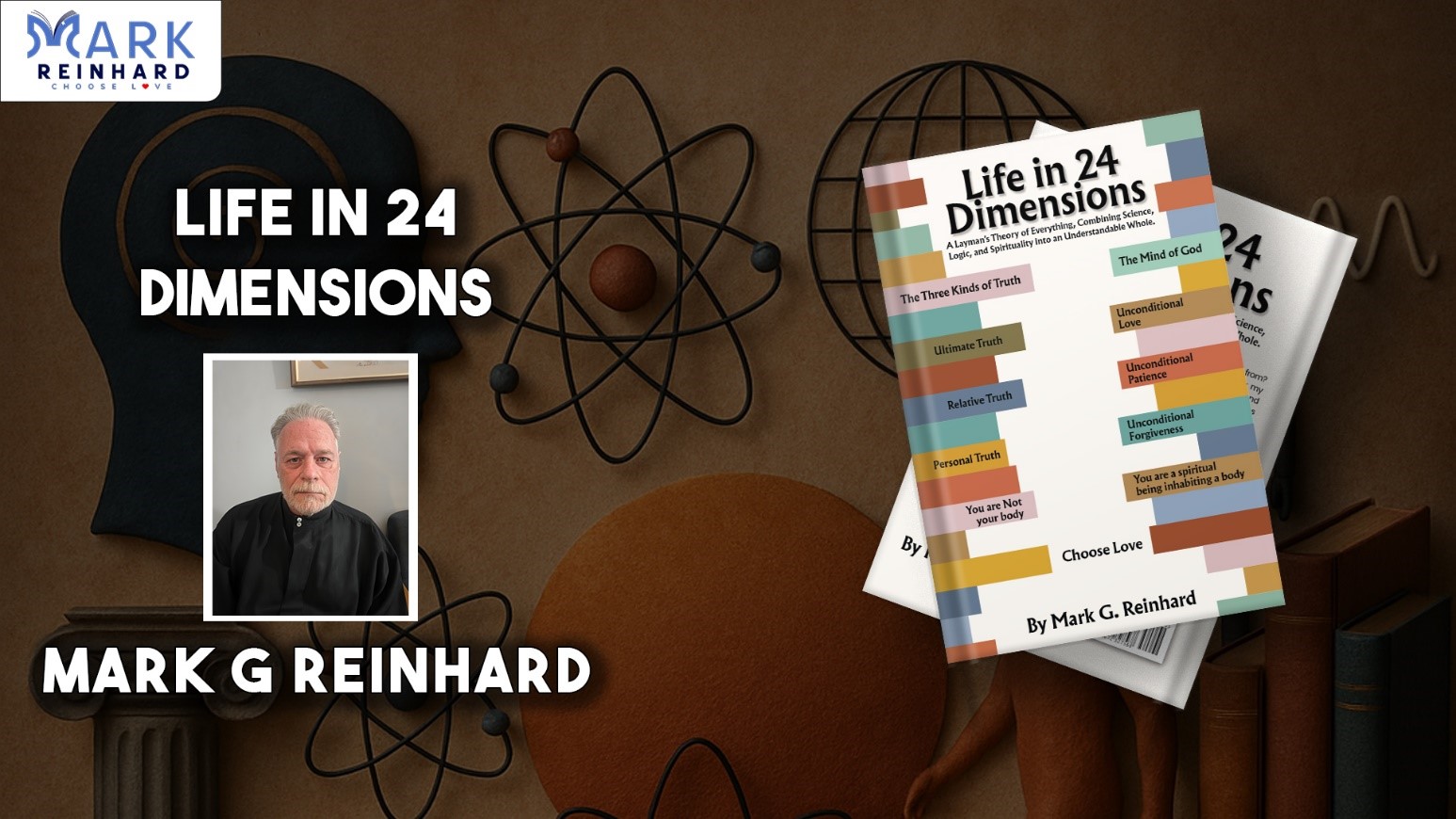
In an age of unparalleled scientific progress, it’s paradoxical that many of us feel more confused about meaning, purpose, and truth than ever. Technology evolves at lightning speed, information is at our fingertips, yet existential anxiety and moral uncertainty seem to be on the rise. Why is a society so informed often so lost? According to Life in 24 Dimensions, the answer isn’t ignorance—it’s perspective.
“Modern culture has focused almost exclusively on the measurable and tangible,” the author explains. “In doing so, we’ve sidelined the vast realms of consciousness, emotion, and spirituality that define human experience.” By treating only what can be observed and quantified as “real,” society has created an incomplete worldview—one that explains how things happen but not why they matter.
This tension between science and spirituality didn’t happen overnight. Historically, reason and faith were seen as opposing forces: science demands evidence, repetition, and logic, while religion relies on tradition, faith, and experience. Life in 24 Dimensions challenges this divide. “What if science and spirituality aren’t enemies, but complementary lenses through which we see the same reality?” the author asks.
Central to the book is a distinction between three types of truth: Ultimate Truth, Relative Truth, and Personal Truth. Ultimate Truth is unchanging and universal; relative truths are conditional and context-dependent; personal truths are subjective experiences. Much of modern conflict, the author argues, stems from confusing these layers—treating personal or relative truths as absolute.
The solution lies in applying logic consistently. Reality, the book posits, includes both physical and non-physical dimensions. Physical dimensions describe matter, space, time, and energy. Non-physical dimensions include consciousness, thought, emotion, free will, and meaning. Ignoring non-physical reality leads to moral drift, fragmented purpose, and social division. Logic, when applied fully, demands recognition of these invisible yet influential forces.
Fear, the author observes, deepens confusion. Fear of being wrong, of questioning beliefs, of losing control, drives separation and conflict. Love, by contrast, is integrative—it aligns consciousness with truth, creating coherence and connection. Here, the book makes a bold claim: God is not merely a belief but the foundation of reality itself. God exists beyond time and matter, embodying Ultimate Truth. Love, then, is the organizing principle of existence, giving rise to consciousness, meaning, and intentional creation.
“Consciousness, morality, and love aren’t accidents,” the author emphasizes. “They’re evidence of a universe rooted in purpose and unity. Logic doesn’t dismiss God—it demands recognition of this deeper reality.”
Life in 24 Dimensions isn’t just a philosophical treatise—it’s a roadmap. It invites readers to expand their understanding, reconcile reason with spirituality, and rediscover meaning in a world that too often measures only what it can touch.