
This post was originally published on this site.

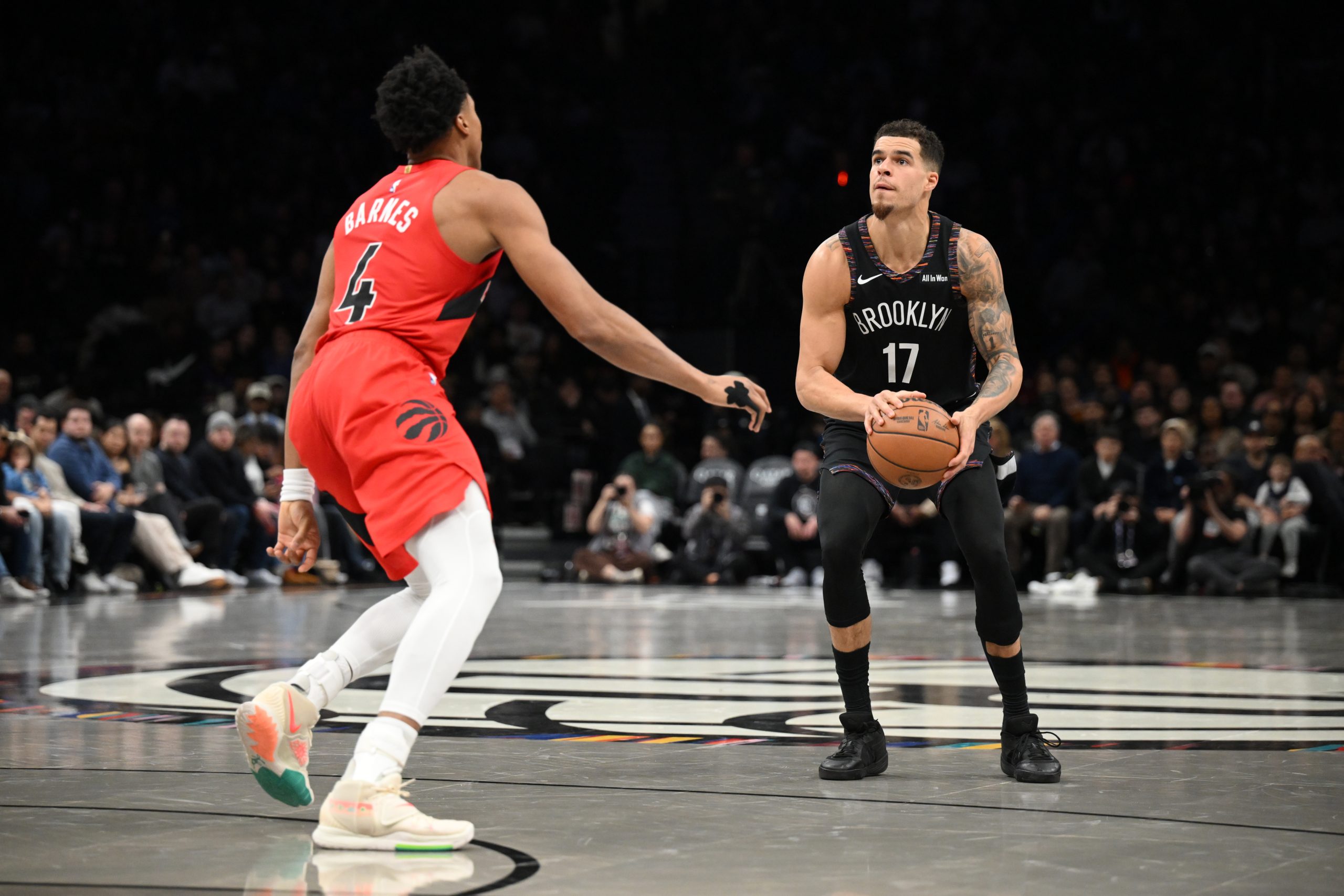
MIchael Porter Jr. is having the time of his life and that success is driving yet another debate in Nets World fan base between the tankers who want nothing less than one of the three franchise-changers at the top of the 2026 Draft and those tanking skeptics who want to let things play out, let the chips fall where they may come the Lottery in mid-May. After all, they note, the last two No. 1 picks were awarded to play-in teams, the Atlanta Hawks in 2024 and the Dallas Mavericks last year.
The argument on the tanking side of things is simple: lose now and win later, putting aside all the vagaries of the draft. Dumping Michael Porter Jr. — ASAP! — would just makes things sweeter: He could bring back yet another first rounder, maybe in 2026, the Holy Grail of draftniks and improve the team’s chances in the lottery come mid-May. But wait, writes Steve Lichtenstein, the former WFAN write who now has his own substack, Steve’s Newsletter, things aren’t so simple.
The 27-year-old 6’10” forward who won a chip with the Nuggets three seasons back is indeed having a great season. After the Nets win Sunday night vs. the Toronto Raptors, Porter is averaging 25.6 points on 49/40/82 shooting splits along with 7.4 boards and 3.3 assists. In the last month, the numbers have gotten even better: 28.7 on 51/47/79 splits with 7.6 boards and 4.0 assists. Them’s all-start numbers.
Moreover, Porter who was the fourth option in Denver has now become a leader on the league’s youngest team. So, as Lichtenstein writes, in normal times, all that would lead to a bidding war. But Lichtenstein argues these are not normal times for a lot of reasons, some but not all related to the CBA.
From my vantage, it just seems like teams are continuing to circle the 2023 Collective Bargaining Agreement with caution. General Managers would rather part with a kidney than a first-round pick. Well, unless they deem the acquired player a transformational piece or perhaps a sure thing that they believe will put them over the hump in their Championship quest.
Waiving-and-stretching bad contracts became the more preferable avenue than attaching an asset, especially a 1, just to dump it in a trade. Whereas the old salary cap rules had exceptions you could drive a truck through, those routes are now obstructed by aprons.
Indeed, the Nets attempt to pry a second first rounder in the 2026 Draft beyond their own failed last summer. There was no market, as Lichtenstein noted. The June draft is seen as even better than the 2025 Draft which looks very good a third of the way into the season. Sean Marks & co. did extract the Nuggets unprotected first in 2032 in the Porter deal, another first that became Drake Powell and three seconds in four salary dumps. At the moment, Brooklyn has 32 draft picks: 13 firsts, 10 of them tradeable, and 19 seconds, all tradeable.
Lichtenstein breaks down the reasons why he thinks MPJ may not return what fans want, another unprotected first, at least for the moment.
- While Porter has proven himself “a complementary cog on a champion in Denver,” there are doubts that he can be the lead guy anywhere but Brooklyn where he is that guy be default, Lichtenstein argues. (As he does in each of his arguments, Lichtenstein notes his positives, not just his 40% career 3-point percentage but his 37.4% mark over 75 playoff games.)
- Porter’s contract will be hard to move, particularly at the deadline when only one team — his — has cap space. Lichtenstein notes “Porter’s contract—he is owed $40.8 million next season on top of the $38.3 million cap number … has to be matched by an acquiring team in an in-season trade.”
- MPG’s contract is so large that if the Nets require a first rounder in exchange, they’ll have to take on bad contracts to fill out a trade package. Lichtenstein notes that the Nets had to take on Terrance Mann’s three-year, $47 million deal to acquire the pick that became Powell as well as $1.1 million in cash. “It might not be so easy to put together a Porter proposal that sticks the Nets with a couple more of them.”
Lichtenstein doesn’t mention the salary cap floor the Nets would have to meet or face some real sanctions — like a prohibition on aggregating salaries — at the deadline. Brooklyn currently has less than $200,000 of a cushion in that calculation.
He also cites a number of trade scenarios that might be appealing to fans, but again argues they have downsides, putting aside the draft assets that might flow to Brooklyn. The deal that seems to have he most currency in fans’ trade machinery is one with Detroit.
The cleanest trade partner is Detroit, who has the $26.6 million expiring contract of Tobias Harris plus a selection of salary-matching reserves, including old friend Caris LeVert. The Pistons are 21st in the league in three-point field goal percentage. The question for them, though, is how much would Porter represent an improvement over their No. 1 seed in the Eastern Conference lineup. Would they attach a 1 in such a scenario, because the Nets have no incentive to sign off without it? It’s not clear-cut.
The Pistons have all their own firsts available. but they’re likely to be Tlow considering how well their youngsters are playing.
Then, there’s the reality that the Oklahoma City Thunder may run away with the NBA championship and no mid-season deal, particularly one with unprotected firsts, is likely to change that.
[T]here might not be any urgency for rivals to go all-in. I don’t envision anyone pulling the trigger on such a move until much closer to the February 5 trade deadline. If then.
Lichtenstein concedes that without MPJ, the Nets are likely to lose more games — “Porter is such a gamebreaker that he can sway a couple of marginal games into the ’wins’” column.“ That, he adds, ”was Marks’ ‘mistake’ last season, according to the fervent pro-tanking fans, until it was too late.“
So, maybe it’s better to wait till the off-season when a lot of the issues cited by Lichtenstein will either go away or dissipate. Back when he was traded to the Nets last June, the punditry all suggested that that would be the plan: pump up his value after a highly successful season.
The worst-case scenario with an MPJ trade, absent him getting hurt, is that the Nets don’t get any offers that include first round picks. Lichtenstein, whose position on tanking in general is well known — he hates it, wonders whether it would be smarter just to wait and let things play out.
To a tanking agnostics, the worst outcome this time would be if Porter were dealt for second rounders. The Nets already have 19 of them over the next seven Drafts, including three in 2026. I’d rather they keep Porter and live with the lottery consequences if 1s are out of bounds.
It seems likely that any trade scenarios won’t materialize until closer to the February 5 — 3:00 p.m. ET — deadline five weeks from now. A lot can happen between now and then.