
This post was originally published on this site.
Canadiens get: Forward Phillip Danault
Kings get: 2026 second-round pick
Shayna Goldman: Centers don’t come cheap in this league — second-line centers such as Brock Nelson can cost a first-round pick and a top prospect. Even a bottom-six center such as Scott Laughton got a first-rounder in return. The return of a second-rounder is more of the Alexander Wennberg variety, when he was traded at the 2024 deadline.
Advertisement
It just comes with a little more attachment, since Danault has another year on his contract. And while the idea of adding a clutch playoff performer sounds enticing, his downturn this season is an obvious red flag.
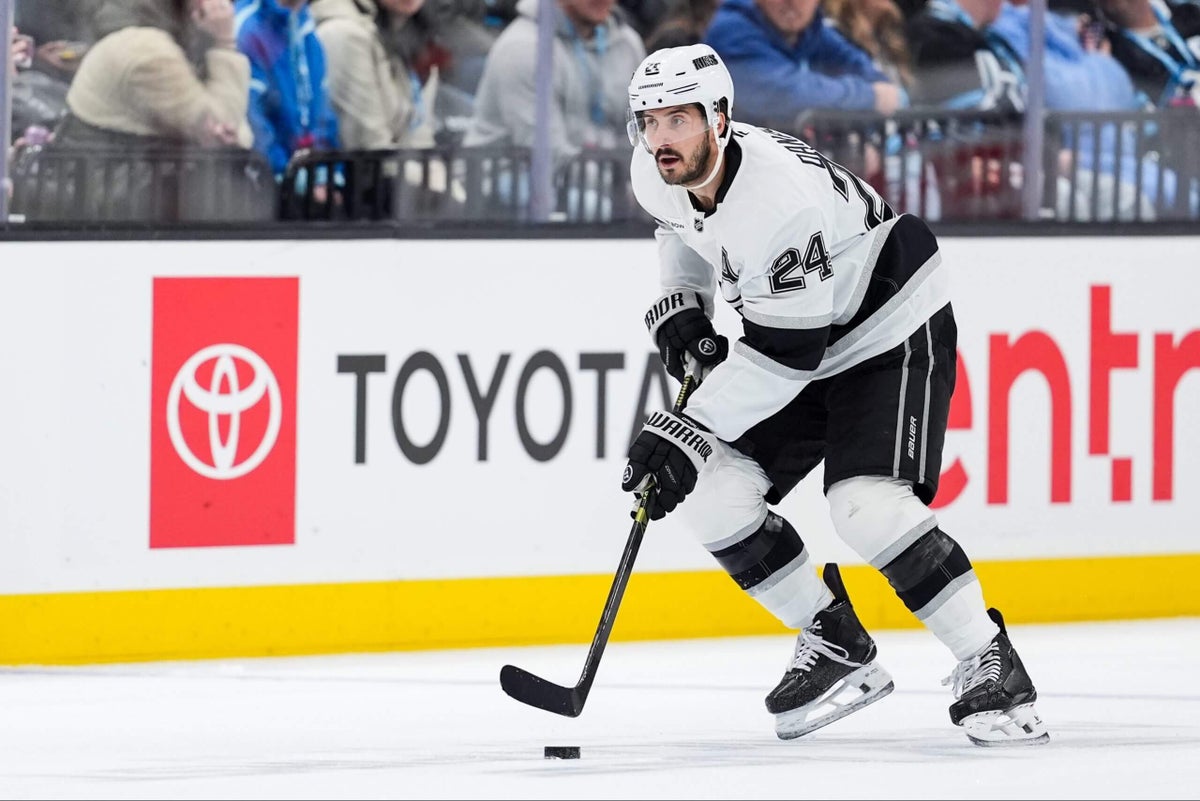
Having zero goals through 30 games and just five points is obviously glaring. When adjusting for minutes played, Danault is only scoring at a rate of 0.61 points per 60, which is the worst of his career — it’s literally a third of his pace from last season. And it’s not as if a change in his power-play deployment explains it. Sure, his minutes on the advantage have ticked down progressively over the years, but the real problem is how much his scoring plummeted at five-on-five. Some of it is simply bad luck, as the team should be scoring more (2.36 xG per 60) than they actually are with Danault on the ice (1.81 goals per 60). But that offensive generation is still down compared to past seasons and relative to his teammates. And on top of that, his defense isn’t as stout as usual, either.
Even with all of those downs in mind, this deal still makes sense for the Canadiens. The familiarity factor is obviously strong, but the driving force is that Montreal needs help down the middle. The goal, clearly, was to find someone who could take some of the defensive burden off Nick Suzuki’s shoulder, and Danault is very capable of absorbing those minutes. Maybe on a more offensive team, with more active defenders supporting the forward group, he can also get back on track scoring-wise.
So even if a second-rounder is a little rich for a player with zero goals this season, given the Canadiens’ overall position, it’s a price they can afford. Montreal accumulated a lot of picks over the years, has almost all of its own picks over the next three years, and has one of the stronger prospect pools in the league. This team can afford to turn that surplus of assets into actual NHL help, and Danault could help stabilize the Canadiens’ two-way play in a middle-six role. By making the trade now, management has time to assess the roster with him in the fold before rushing to any other moves.
Advertisement
The Kings, on the other hand, need a lot of help. Danault hasn’t threaded the needle enough in L.A. this year, on a team that’s starved for scoring. It sheds cap space and moves out a player who has clearly underperformed, in exchange for a second-rounder that could be flipped to address other areas of need. Still, it would have made sense to keep the shutdown center with Anže Kopitar’s incoming retirement in mind — what was once a strength down the middle could quickly become a weakness behind Quinton Byfield next year, unless someone such as Alex Turcotte or Samuel Helenius steps up (and this move gives these players more runway to show it this year. Still, everything around the Kings just feels underwhelming right now.
Canadiens grade: B+
Kings grade: C+
Harman Dayal: This is a sensible trade for both sides, with it especially making sense for Montreal.
The Canadiens desperately needed to beef up their center depth, a task that’s no easy feat in today’s market, where quality centers are hard to come by.
There’s no doubt that Danault’s offensive game has fallen off a cliff this year — his line was scoring just 1.8 goals for per 60 minutes at five-on-five, and his underlying offensive play-driving metrics took a nosedive compared to last season as well. However, the 32-year-old still brings a ton of defensive specialist qualities that the Habs will benefit significantly from.
Danault is strong in the faceoff dot and his defensive impact is still sturdy even if it’s no longer elite — the Kings surrendered just 1.35 goals against per 60 during his five-on-five minutes this year. Because of how little they give up defensively, Danault’s line was still winning its two-way matchups, with L.A. outscoring opponents with him on the ice. He also remains a high-end penalty killer.
Advertisement
The Habs are a young, inexperienced group that struggles defensively and has faced injuries down the middle. Danault’s arrival as a savvy, battle-tested defensive ace should help stabilize the bottom six.
Montreal had an extra second-round pick this year, so the cost feels justifiable. And it doesn’t seem like an overpayment despite Danault’s lack of offensive production this year because there aren’t many serviceable NHL centers available.
The Canadiens are incurring some risk with Danault’s contract, which pays him a $5.5 million cap hit through the end of next season. He’ll need some kind of modest offensive bounce back, even if he doesn’t return to being a 45ish point player. With that said, we’ve seen plenty of underperforming veterans rebound with a change of scenery since last season, whether it be Jacob Trouba, Cam Fowler, or Chris Kreider. The risk of Danault’s $5.5 million cap hit also isn’t excessive in this rising cap world, especially because the Habs have extra cap flexibility for next year, with Patrik Laine’s $8.7 million AAV deal coming off the books this summer.
From the Kings’ perspective, it was clear that both sides needed a fresh start. This should open up an opportunity for Alex Turcotte, who impressed in a fourth-line role last year, to see if he can break out in a bigger role. Turcotte’s speed and dogged work rate are intriguing tools.
What matters now for L.A. is what it does with this newfound cap space and some excess draft capital (the Kings have two second-round picks and two third-round picks this year). Can they bundle some of their assets together to make a bigger splash closer to the deadline?
Trading Danault doesn’t make the Kings, who are still in a playoff spot, a better team today. But the return was decent for an underperforming player. Now the goal has to be to leverage this new asset and cap flexibility to bolster the team prior to the deadline.
Canadiens grade: B+
Kings grade: B