
This post was originally published on this site.
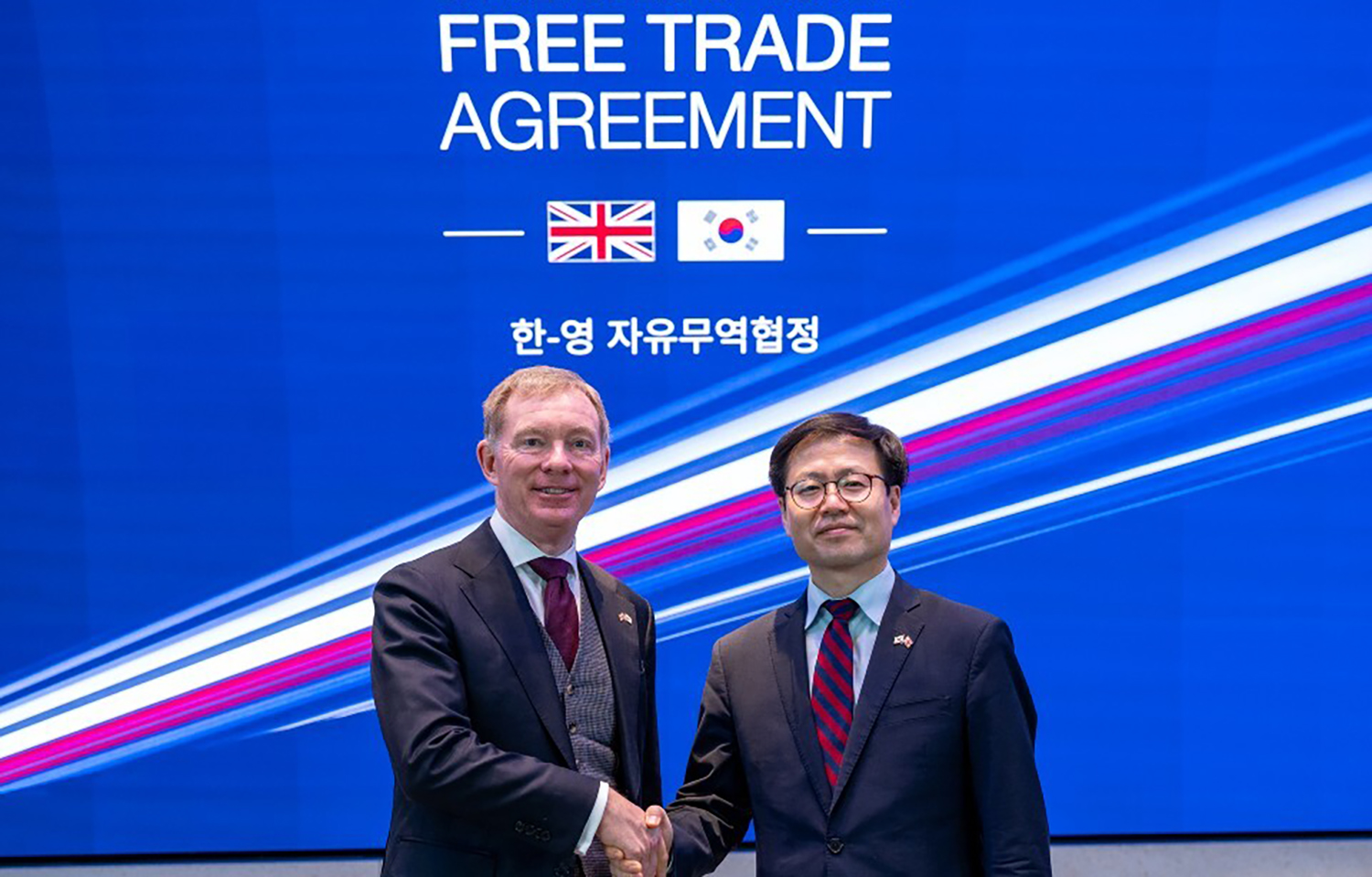
The United Kingdom and South Korea have struck a new trade deal.
The latest deal represents an extension of a previous agreement between the two countries that was set to expire in January 2026. The U.K. government said it expects the new package to protect GBP 2 billion (USD 2.7 billion, EUR 2.3 billion) of U.K. exports from an increase in tariffs.
According to the nation’s Department for Business and Trade, the country’s trading relationship with South Korea – the 12th largest economy in the world – has increased by 32 percent over the last decade, reaching GBP 15.8 billion (USD 21.2 billion, EUR 18 billion) in 2024.
Therefore, along with U.K. industries like car manufacturing and pharmaceuticals, food and drink exporters are set to benefit from an extension of tariff-free trade on most goods and services between the two nations.
U.K. Prime Minister Keir Starmer said the FTA, finalized on 15 December, was “a huge win for British business,” highlighting that it represents the government’s fourth major trade agreement this year, following new deals made with the European Union, India, and the United States.
The continued relationship between the U.K. and South Korea is likely to particularly benefit Scottish salmon.
Scottish salmon is the United Kingdom’s top food export, and trade body Salmon Scotland has forecast that international sales of the product will reach GBP 1 billion (USD 1.3 billion, EUR 1.1 billion) for the first time this year.
Salmon exports to South Korea soared more than tenfold between 2015 and 2019 – from GBP 214,000 (USD 286,934, EUR 244,009) to GBP 2.25 million (USD 3 million, EUR 2.6 billion) – before the trade was hit by the global pandemic. However, with export levels rising to GBP 366,000 (USD 490,723, EUR 417,368) last year, the new trade deal is expected to help Scottish producers get back toward all-time highs and capitalize on the recent boom in the Asian market.
The FTA includes dedicated provisions to promote smooth customs procedures, including greater clarity of export and import licensing requirements, heightened transparency when conducting import checks at border checkpoints, and more predictable clearance processes for the release of goods, mostly within 48 hours. This will support smoother cross-border operations and reduce risks to perishable products.
Salmon Scotland CEO Tavish Scott welcomed the new agreement.
“This deal will increase support in accessing the market and provide the opportunity for our exporters to deliver fish in pristine condition, with confidence, to consumers in South Korea,” he said. “South Korea represents an important market within Asia where Scottish salmon has seen significant growth in recent years.”