
This post was originally published on this site.
What Is JPMorgan Bringing Onchain With MONY?
JPMorgan Chase is moving deeper into blockchain finance with the introduction of its first tokenized money-market fund on Ethereum, seeded with $100 million of the bank’s own capital. The private vehicle — My OnChain Net Yield Fund, or MONY — will open to qualified investors this week through the Morgan Money platform, according to The Wall Street Journal.
Investors will receive digital tokens representing their positions, stored in a compatible crypto wallet. Subscription and redemption can be completed using cash or Circle’s USDC stablecoin. The fund is built on Kinexys Digital Assets, JPMorgan’s in-house tokenization platform.
MONY functions like a traditional money-market fund: it holds short-term debt instruments, accrues interest daily, and is structured to offer yields above standard bank deposits. Access is restricted to individuals with at least $5 million in investable assets and institutions with a minimum of $25 million, with a $1 million entry point.
Investor Takeaway
Tokenized funds are becoming a gateway for institutions that want onchain settlement without leaving regulated structures. JPMorgan’s $100M seed signals growing appetite for blockchain-based liquidity tools.
Why Are Institutional Firms Accelerating Tokenization?
JPMorgan’s move comes as U.S. policymakers give clearer guidance on where blockchain-based assets fit inside the existing financial system. The GENIUS Act, passed earlier this year, set a national framework for dollar-denominated stablecoins. Meanwhile, work on the Clarity Act points to a more coherent division of regulatory roles for onchain financial products.
These developments have pushed large institutions to scale tokenization programs that were previously experimental. “There is a massive amount of interest from clients around tokenization,” said John Donohue, JPMorgan Asset Management’s head of liquidity. “We expect to be a leader in this space and work with clients to make sure that we have a product lineup that allows them to have the choices that we have in traditional money-market funds on blockchain.”
Real-world asset markets have reflected this trend. Total capitalization reached $38 billion in 2025, according to The Block. Tokenized money-market funds have drawn particular interest because they give investors a way to keep assets onchain while earning yield, solving the problem of idle stablecoin balances that generate no return.
How Does JPMorgan Fit Into the Competitive Landscape?
The bank joins an expanding group of asset-management firms experimenting with tokenized funds. BlackRock runs the largest such product with more than $1.8 billion in assets. Goldman Sachs and BNY Mellon said earlier this year they would work together on digital tokens tied to money-market funds from major issuers. Several crypto exchanges have also rolled out tokenized securities in selected markets as demand grows for onchain versions of familiar financial instruments.
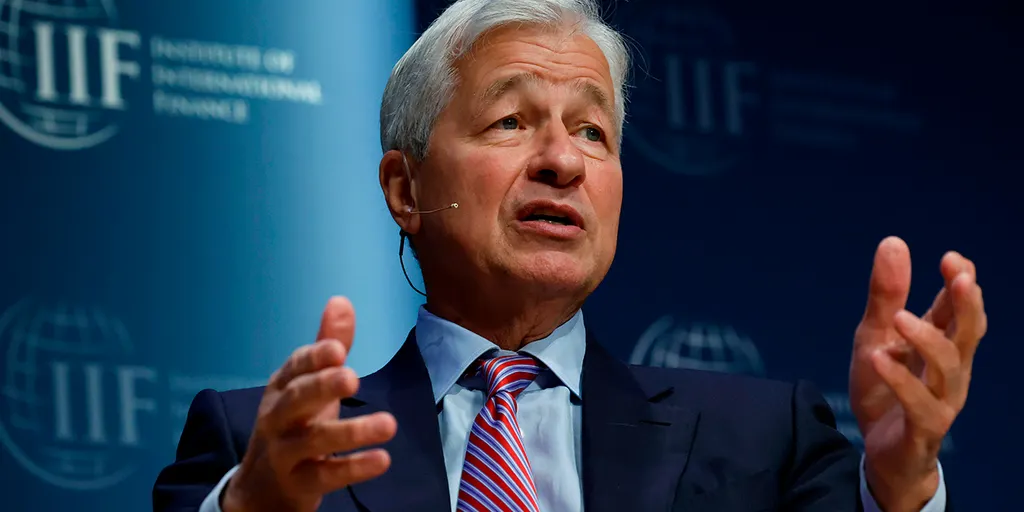
For JPMorgan, MONY is the latest in a series of blockchain initiatives that contrast sharply with CEO Jamie Dimon’s long-running criticism of Bitcoin. Despite his past comments — including calling Bitcoin “worse than tulip bulbs” — the bank has been one of the most active Wall Street institutions exploring blockchain-based settlement and tokenization.
Last week, JPMorgan helped arrange a commercial paper offering for a Galaxy Digital subsidiary on Solana using a newly issued USCP token, with settlement in USDC. Executives involved described the transaction as part of a broader effort to test how public blockchains can support institutional capital-markets activity.
Investor Takeaway
JPMorgan’s recent work across Ethereum and Solana shows that large institutions are now testing public networks directly — not just private chains — for fund issuance and debt markets.
What Does MONY Mean for Onchain Funds Going Forward?
Tokenized money-market funds have become one of the clearer entry points for regulated institutions exploring blockchain. They mirror familiar investment structures, offer predictable yields and operate with the same risk profiles as their traditional counterparts — while enabling faster settlement, token transportability and blockchain-based reporting.
If MONY attracts demand from qualified investors, it will add to the growing case that tokenization can slot into existing frameworks without forcing radical changes to compliance or custody. The ability to subscribe with USDC or cash positions the fund at the intersection of traditional and onchain liquidity — a theme several banks and asset managers are now pursuing.
The rollout also expands Ethereum’s footprint in the tokenized-asset sector. While many institutions began with private chains or permissioned systems, JPMorgan’s move builds directly on a public network, reflecting a broader readiness among large firms to explore public-chain settlement for regulated products.
As tokenized funds, commercial paper and other short-term debt instruments migrate onchain, competition among banks is likely to intensify. MONY gives JPMorgan a stake early in the market’s growth and signals that tokenized cash instruments may become standard tools for liquidity management in the years ahead.