
This post was originally published on this site.
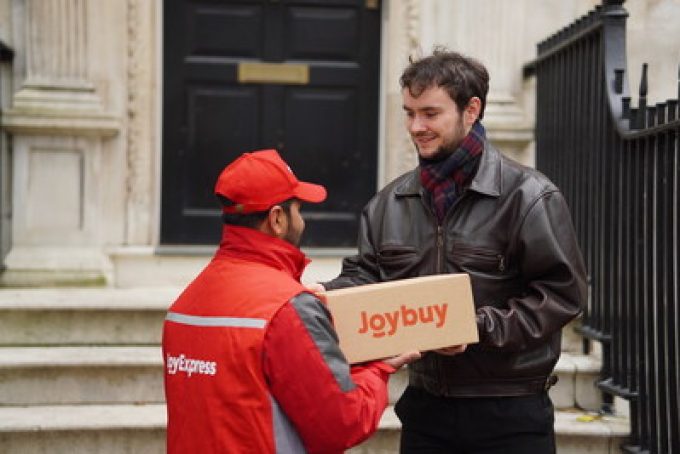
JoyExpress delivery
News that JD.com has launched a dedicated European last-mile delivery network shows how Chinese ecommerce players are restructuring their logistics in anticipation of tougher rules on low-value imports into the EU.
The Chinese retailer said today that JoyExpress, part of JD Logistics, will support the launch of Joybuy, its new European online retail platform, which is currently in beta testing ahead of a full launch in March.
JoyExpress will operate branded vehicles and delivery teams across the UK, Germany, the Netherlands and France, offering same-day and next-day delivery in major cities. JD.com said the network will operate from more than 60 warehouses and depots across Europe, with capacity set to expand as Joybuy rolls out to additional markets.
Unlike earlier cross-border models that relied heavily on direct parcel shipments from China, Joybuy is being positioned as a locally fulfilled European retail operation, with warehousing, transportation and last-mile delivery managed inside the region.
The move adds to mounting evidence that Chinese ecommerce platforms are moving away from parcel-by-parcel fulfilment into Europe, as the EU prepares to apply a €3 customs duty on low-value consignments from 1 July, and several member states, including Italy, have already introduced their own handling fees – which in Italy’s case, has led to about 30 fewer freighter flights this year already.
While JD.com did not reference customs rules in its announcement, logistics providers say the direction of travel is clear.
Rohlig SUUS Logistics customs product director Mirosław Kłósek has said the end of the de minimis exemption is “not merely a technical adjustment”, but a change that will “have a real impact on costs, sales models and the organisation of logistics in international trade”.
JD.com is not alone. Shein has said its facility in Wrocław, Poland, will serve as its primary European logistics hub, while Temu is expanding a “local-to-local” fulfilment model in partnership with DHL, which the platform expects will ultimately account for the majority of its European sales. TikTok Shop has also rolled out “Fulfilled by TikTok” for Asian sellers, using warehouse capacity in Germany, France, Italy and Spain to enable local fulfilment.
This localisation of inventory has potential implications for airfreight flows between China and Europe, particularly for parcel-heavy uplift that has supported demand in recent years.
Analyst Xeneta has warned that ecommerce has become a central driver of air cargo demand, making the sector sensitive to policy and cost changes affecting cross-border online trade.
In a recent update, Xeneta said: “What happens next will be heavily influenced by ecommerce, with shippers in China, Europe and elsewhere facing higher delivery costs,” adding that forward-looking signals for Chinese cross-border ecommerce exports had become “less buoyant”.
JD.com’s decision to embed warehousing and last-mile delivery inside Europe suggests that, for large platforms at least, the post-de minimis model is already being designed into new market launches.
The Loadstar Podcast with Container Trades Statistics: Unpacking 2025