
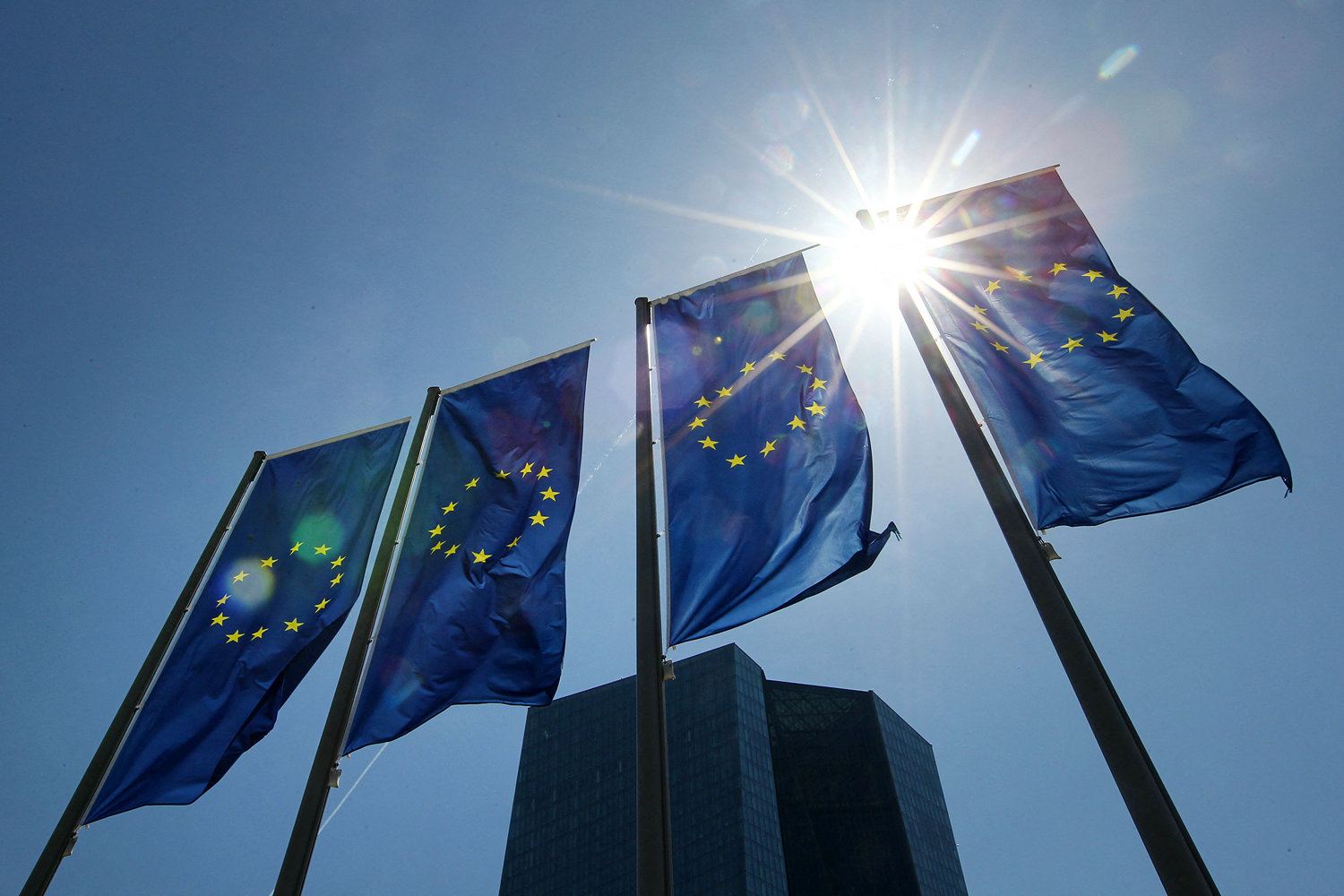
This post was originally published on this site.
Bond Markets Are Now Battlefields
The world is returning to an era of weaponized finance.
As the Greenland crisis came to a head in the days before Davos, Europeans sought tools that could be reforged as weapons against the Trump administration. On Jan. 18, Deutsche Bank’s global head of foreign exchange research, George Saravelos, warned clients in a note that “Europe owns Greenland, it also owns a lot of [U.S.] treasuries,” and that the EU might escalate the conflict with a “weaponization of capital” by reducing private and public holdings of U.S. debt instruments.
U.S. Treasury Secretary Scott Bessent reported later that week that Deutsche Bank no longer stood behind the analyst’s report, but Saravelos was far from the only financial analyst to discuss the idea. Within days, a few European pension funds eliminated or greatly reduced their holdings of U.S. Treasurys and—perhaps as a result—U.S. language about European strength became considerably less aggressive.
As the Greenland crisis came to a head in the days before Davos, Europeans sought tools that could be reforged as weapons against the Trump administration. On Jan. 18, Deutsche Bank’s global head of foreign exchange research, George Saravelos, warned clients in a note that “Europe owns Greenland, it also owns a lot of [U.S.] treasuries,” and that the EU might escalate the conflict with a “weaponization of capital” by reducing private and public holdings of U.S. debt instruments.
U.S. Treasury Secretary Scott Bessent reported later that week that Deutsche Bank no longer stood behind the analyst’s report, but Saravelos was far from the only financial analyst to discuss the idea. Within days, a few European pension funds eliminated or greatly reduced their holdings of U.S. Treasurys and—perhaps as a result—U.S. language about European strength became considerably less aggressive.
It’s unclear how much of an impact Europe’s moves had on the White House backing off. But it poses a number of questions: Can Europe take advantage of weaponized interdependence to wage financial warfare against the United States? How big are the obstacles in the way, and how much impact can such moves have?
Financial flows and financial policy are instruments of coercive power. There is some evidence of financial flows putting pressure on the United States last year; in the wake of his triumphant declaration of mass tariffs in April, movement away from Treasurys reportedly persuaded President Donald Trump to partly change course.
However, this seems to have been an organic, unplanned development and a short-lived one.
Despite the precipitous fall of the dollar, and lively discussion over the past year of the United States losing its reserve currency status, the evidence points to mundane concerns about inflation and policy uncertainty leading to a slow reallocation of investment from the United States to other countries rather than any kind of coordinated response. Expert observers have asked if it is even possible for Europe to do anything further given its active trade with the United States, its smaller markets, and its interdependence. The Financial Times’s Alphaville blog summarized the idea of weaponization as “implausible.”
Yet the potential is there. History can be instructive. The state weaponization of finance feels new but, in fact, is centuries old. In the last decades of the 19th century, European governments—particularly France and Germany—aggressively used finance to advance their interests. The subservience of finance to diplomacy was considered natural; to propose otherwise could be dismissed as “financial pacifism.” At a critical moment in conflict with Russia, German Chancellor Otto von Bismarck banned the Reichsbank from accepting Russian securities as collateral. After the Franco-Prussian War an “official but tacit ban” was used to prevent French investors from putting any money into Germany.
How might similar action look today?
The main battlefield for weaponization is markets for sovereign debt—Treasurys on the U.S. side and the mix of national and European Union-level debt instruments on the European side. If Carl von Clausewitz had been a banker instead of a general, he would have pointed to these instruments as the “center of gravity” of any coercive financial operations. Here, the United States has a distinct advantage: Treasurys are the core market of international finance—large, very deep, very liquid. They form the backbone of world financial flows, a major channel of supply and demand for local markets everywhere.
Virtually all national financial markets are tied to the U.S. Treasury market, and it greatly eases the U.S. ability to borrow. This makes it a potentially powerful target for European pressure but also, at best, a delicate one—it is very difficult to launch pressure that does not boomerang back against the EU. Much of EU ownership of Treasurys is also in private hands.
Despite all this, European governments still have the means to go on the offensive. Finance is notoriously sensitive to the arbitrage opportunities created by regulation, such that leading textbooks on the industry include extensive discussion of loophole mining. (This may also explain why lawyers can now earn more than bankers on Wall Street.) If clever bureaucrats at the European Central Bank and EU and elsewhere created the right loopholes, then European funds could move accordingly. Instead of banning use of Treasurys as collateral à la Bismarck, slight adjustments of their risk weight or tax impact under EU or national law should do the trick. There are great technical and political challenges, but it is absolutely doable.
On a defensive basis, Europe can improve its financial position by further developing common EU debt, building on the large-scale Next Generation EU issuance during the COVID-19 pandemic. In December, EU leaders agreed to raise 90 billion euros ($106.3 billion) for Ukrainian defense, and further steps are very much under discussion. The political and technical challenges to full development of common debt options are obviously enormous, requiring the historically unprecedented establishment of a large, stable market for supranational debt.
EU common debt tends to trade at a discount relative to comparable national debt, showing investors’ concerns. However, the potential payoffs are significant. In addition to facilitating EU-wide defense planning and creating a clear substitute for the Treasurys market, a strong common debt market could create a new and more powerful backbone to European finance, investment, and economic growth.
None of the above analysis should be viewed as prescriptive; by far the best path forward is a negotiated return to the rules-based order as opposed to a collapse into the full anarchy of unrestrained interstate competition. Unfortunately, the Trump administration seems committed to an aggressive policy that puts that order in peril. From at least the Napoleonic wars to the end of World War II, national interests regularly hijacked international markets, pushing them away from their idealized Economics 101 role as mechanisms of price discovery and efficient allocation into channels of pressure and coercion.
In an effort to bottle up these destructive spirits, the Franklin Roosevelt administration—with the assistance of economist John Maynard Keynes—used the United States’ status as the most powerful surviving state to implement the Bretton Woods system of financial and political controls. The success of the Bretton Woods project can be measured in part by how many of the tactics of the previous eras have been forgotten.
As the past month shows, these tactics and their destructive side effects are reemerging as the order collapses. Once again, bond markets are now battlefields.
Geoffrey Fain Williams is a professor of economics at Transylvania University in Lexington, Kentucky. He has published research on crime, gun markets, racial discrimination, and geoeconomics.
Charles Dainoff is an assistant professor of political science at the University of Idaho. He has written extensively on the relationship between tax havens and kleptocracies.
Robert Farley is an assistant professor at the Patterson School of Diplomacy and International Commerce at the University of Kentucky. He blogs at Lawyers, Guns and Money and Information Dissemination. X: @drfarls
Read More
-

German Defense Minister Ursula von der Leyen and her Norwegian counterpart, Ine Marie Eriksen Soreide, stand inside the operations room of a U34 submarine during a joint visit to a German naval base in Eckernfoerde, northern Germany, on Aug. 22, 2017. Europe Is Finally Treating Its PTSD
After decades of trauma and denial, the continent is confronting the reality of war.

Stories Readers Liked
-
A large crowd of people carrying flags and holding signs with faces on them. -
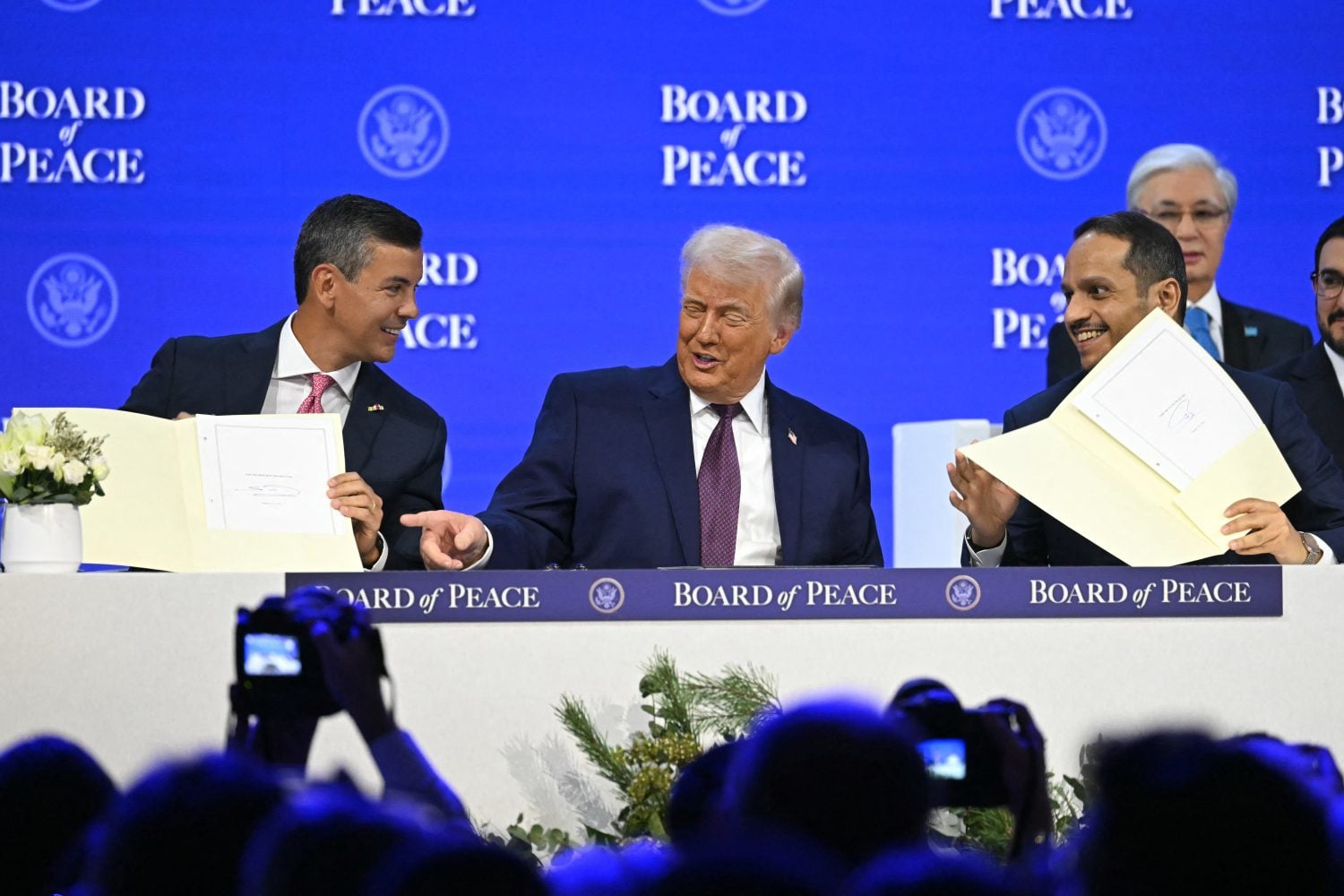
Paraguayan President Santiago Peña, U.S. President Donald Trump, and Qatari Prime Minister Sheikh Mohammed bin Abdulrahman bin Jassim Al Thani participate in the signing ceremony of the Board of Peace in Davos, Switzerland on Jan. 22. -
Gen. Zhang Youxia, then the vice chair of the Central Military Commission, attends the opening session of the National People’s Congress in Beijing. -
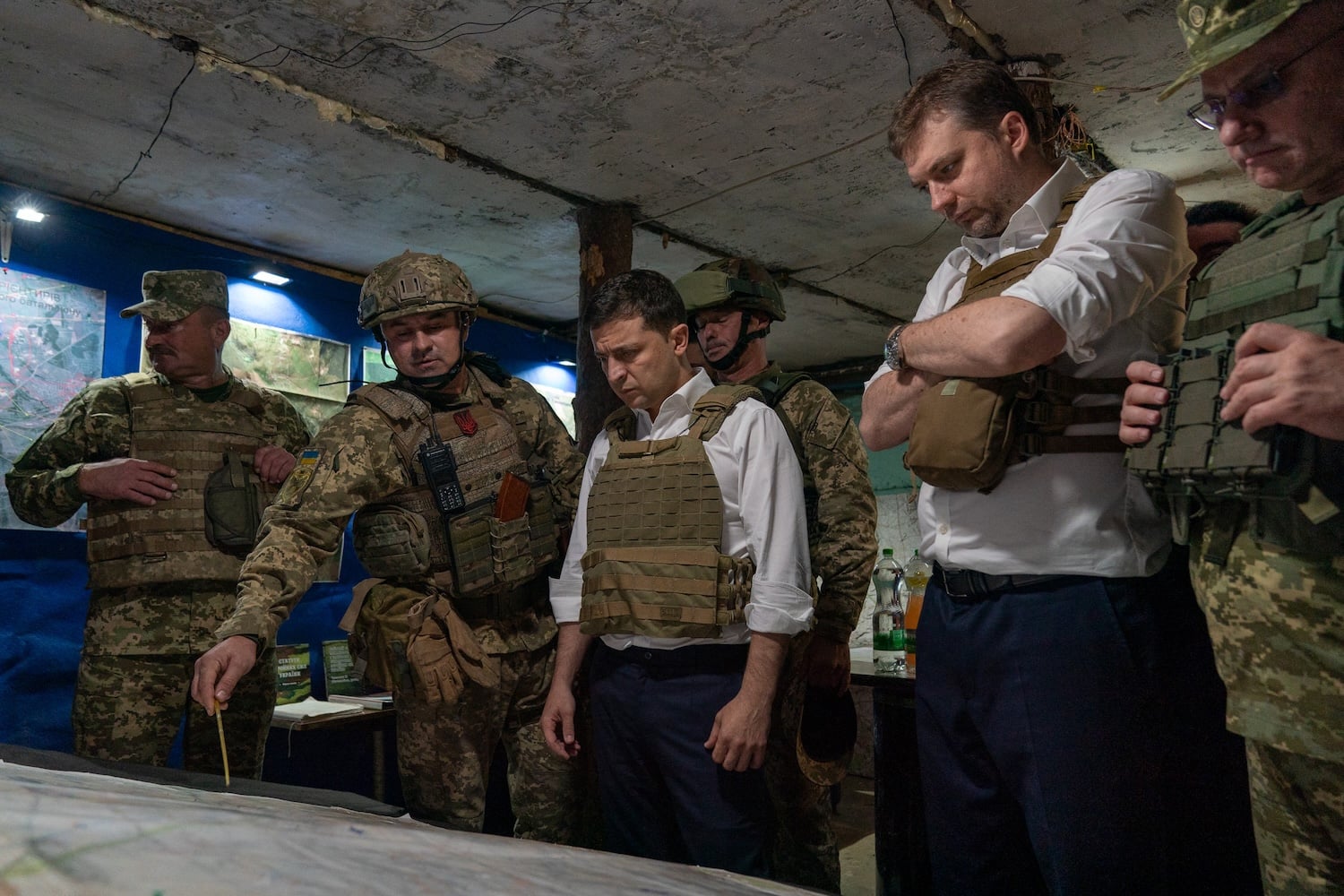
Ukrainian President Volodymyr Zelensky talking with officers at a map during his visit to the Donetsk region on October 14, 2019. -

Central American migrant children play on a seesaw at a shelter in Ciudad Juárez, state of Chihuahua, Mexico. -
An illustration shows Donald Trump from the nose down with a red oil rig as a tie. -
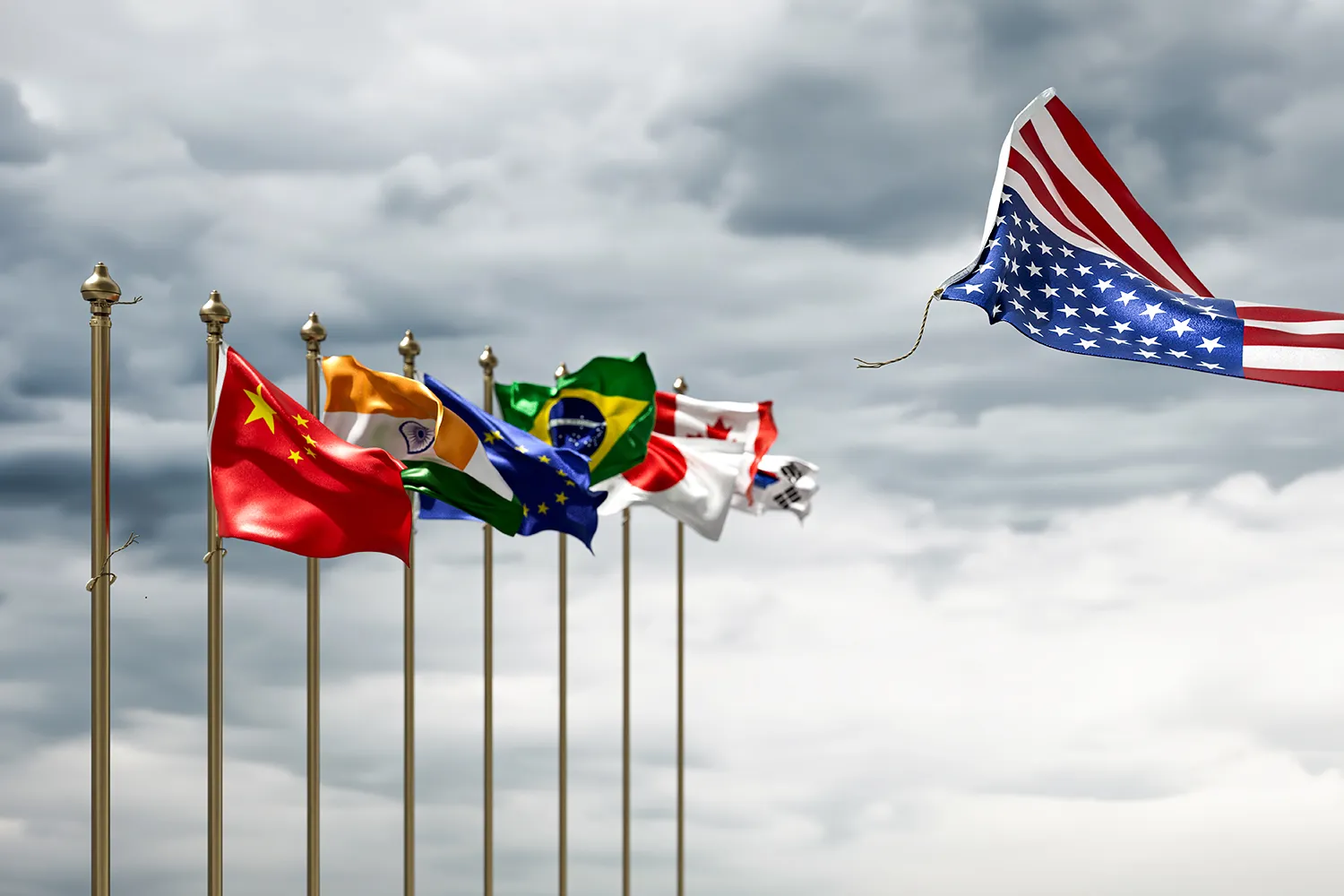
An illustration shows one empty flagpole alongside the flags of multiple countries. The U.S. flag is seen at far right, untethered, flying out of frame. -
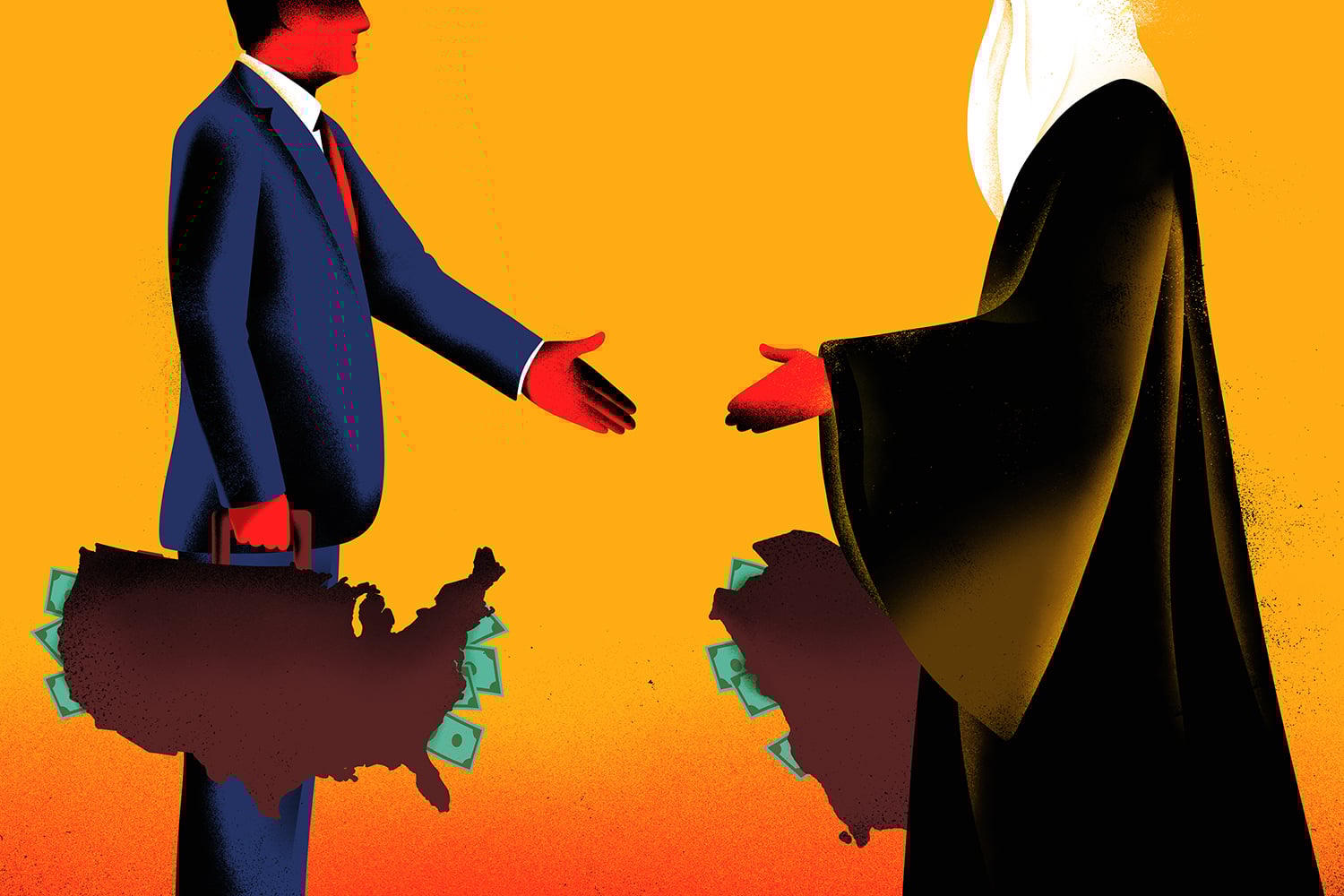
An illustration shows two men against a bright yellow background. One man wears a Western-style business suit and the other wears a black robe and white head covering. The men are shaking hands. Each holds a briefcase with money spilling out, the left man’s briefcase shaped like the United States’ and the right man’s like the Arabian Peninsula. -

A man in a coat outside of a glass office building, with high rise buildings under construction in the background. -
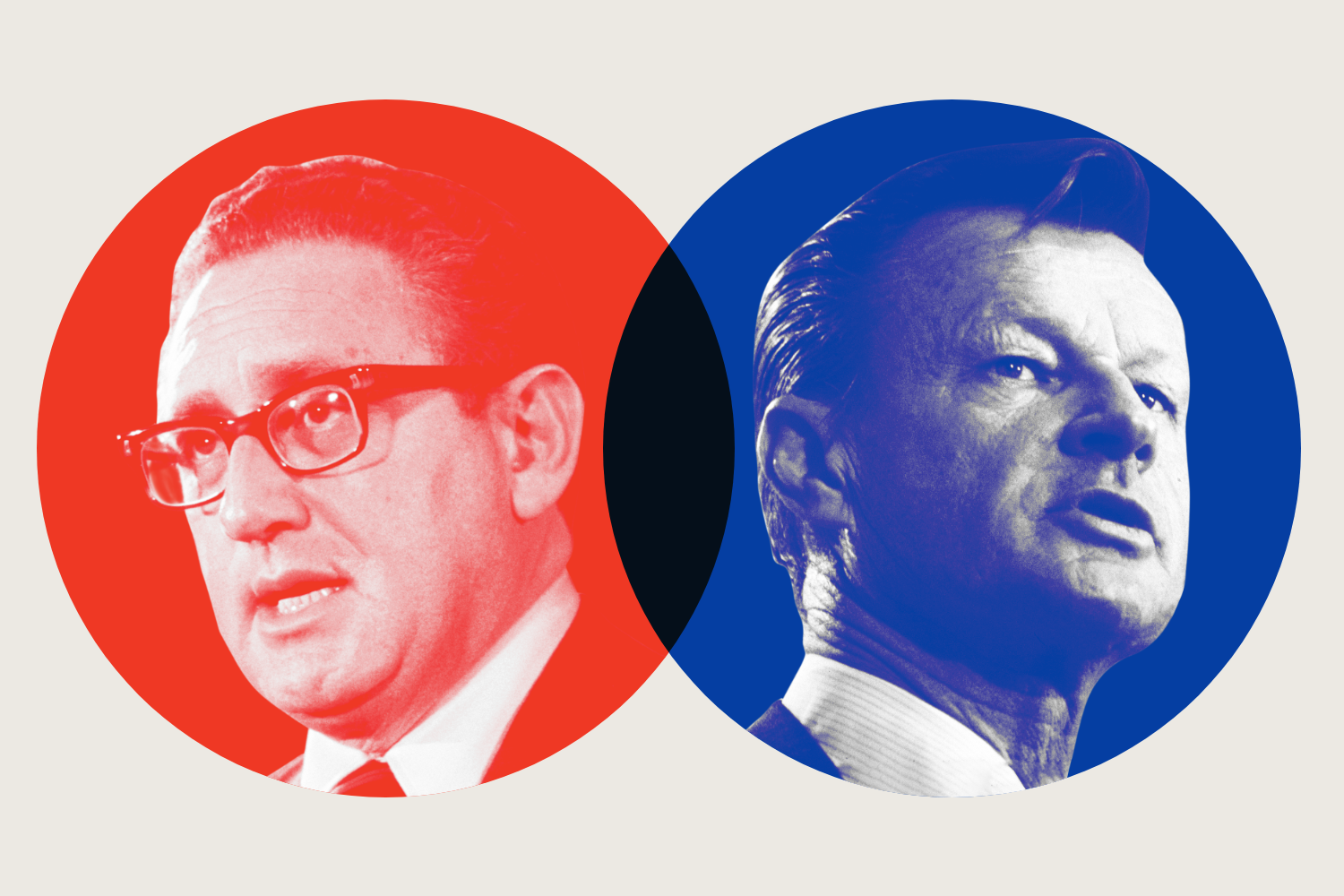
Photos of two men speaking each shown as a negative color inside a red and blue circle.
Trump’s Board of Peace
Trump’s Board of Peace Cracks the BRICS Wall
The myth of a global south resisting U.S. hegemony melted away in Davos.
-
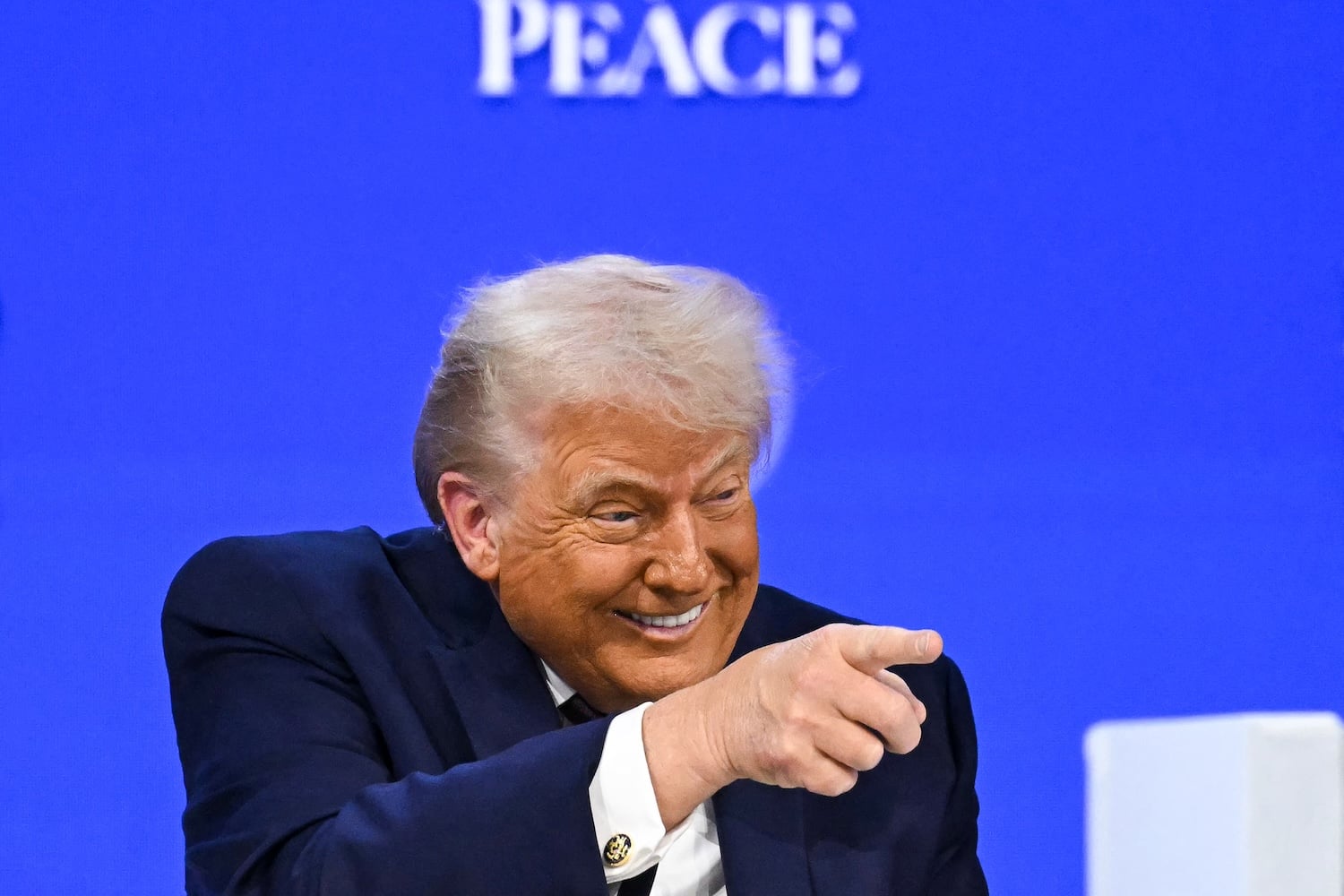
U.S. President Donald Trump speaks at the Board of Peace meeting during the World Economic Forum in Davos, Switzerland, on Jan. 22. -
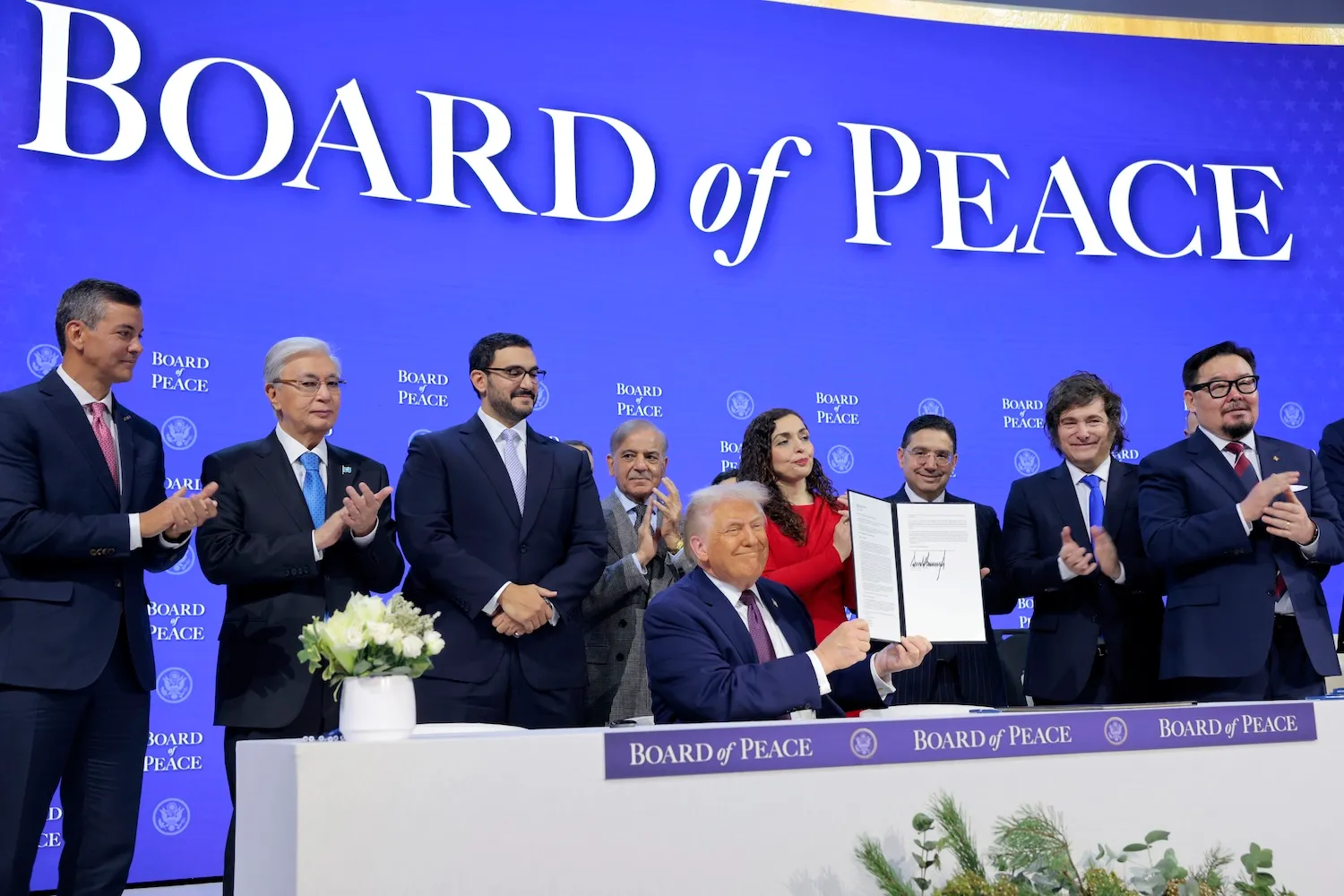
Trump beams and sits at a long table while holding up a folder containing printed text as well as his large signature. Other world leaders stand behind him, some with their hands clasped, some clapping. -
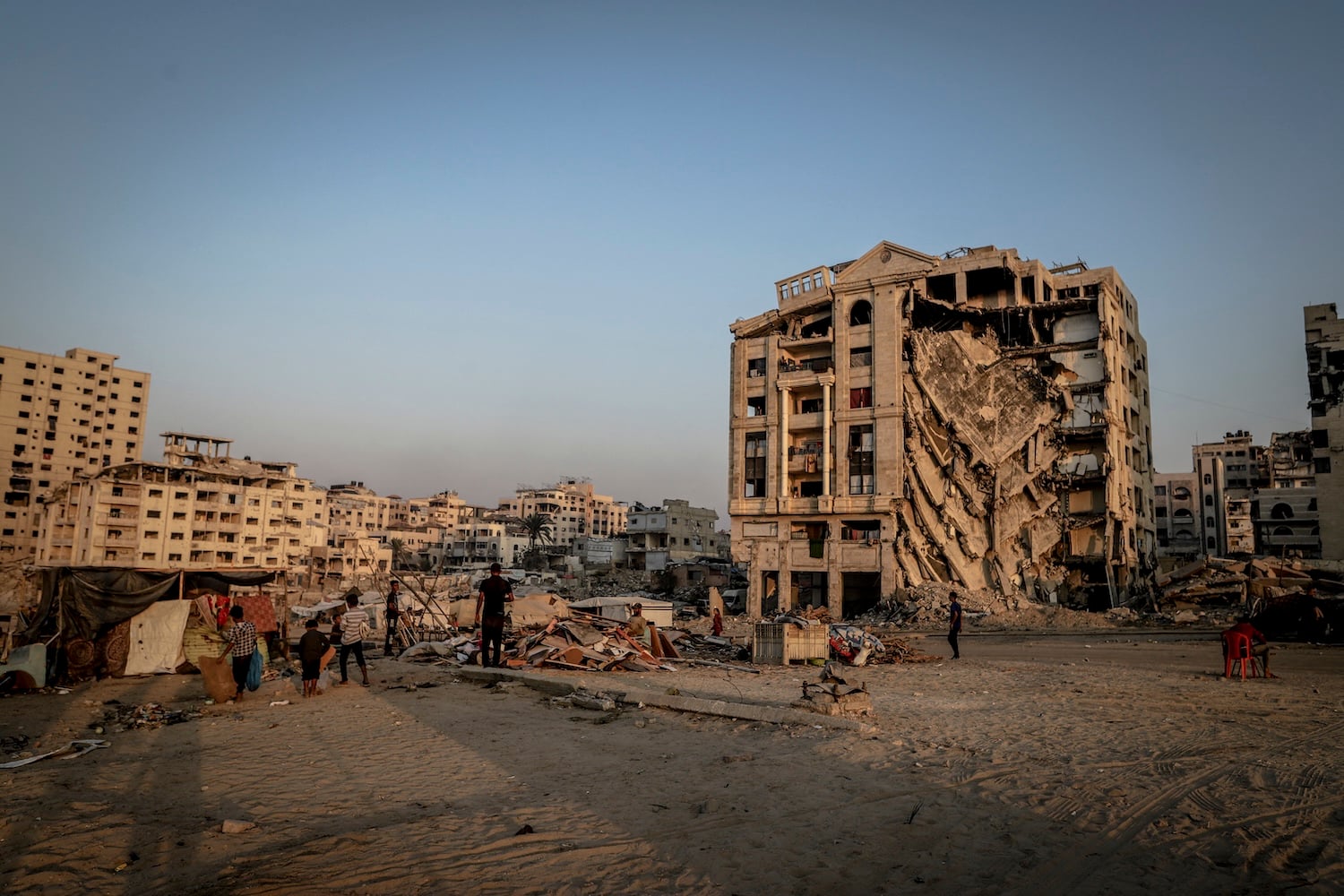
People walk past a heavily damaged building in Gaza City on Nov. 10, 2025.
Join the Conversation
Commenting is a benefit of a Foreign Policy subscription.
Subscribe
Subscribe
Already a subscriber?
.
View Comments
Join the Conversation
Join the conversation on this and other recent Foreign Policy articles when you subscribe now.
Subscribe
Subscribe
Not your account?
View Comments
Join the Conversation
Please follow our comment guidelines, stay on topic, and be civil, courteous, and respectful of others’ beliefs.
View Comments
Change your username |
Log out
Change your username:
CANCEL
Confirm your username to get started.
The default username below has been generated using the first name and last initial on your FP subscriber account. Usernames may be updated at any time and must not contain inappropriate or offensive language.