
This post was originally published on this site.
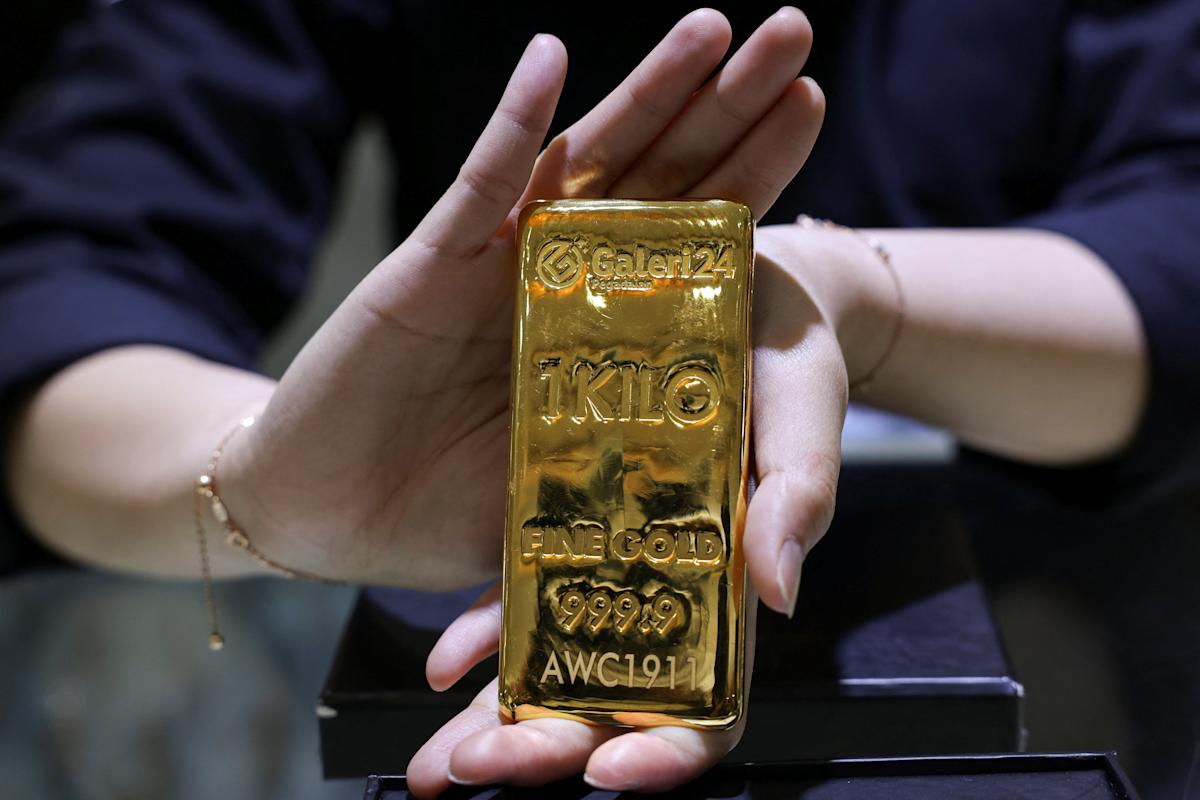
Gold prices rose for a second consecutive session on Wednesday as investors returned to precious metals after one of the sharpest sell-offs in decades, helped by a weaker dollar.
Gold futures (GC=F) climbed 3.4% to $5,102.60 a troy ounce, while spot prices rose 3.2% to $5,087.02 at the time of writing.
The precious metal had surged to a record $5,594.82 last Thursday before suffering its steepest one-day fall since 1983, dropping more than 9% on Friday. Prices then fell a further 1.9% on Monday.
Investors said the rebound reflected renewed buying after a wave of analysts in the City argued that the sell-off had been excessive and that further gains were likely.
Analysts at Jefferies said: “The path of least resistance for commodities and mining shares is still mostly higher in an environment where investors and central banks globally are actively reallocating capital en masse to real assets due to macro factors … our point? Buy the dip.”
Read more: Should you invest in gold?
Despite the recent volatility, gold (GC=F) remains up more than 60% over the past year.
In a note published after Monday’s rout, Joni Teves, precious metals strategist at UBS, wrote: “Is the gold rally over? Our short answer is no.”
UBS has forecast that gold (GC=F) could reach $6,200 later this year.
“After plunging from record highs amid elevated volatility, precious metals attracted renewed buying interest,” ING Bank analysts Warren Patterson and Ewa Manthey wrote in a note.
“Safe haven demand is among factors that will remain supportive of gold prices over the medium term,” they said.
Oil prices rose on Wednesday, extending gains from the previous session as investors weighed renewed concerns over an escalation in tensions between Washington and Tehran.
Brent crude (BZ=F) futures gained 0.2% to $67.45 a barrel, while West Texas Intermediate (CL=F) rose 0.4% to $63.49 at the time of writing.
The move came after the US military said on Tuesday that it had shot down an Iranian drone that had “aggressively” approached the Abraham Lincoln aircraft carrier in the Arabian Sea.
Read more: Robinhood UK rolls out stocks & shares ISA with 2% cash bonus
“These security events raise the geopolitical temperature and resurface fears of oil supply disruptions. The Straits of Hormuz is a critical transit corridor, accounting for 20% of the world’s petroleum liquids consumption,”Nikos Tzabouras, analyst at FXCM wrote.
Prices were also supported by industry data pointing to a sharp decline in US crude stockpiles. Inventories in the world’s largest producing and consuming nation fell by more than 11 million barrels last week, according to sources citing figures from the American Petroleum Institute.
Sterling pushed a bit higher against its major peers on Wednesday as investors awaited the Bank of England’s interest rate decision on Thursday.
The pound was up 0.2% against the dollar at $1.3724 and up 0.1% against the euro at €1.1600.
The US dollar index (DX-Y.NYB), which measures the currency against a basket of six major peers, slipped 0.1% to 97.37.
Markets expect the BoE to keep interest rates on hold at 3.75% on Thursday, before cutting borrowing costs once or twice later in the year.
Stocks: Create your watchlist and portfolio
“Markets now think the Bank of England will wait until probably the May policy meeting before cutting rates further,” said Lee Hardman, senior currency analyst at Japanese bank MUFG. “I think that delayed expectations for the Bank of England rate cuts is helping the pound to strengthen.”
In equities, the FTSE 100 (^FTSE) hit a new record hight on Wednesday morning, up 0.6% to a new peak of 10,383 points.
Download the Yahoo Finance app, available for Apple and Android.