
This post was originally published on this site.
CLEVELAND, Ohio — Save the red pens for a rainy day this summer.
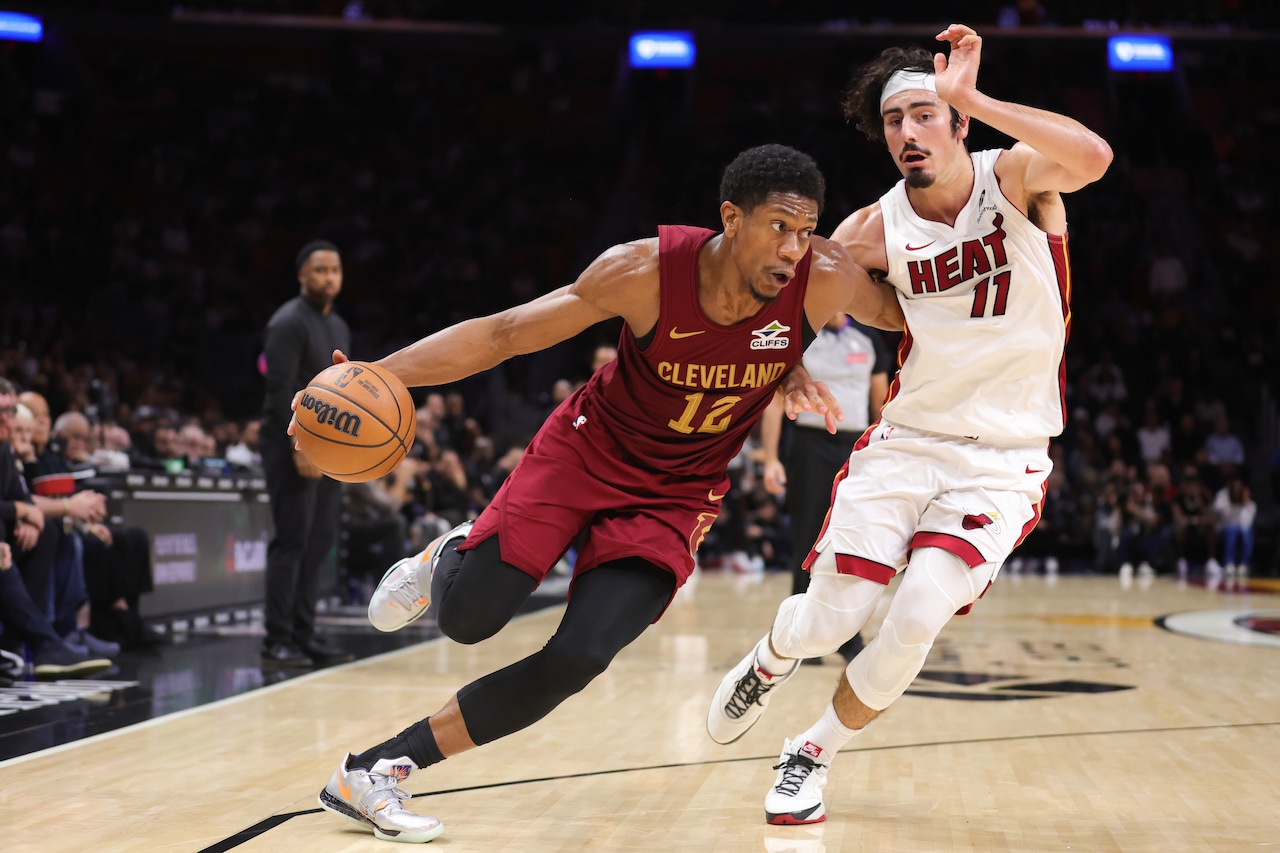
I know we love to grade trades. I know Cleveland shipped forward De’Andre Hunter to Sacramento this weekend for Kings guards Dennis Schröder and Keon Ellis. And we know Ellis brings point-of-attack defense and a 3-point stroke, while Schröder can energize Cleveland’s bench with his playmaking.
But the Cavs’ latest move can’t be assessed until we learn how president of basketball operations Koby Altman manages his newfound pennies.
With respect to Schröder and Ellis, the biggest asset Altman acquired this week was financial flexibility. As things stand, Cleveland remains about $14 million above the second-apron luxury tax threshold, which punitively punishes high spenders by limiting various roster-building tools. The Cavs still can’t aggregate salaries in trades or use their mid-level exception this summer, for example.
And over the last several months, most hypothetical roster improvements have been killed on the cutting-room floor. Sorry, the salaries don’t match. Can’t make that deal.
But the Hunter trade cleared enough cap space to leave them one Max Strus-sized salary ($15.9 million) — or one Lonzo Ball-sized salary ($10 million) plus a pair of minimum contracts — away from unlocking their salary-cap shackles.
And if Cleveland pursues that route, then suddenly, your favorite fake Core Four trades won’t feel so fanciful.
Let us pause here to acknowledge that, yes, the Cavs have won eight of their last 10 games. They’ve won seven of those eight without All-Star guard Darius Garland, and two without Garland and reigning Defensive Player of the Year Evan Mobley. Cleveland is trending up, and both Schröder and Ellis can help the team win now.
That being said, Cavs fans learned long ago to stop celebrating regular-season win streaks.
Three-plus years into building around Garland, Mobley, Donovan Mitchell and Jarrett Allen, the Cavs have won two playoff series. Fifty-one games into this season, they rank seventh in offensive rating, 13th in defensive rating and are tied for fourth place in a weakened Eastern conference.
And with one year remaining (plus a player option) on Mitchell’s contract after this season, the Cavs must consider the long- and short-term implications of their current trajectory.
Short-term: Their offense is never the same without Garland. Wait until he returns.
Long-term: Garland has been hurt during parts of the last three seasons. Can’t count on his durability.
Short-term: Mobley was finally playing at an All-NBA level again before he suffered another calf strain last month.
Long-term: Mobley failed to seize a star’s role to start this season. And Mitchell, who turns 30 next season, can’t afford to wait much longer on the big man’s breakout.
Short term: The Cavs traded Hunter because he didn’t fit their roster the way they anticipated.
Long term: Swapping Hunter’s contract for smaller ones plants the seeds for a potential sea change this summer.
The key word is potential. The Cavs can still influence that decision. Few trades are made with one motivation in mind.
By acquiring Hunter last year, Cleveland solidified its wing rotation (particularly against the Celtics) and cemented its belief in the Core Four, salary cap penalties be darned.
By trading him last week, Altman admitted his miss at last year’s deadline, created flexibility for the summer and added two useful rotation players.
Reminder: Schröder provides both an upgrade at backup point guard and a fiery presence in the locker room. Ellis shoots 3s and defends hard. And Hunter’s exit allows Cleveland to lean into second-year forward Jaylon Tyson’s breakout season without worrying about hurting another player’s confidence.
The Cavs could well win the trade, but we’re not marking our rubrics yet. Not until Altman makes a decision about his rainy-day fund.