
This post was originally published on this site.
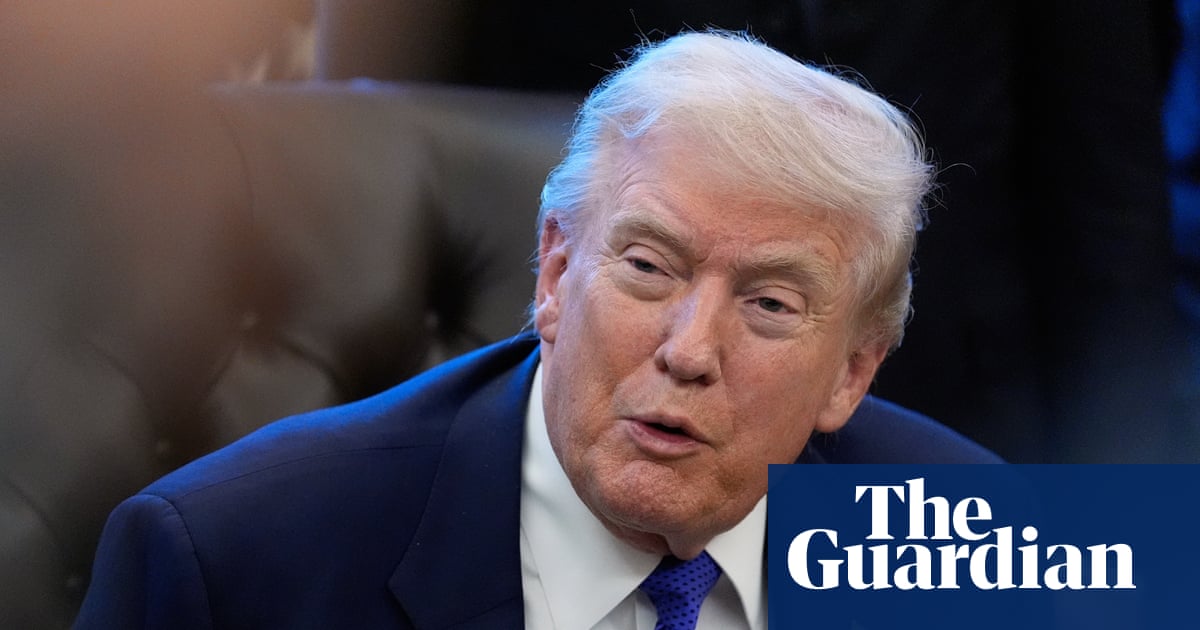
Donald Trump has been accused of “corruption, plain and simple” after it was revealed that a member of the Emirati royal family was behind a $500m investment into the Trump family’s cryptocurrency company.
Ethics experts say the deal – struck just days before the US president’s inauguration last January – amounts to a deep conflict of interest for the White House, amid calls for a congressional investigation into the transaction.
Months after the deal, the Trump administration announced that the United Arab Emirates would be allowed to import 500,000 of Nvidia’s powerful AI chips – overriding concerns that the deal could eventually allow China access to the technology.
The January 2025 investment was backed by Sheikh Tahnoon bin Zayed Al Nahyan, a powerful official in the UAE government. Tahnoon is the brother of the country’s president, and serves as both national security advisor and chair of the Emirates’ $1.5tn wealth fund.
Donald Sherman, president of the Citizens for Responsibility and Ethics in Washington, a powerful government watchdog group, said the deal is a “blatant, disgraceful conflict of interest and a possible violation of the Constitution’s Federal Emoluments Clause”.
“Thanks to this latest monetization of the White House, the American people will have to question whether Trump administration policies affecting the UAE…. are in the best interest of the public and American workers, or a foreign nation that padded the president’s bottom line,” Sherman said.
Four days before inauguration, Tahnoon ’s emissaries agreed to acquire a 49% stake in World Liberty Financial, a cryptocurrency company co-owned by the Trump family, for half a billion dollars, according to the Wall Street Journal, which first reported on the deal.
Documents seen by the Journal indicate that Tahnoon paid the Trump family and entities affiliated with Steve Witkoff, cofounder of World Liberty and Trump’s envoy to the Middle East, half of the investment up front, with $187m going to Trump entities, and $31m going to Witkoff’s. The payment came from Aryam Investment, a Tahnoon-backed company.
A White House official said the president is “not involved in running his businesses and has turned them over to his children, so these business endeavors do not involve him”.
Claims that the president had breached the constitution’s federal emoluments clause, designed to safeguard against corruption, are “bogus and irrelevant”, the official argued. “Mere appearances of business deals with which he has no involvement plainly cannot violate the Emoluments clause.”
In a statement, White House counsel David Warrington added: “President Trump performs his constitutional duties in an ethically sound manner and to suggest so otherwise is either ill-informed or malicious.”
Government ethics experts have long been alarmed over the way that Trump and his family structured his companies before he started his second term. Typically, a president puts his assets into a blind trust overseen by an independent third party. But Trump handed over control to two of his sons, Donald Trump Jr and Eric Trump.
While it’s no different from how Trump structured his companies during his first term, Trump spent the years after he left the White House expanding his family business. Now Trump entities are dabbling in social media, streaming platforms, nuclear fusion, financial services and, through World Liberty, crypto.
“This is beyond unprecedented and unimaginable,” said Kedric Payne, general counsel and senior director of ethics at the Campaign Legal Center. “I can’t think of any president in modern history who had an international business that could even get [him] into this type of predicament.”
While Trump claims to be staying out of his family business, the president met with Tahnoon multiple times after he reentered the White House. In March, Trump hosted a dinner at the White House for Tahnoon and an Emirati delegation. In a post on Truth Social, he said the evening “demonstrated the long-standing ties and bonds of friendship between our countries”.
Come May, World Liberty announced that MGX, the Emirati’s AI investment arm, would use its USD1 stablecoin to invest $2bn into crypto exchange Binance.
Two weeks later, the White House would announce its deal to allow the UAE to import Nvidia chips, which would allow the Gulf state to compete as a major AI player. The Biden administration had restricted the export of AI chips to the UAE, given its relationship with China, over fears that giving chips to the UAE could ultimately lead them to getting to China.
The Guardian has not identified evidence of the president explicitly offering the chip exports in exchange for the investment in his family’s crypto venture.
Richard Briffault, a law professor at Columbia, said while there’s no direct allegation of a quid pro quo, “the situation of a major investment by a foreign power in a major company that the president has a major stake in, that creates a structural conflict of interest”.
“The concern is that we can never be sure why certain decisions are being made,” Briffault said. When Trump allowed the UAE to import AI chips, “it could have a shrewd geopolitical move, or it could have been influenced by the fact that the country has a major investment in a Trump family business. We just can’t know for sure.”
Government ethics advocates said it will be up to Congress to investigate the extent of the relationship between Trump’s company and any foreign interest. But with a majority in the House and Senate, only Republicans have the power to launch a formal investigation.
“Congress needs to grow a spine and put a stop to Trump’s crypto corruption,” Democratic senator Elizabeth Warren said in a statement. “This is corruption, plain and simple. The Trump administration must reverse its decision to sell sensitive AI chips to the United Arab Emirates.”