
This post was originally published on this site.
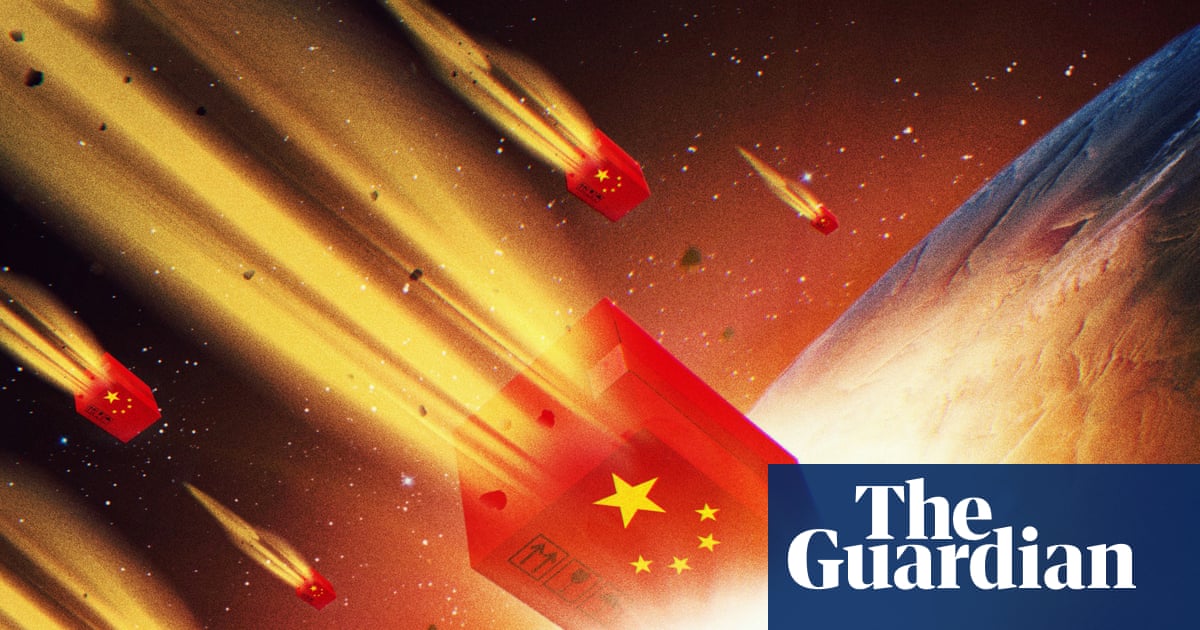
When the Canadian prime minister, Mark Carney, took to the podium at the World Economic Forum in Davos last week to lament how “great economic powers” were dismantling the international order, it seemed clear that he was talking about the United States. He might have been talking about China as well.
Not a week earlier, Beijing had revealed that China’s trade surplus ballooned by 20% in 2025, to $1.2tn. Despite Donald Trump’s wall of tariffs that crashed Chinese sales to the US, its overall exports expanded more than 5%. Sales to the 11 countries in Asia’s Asean bloc increased more than 13%. Exports to the European Union rose over 8%. Chinese imports, by contrast, were flat.
This gargantuan imbalance is strangling manufacturers from rich countries in Europe to poorer nations in Asia and Latin America. As Eswar Prassad, a former head of the China division at the International Monetary Fund, now at Cornell University, pointed out: “Forget Trump’s Tariffs. The Real Danger Lies in China’s Trade Surplus.”
The wave of Chinese exports should remind us that the United States’ turn against the global order it did so much to build did not happen in a vacuum. The US commitment to globalization and liberal democracy blew up under the strain imposed by China’s export-led economic surge.
America’s fragility is not China’s responsibility. But Beijing must understand that its strategy is putting enormous stress on international economic institutions. If it wants to preserve any semblance of the global trading order upon which it built its wealth and power, it must reconsider mercantilistic policies that are mopping up global demand in the service of Chinese jobs, undercutting other countries’ shot at prosperity.
Many factors contributed to the implosion of American governance. But Trump’s rise was largely propelled by a sense of grievance against a world order that, Americans believed, had taken the US for a ride.
America’s pain was largely self-inflicted. Manufacturing’s footprint shrunk in Germany over the last quarter century, like it did in the US. It shrunk in the UK and France, Italy and Japan. While those shifts have caused domestic political disruptions, in none of these other countries did voters try to punish the rest of the world for the loss, as Trump has.
The “China shock” – the wave of imports from China following its accession to the World Trade Organization in 2001 – played a big role in twisting America’s politics, delivering a blow to manufacturing in many regions of the United States which have yet to recover, providing Maga fertile ground in which to grow.
But Americans’ exceptional fury arose largely because the US failed to build the social infrastructure deployed in other affluent countries to manage these industrial disruptions and mitigate the downsides of increased globalization and technological change. Even as the US got extremely rich from the globalized economy, ordinary Americans fumed about being left behind.
China, however, would be making a huge mistake if it were to conclude that its policies had no part in setting off convulsions across the global economy.
China’s overbearing exports are changing minds about the benefits of open trade well beyond the United States. The World Trade Organization (WTO) reports more than 300 antidumping investigations since 2020 by low- and middle-income countries against Chinese exports, from steel and cutlery to footwear and washing machines.
Late last year, Mexico imposed tariffs of up to 50% on Chinese goods. India raised tariffs on steel imports to stem a surge in imports, largely from China. And China’s export wave is a big part of the reason that the European Union now agrees with the US that the WTO no longer works.
“We urgently need a new system of global trade governance fit for the 21st century,” Maroš Šefčovič, the EU commissioner for trade, wrote as the meetings in Davos got under way. In particular, he noted that it may be time to jettison the WTO’s bedrock “most favored nation” rule, which ensures that tariff reductions offered to one trading partner must in most cases be offered to all.
The principle was embraced in the heyday of globalization, when the overriding goal of trade negotiations was to expand global trade. It responded to the concern that a spaghetti bowl of differential tariffs might distort investment, encouraging firms to invest based on a country’s tariff portfolio rather than its natural and human endowments, undercutting global prosperity.
And yet the sense that China does not play fairly – undervaluing its currency and providing state support to exporting firms in the form of subsidized credit and other incentives, even as it keeps its own domestic market largely closed to imports – is nurturing a consensus that countries need new tools to protect themselves from China’s overbearing tactics.
“A single country’s manufacturing production exceeds that of the nine next-largest manufacturing countries combined,” noted the United States in a communication to the WTO about ways to reform the organization. “These imbalances and policies present the greatest threat to a global economy of fair and reciprocal trade.” Šefčovič largely agreed. “Access to lower tariffs cannot be unconditional,” he wrote. “It must be earned through stronger, credible commitments to the core principles of free and fair trade.”
The world needs an engaged China. As the US turns its back on international law and institutions, the world’s second-largest economy could provide a valuable counterbalance to preserve the open trading system. Before traveling to Davos, Carney visited Beijing, where he and China’s president, Xi Jinping, signed a new strategic partnership. Last October, China expanded its free trade agreement with the Asean bloc. South Korea and China have traded state visits.
But preserving a liberal trading regime requires China to do much more than define itself as a reasonable nation, in contrast with a United States that went off the rails. From steel to cars, it is producing stuff way beyond the world’s capacity to absorb. Beijing’s argument that its purchases of raw materials are producing prosperity across the global south, even as its exports overwhelm developing countries’ manufacturing industries, is unlikely to build support for China’s leadership in the global economy.
Sticking to its export-led strategy does not even serve China well. Business investment is hitting diminishing returns, requiring more capital to generate each additional job. And this is delivering scant prosperity to ordinary Chinese. China’s household spending amounts to only 40% of GDP, compared with 60% across the nations in the Organisation for Economic Co-operation and Development.
Trump is offering Beijing an unparalleled opportunity, opening space for China to become a global leader as the US retreats into itself, the steward of an alternative trading system. But by sticking to its guns China will, instead, validate the US turn against the global economy, and continue to erode faith in a trading system by which it has done remarkably well.